Qalibaf's war drums and the theater of Iranian Hajj politics
As Iran repatriates nearly 31,000 pilgrims from Mecca, parliamentary speaker Mohammad Bagher Qalibaf invokes the language of existential conflict — a rhetorical strategy that tells us more about domestic factional pressure than any genuine foreign threat.
On the final weekend of May 2026, Iranian state media released footage of Parliament Speaker Mohammad Bagher Qalibaf speaking at what was described as a farewell ceremony for the "martyred leader of the Revolution." The video — circulated by Arabic-language outlet Al-Alam and timestamped within hours of the Hajj return operation — showed Qalibaf in a register that has become familiar from Tehran's hardliners: combative, existential, framing ordinary diplomatic and religious logistics as theater for a wider war.
"We are pushing back the enemy in a big and history-making war," Qalibaf declared, his voice raised in what the footage suggests was a scripted moment of rhetorical release. The same session drew the headline "When Qalibaf's anger broke" — language designed for social propagation, not parliamentary record.
That same day, Iranian authorities announced the completion of an 11-day operation returning nearly 31,000 pilgrims from Mecca across six airports. The logistics are real. The scale is verifiable. And it is precisely this ordinariness — six airports, a predictable calendar, tens of thousands of returning citizens — that makes the accompanying war rhetoric so instructive.
The Hajj operation as political infrastructure
The Iranian Hajj return program is not new. Tehran has managed pilgrim logistics through state bodies for decades, coordinating with Saudi authorities under agreements that survived diplomatic ruptures, sanctions, and regional wars. What has changed in recent years is the framing. Each return convoy now arrives bearing the weight of a narrative: Iran as a besieged but unbroken civilization, Saudi Arabia as a reluctant partner in a arrangement that Tehran never fully trusted, and the pilgrimage itself as evidence of sovereign capacity despite external pressure.
The six-airport system — routing pilgrims through Imam Khomeini International Airport, Mehrabad, Isfahan, Shiraz, Mashhad, and Tabriz — speaks to the geographic reach of Tehran's domestic network. It is also a reminder that when Iran announces operational details of this kind, the information is calibrated. The numbers are not leaked; they are released. The specificity signals control.
The sources do not indicate any disruption to the 2026 Hajj season. Saudi Arabia managed the pilgrimage with its usual efficiency. The operational normalcy is precisely what makes it available as backdrop for political theater.
Why the war language now
Qalibaf is not a peripheral figure. As Parliament speaker, he occupies the institutional apex of the hardliner bloc that consolidated control after the 2021 presidential election and the subsequent crackdown on the reformist wing. His rhetoric therefore reflects calculation, not merely sentiment.
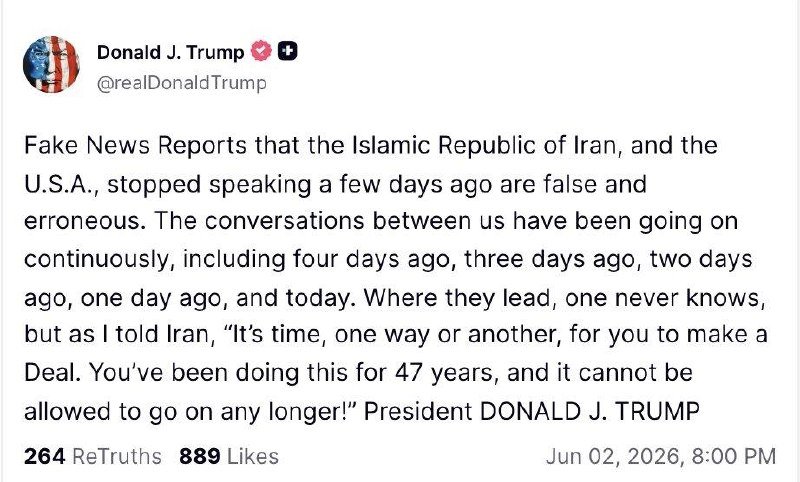
The timing matters. The footage surfaces amid ongoing nuclear negotiations with the United States — talks that have produced no publicly confirmed framework as of late May 2026, and that have generated significant friction within Iran's ruling factions. For the hardliners, any accommodation with Washington is betrayal; for pragmatists around the presidency, sanctions relief is survival. Qalibaf's language — "pushing back the enemy," "big and history-making war" — speaks directly to the conservative base that will judge him on his willingness to sound the alarm, not on the nuance of his diplomatic positions.
This is not unique to Iran. Across multiple capitals in the region, leaders facing domestic political pressure reach for foreign threat frameworks to consolidate authority. The language is designed for a domestic audience first, an international one second.
What the sources tell us — and what they don't
The Al-Alam footage is real. The Hajj operation numbers are real. Qalibaf's statements are real. What the sources do not establish is whether the "farewell of the martyred leader" refers to a specific commemorative event with a defined date, or whether it is a recurring ceremony used to generate periodic content. The phrasing "martyred leader of the Revolution" is the standard epithet for Ayatollah Khomeini, who died in 1989 — meaning this is either an annual event or a manufactured one. The sources do not resolve this ambiguity.
Similarly, the sources do not indicate which "enemy" Qalibaf means. Given Iran's current geostrategic posture — engaged in indirect confrontation with Israel, subject to US sanctions, with active proxy relationships across the region — the term is intentionally elastic. It can mean Washington, Tel Aviv, the Saudi bloc, or some combination. The ambiguity is the point.
The structural pattern
What we are watching is the routinization of existential rhetoric within a functioning state apparatus. Iran is not a failed state; its institutions manage real logistics, real populations, real diplomatic relationships. The Hajj operation proves operational competence. But alongside that competence runs a second register — one that treats every political moment as a chapter in an ongoing civilizational conflict.
This dual register is not irrational. It serves the hardliners' domestic interests, it disciplines the reformist wing, and it provides a framework for understanding foreign pressure that resonates with a population that has lived under sanctions for decades. The cost is that genuine diplomatic progress — which would require rhetoric calibrated for negotiation rather than mobilization — becomes harder to sell to the base Qalibaf is addressing.
The pilgrim returns, the airports receive them, and the parliamentary speaker reminds everyone that they are at war. These are not contradictions. They are the same system managing two different audiences simultaneously.
This publication covered the Hajj return operation and Qalibaf's statements through Al-Alam News Network reporting on 31 May 2026. No independent corroboration of the specific ceremony or its date was available from Western wire services as of publication.
Wire provenance
This editorial synthesis draws on the following public wire/social posts:
- https://t.me/alalamfa/
- https://t.me/alalamfa/
- https://t.me/alalamfa/
Follow the event.
These dated source records provide context. They do not retrospectively verify this archive article.
Separate what the nuclear watchdog reported from what it could not determine after the June 2025 strikes.