When Deterrence Becomes Its Own Language: Reading the IRGC's Public Messaging Playbook
A spate of public statements from senior Iranian Revolutionary Guard commanders in recent days reveals a communication strategy that speaks louder than any single threat.
Deterrence, like any dialect, develops its own grammar.
On 2 June 2026, that grammar was on display in a series of statements from senior Islamic Revolutionary Guard Corps officers, carried on the Al Alam Arabic Telegram channel. Brigadier General Hussein Mohebi, the Guard's official spokesman, said Iran was "fully prepared for all possible scenarios." He added that if "the enemy returns to the military arena," the type of operation, geography of battle, and weapons employed would all differ from prior engagements. A separate statement from Brigadier General Assadi — carried in the same dispatch — was more direct: "When there is no surrender, war is coming; so we wait and we have no problem with the war." Assadi also offered a more calibrated line for external audiences: "If NATO also appears in this area, there is no need to worry."
The statements, taken together, read less like a press briefing and more like a syllabus.
What the language is actually doing
Senior officials at state security institutions do not conduct media operations casually. Every phrasing is deliberate. The word "prepared" in Mohebi's statement functions as a constant — it has been the baseline posture of the IRGC for decades and signals nothing new in isolation. What changes the register is the sentence that follows it: the specification that future operations would differ in type, geography, and materiel. That is not a description of existing readiness. It is an announcement of escalation doctrine — a suggestion that the rules of engagement, as currently understood by Western and regional military analysts, are under review.
Assadi's language operates on a different register. "When there is no surrender, war is coming" is an if-then construction that places the causal burden on an external party. The logic is familiar from decades of Iranian strategic communication: conflict is not chosen, it is arrived at through the other side's refusal to accommodate. "We wait" and "we have no problem with the war" complete the frame — the Guard is not spoiling for a fight; it is patient, and the other party is running down the clock on its own options.
The NATO reference is the most analytically interesting line. "If NATO also appears in this area, there is no need to worry" reads as confidence-building toward a specific audience — the message being that a body the Iranian leadership has spent years treating as an existential stressor is, in Assadi's framing, already priced in.
The counter-reading
It would be a mistake to read these statements as purely aggressive. They also function as a form of strategic reassurance — not to Western capitals, but to a domestic audience that has watched years of economic pressure, regional confrontation, and occasional direct military exchange. "Fully prepared for all possible scenarios" serves a morale function. The message to ordinary Iranians is that their leadership is not caught off-guard by any configuration of external threat. That matters when a significant portion of the population has absorbed years of sanctions, currency volatility, and the psychological weight of being designated a target by multiple administrations.
The IRGC's media apparatus is, in this sense, both outward-facing and inward-facing simultaneously. The outward message is deterrence. The inward message is continuity and capability. Both objectives are served by the same set of phrases.
What the pattern reveals
The statements follow a rhythm that Iranian state media has employed throughout periods of heightened tension: alternating between explicit warning and calculated dismissiveness. "We are prepared for all possible scenarios" is the former. "If NATO also appears in this area, there is no need to worry" is the latter. This oscillation is not contradictory — it is a communication strategy designed to demonstrate both strength and control. The implication is that whatever the external world does, the response has been anticipated and the outcome has been determined.
For outside observers, the challenge is separating the performative from the operational. The statements do not contain new intelligence about capabilities or intentions. What they contain is a calibration of tone — a signal about where, precisely, the IRGC believes the threshold for response sits, and a reminder that it has not moved in anyone's favour recently.
The stakes
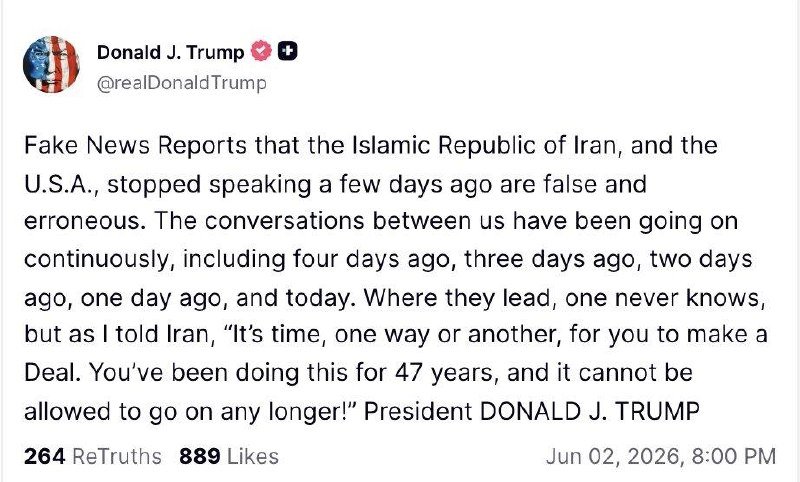
The language matters because it sets the floor for how the next cycle of diplomatic activity will be framed. If — as appears increasingly possible — talks between the United States and Iran resume in the coming months, both sides will be working from text that has already been publicly hardened. The IRGC's position, as stated on 2 June, is that any pressure is a prelude to either capitulation or conflict. That leaves little rhetorical room for a face-saving compromise — which may be the point. Making the diplomatic off-ramp look narrow serves a domestic political function for a leadership that has staked its legitimacy on resistance.
The statements, stripped of their rhetorical surface, say this: the Guard does not believe the other side will back down, and it has decided not to pretend otherwise. Whether that assessment is accurate is a separate question from whether it will shape the next chapter of this relationship. It will.
Wire provenance
This editorial synthesis draws on the following public wire/social posts:
- https://t.me/alalamarabic/892345
- https://t.me/alalamarabic/892342
- https://t.me/alalamarabic/892337
- https://t.me/alalamarabic/892336