One reported phone call, five relays, four versions of what it means
A Wall Street Journal report of a Trump and Netanyahu call on 31 October has been relayed across five Telegram channels, several adding verdicts of their own. The sourcing supports far less than those framings.
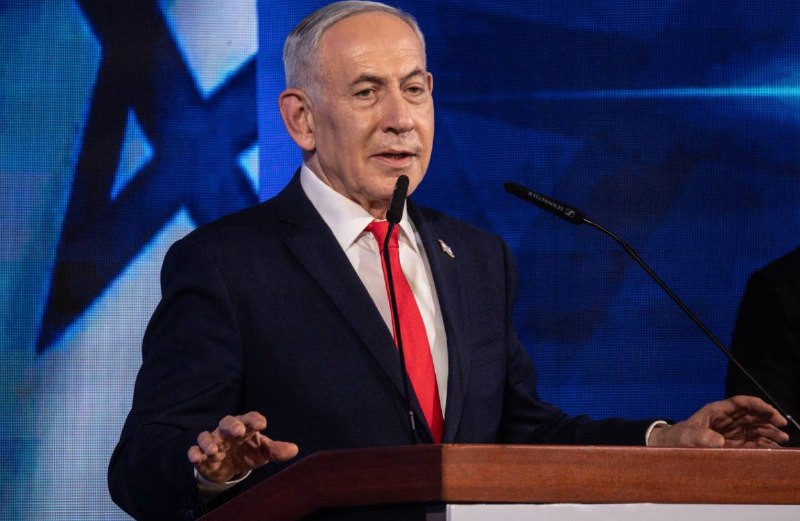
Between 22:53 UTC on 31 October and 02:10 UTC on 1 November, five Telegram channels relayed the same account. Donald Trump and Benjamin Netanyahu had spoken by telephone on Saturday, the posts said, while Washington was reportedly preparing to restart strikes against Iran. The underlying report is attributed to The Wall Street Journal, which the posts describe as citing sources. Each channel then added its own framing. One described the call as a telephone consultation about Iran. One, branded Tasnim, called the American president the head of “the terrorist state of America.” A war-monitoring relay said Trump had met senior military officials about options for resuming major operations before the call. Five posts, one report, and several readings of what it means.
The call is not really the story. Nothing in the thread disputes that it was reported, and the details are specific enough to take seriously. What the sourcing can support is a narrower question, and the answer is considerably less than the posts suggest. A phone call, a reported preparation and a reported meeting about options are three separate facts. Stacked together and retransmitted, they produce a war narrative that no single post in the cluster establishes. This publication reads the cluster as a case study in how a pre-decision report gets finished by the people who share it.
What the reporting actually carries
The anchor is one Wall Street Journal report, which the thread cites as saying the two leaders spoke on Saturday, 31 October, while the United States was reportedly readying a return to strikes on Iran. The war-monitoring relay adds that Trump met senior military officials to weigh options for resuming operations. Those are the load-bearing facts. Everything else in the cluster is commentary attached to them.
The available source items do not specify what the leaders discussed beyond Iran. The cited posts contain no official readout from either government, and this article has not independently established whether one exists. The relays agree on the day but differ on timing. One places the call on Saturday morning, another says it took place this morning, and two others say Saturday. The posts are copies of copies, so this article treats the call as reported rather than established, and it attributes to neither leader any words the thread does not contain.
Framings, one report
The two Tasnim-branded posts do not say the same thing. The tasnimplus post relays the Wall Street Journal account in plain terms, including the reported American preparations to resume war against Iran. The JahanTasnim post goes further, calling the American president the head of “the terrorist state of America.” That phrase is political vocabulary, and readers should weigh it as a position rather than as reporting. It presents American military planning as aggression already underway, a reading the sourcing does not establish.
The war-monitoring relay leans toward an operational reading. The osintlive post passes along a report attributed to WarMonitorRT and @IsraelWarRoom, and it presents the call as following Trump’s meeting with senior military officials. Neither reading is unreasonable to notice. A reported conversation between Washington and Jerusalem while Washington is reportedly preparing strikes on Iran is newsworthy. Monexus analysis: a government that regards Iran as a threat has an obvious reason to talk to Washington while force is under discussion, and the security concern behind such a call is real. Nothing in these posts suggests otherwise.
Where the framings part company is on what the call means. Monexus analysis: the most defensible reading of the sourcing is narrower than any of the verdicts. A reported conversation, a reported preparation and a reported meeting about options are consistent with a decision to strike, with a decision not to, and with deliberation that never resolves. The thread does not tell us which.
The anatomy of a pre-strike story, in our assessment
Coverage of contemplated force tends to follow a recognisable shape. It begins with a sourced account, moves through a call or a meeting, and attaches itself to the word “preparing” well before any order is visible. Each step is reportable on its own. The trouble is that each retransmission can add a degree of certainty the original did not carry. Our assessment is that the five posts show this drift in small form. The Wall Street Journal core, as the wfwitness post renders it, is that the United States reportedly prepares to restart strikes, while the osintlive post presents the call as a sequel to a military meeting.
Each post then hands its reader a version that fits an existing view of the conflict. The shared core, a single report attributed to the Wall Street Journal, gets thinner with every retransmission. The discipline that follows is symmetrical. A reader who doubts a Tasnim headline should doubt a headline that turns an unconfirmed plan into a completed decision, and should doubt it just as much when the headline comes from a channel that shares their politics.
What is at stake if the reporting holds
If the report is accurate and the planning matures into a renewed strike campaign, the costs will not stay inside the rooms where the decision was discussed. In our assessment, the people who pay for a strike are rarely the officials on the call. They are civilians in the cities that would be targeted, workers in nearby facilities, and populations in neighbouring states whose airspace, shipping and energy systems could be drawn in. The source items quantify none of this, and this publication will not supply figures they do not contain. What they do show is a window in which two governments are reportedly in contact about force, and a public reading the outcome in advance from channels with stakes of their own.
Those stakes cut in more than one direction. Tehran would have reason to treat a reported American plan as a deterrence signal, and it would read every relay accordingly. Israeli officials would have reason to take a reported threat to Iran seriously and to weigh such reports against intelligence the thread does not contain. Neither reason makes an unverified relay a sound basis for policy. The people with the most at risk from a miscalculation are the ones least likely to receive an accurate account of it from a Telegram feed.
The document worth waiting for is not another relay. It is an on-the-record statement from either capital saying what was discussed and what, if anything, was decided. The cited posts contain no such statement. When one arrives, the framings in these five posts will have to meet a fact they cannot supply themselves.
Wire provenance
This editorial synthesis draws on the following public wire/social posts:
- https://t.me/wfwitness/118093
- https://t.me/osintlive/587584
- https://t.me/alalamfa/357471
- https://t.me/tasnimplus/129875
- https://t.me/JahanTasnim/242622
Follow the event.
These dated source records provide context. They do not retrospectively verify this archive article.
Separate what the nuclear watchdog reported from what it could not determine after the June 2025 strikes.