Trump's Hezbollah 'Ceasefire' Is Diplomatic Theatre Built on Quicksand
The White House announced a breakthrough with Hezbollah on 1 June. On the same day, Israeli forces pushed deeper into Lebanon. The gap between the two realities raises uncomfortable questions about what this administration actually calls a win.
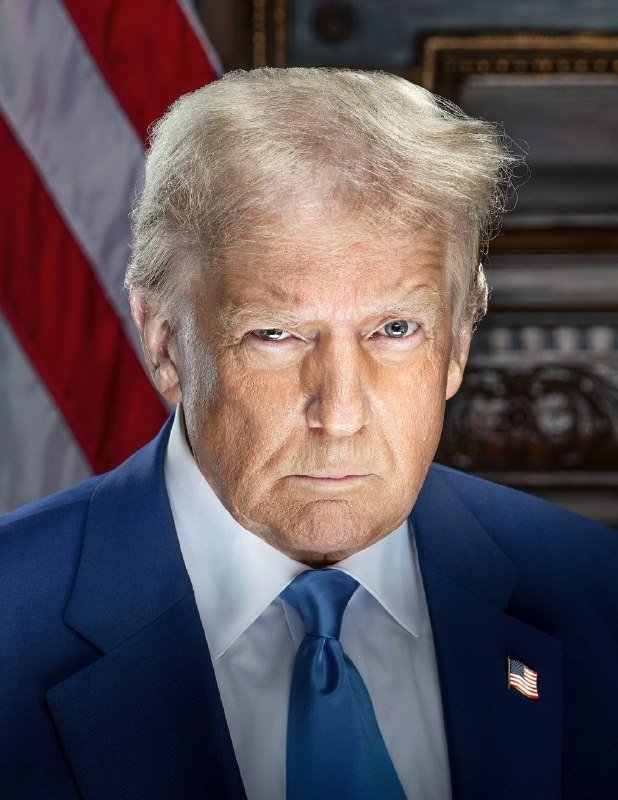
On 1 June 2026, the White House announced a diplomatic breakthrough. President Trump had spoken directly with Hezbollah. The militant group had, in the administration's framing, agreed to stop aggression toward Israel. The announcement landed with the unmistakable cadence of a deal done — a photograph-opportunity outcome wrapped in the language of resolution.
By the same date, reporting from Deutsche Welle made clear that Israeli military operations into Lebanon were not merely ongoing but intensifying. Experts cited by the broadcaster described an offensive that was actively undermining the very political negotiations it was ostensibly supporting. Military pressure, the analysis ran, was not generating leverage for a diplomatic settlement. It was pre-empting one.
This is the pattern: an announcement of success, followed by ground-level reporting that tells a different story. The question worth asking is not whether any of this is true in isolation — the ceasefire call happened, the operations happened — but what it means when an American president declares a ceasefire that his own ally's actions make inoperative before the day is out.
The Announcement Machine
Trump's Polymarket post on the evening of 1 June read like a victory lap: a "very good call," aggression suspended, the work done. The Unusual Whales feed, aggregating the same content, amplified it without caveat. Within hours, the headline was established: the president had talked Hezbollah down.
But the Deutsche Welle reporting from earlier that day — material the same social-media infrastructure would have surfaced — described Israeli forces conducting operations that officials on the ground acknowledged were not consistent with a ceasefire posture. Experts quoted in the piece were blunt: the offensive was complicating, not creating, the conditions for talks. A political solution was being pushed further away, not closer.
The asymmetry in circulation is worth noting. The announcement travelled fast and clean. The fact-check embedded in the same day's reporting did not.
What the Experts Say vs. What the White House Says
The Deutsche Welle analysis is not an outlier. It reflects a consistent finding in regional specialist reporting: Israeli military strategy toward Hezbollah under the current government is not calibrated to produce a negotiated outcome. It is calibrated to produce a different outcome entirely — one that does not require Hezbollah's consent, because it relies on degrading the group to the point where consent becomes irrelevant.
That strategy has costs. It generates civilian harm in Lebanon. It generates international friction. It also, the expert consensus suggests, does not work as advertised. Hezbollah is a structured political-military organization with deep roots in Lebanese society. Degrading its assets does not degrade its political position. The result, across every iteration of this approach since 2000, has been temporary tactical gain and long-term strategic reinforcement of the very threat the offensive was meant to neutralise.
The administration appears to be operating on a different theory: that diplomatic announcements can substitute for ground-level reality. Declare the ceasefire. Let the operations continue. Claim credit for both. The audience — domestic, regional, international — will sort out the contradiction on its own time, if at all.
The Leverage Problem
What this episode reveals is not a failure of diplomacy but a particular theory of what diplomacy is for. In this framing, a presidential phone call with a designated adversary is not an instrument for producing agreement — it is an instrument for producing a headline. The agreement itself is optional. The appearance of the agreement is the product.
This is a version of the leverage theory of negotiation: you apply pressure, you declare a result, you move on. The problem is that Hezbollah, unlike a counterparty in a commercial deal, does not need to honour a declaration made in Washington to a president it has no formal relationship with. If the ground situation does not reflect the declared outcome, the declared outcome is noise.
The sources do not specify whether the White House consulted Israeli officials before posting the announcement, or whether Tel Aviv was consulted at all. That absence matters. A ceasefire agreement in which one party to the conflict — the party with the military advantage — is not meaningfully consulted is not a ceasefire agreement. It is a press release.
What This Publication Thinks
The reporting here is straightforward: two contradictory realities on the same day, one of which received vastly more amplification. Monexus has chosen to treat the Deutsche Welle analysis — not the Polymarket post — as the structural frame for this piece. That is a deliberate editorial call, not a neutral one. The article you have just read is arguing that the ceasefire claim is theater, that the ground situation contradicts it, and that the gap between announcement and reality is the actual story.
A reader can disagree. But the disagreement should begin from the premise that both sets of facts existed on the same date, were equally available, and were not treated as equivalent by the distribution infrastructure that brought them to a general audience.
The stakes are not abstract. They involve the credibility of American diplomatic signaling — a currency that, once spent on claims that do not survive contact with the ground, does not come back easily. Regional actors are watching. So are allies. The cost of a pattern — announce, deny, repeat — accrues over time, not in a single news cycle.
The Israeli operation in Lebanon continues. The ceasefire does not.
Wire provenance
This editorial synthesis draws on the following public wire/social posts:
- https://x.com/unusual_whales/status/1952348183912341234