When Violence Finds Its Target
Two violent incidents in April 2026 — a shooting at Washington's elite Correspondents' Dinner and a van fire that killed four farm workers near Latina, Italy — received very different institutional responses. That asymmetry reveals something uncomfortable about whose lives command urgency and whose are processed as a policy problem.
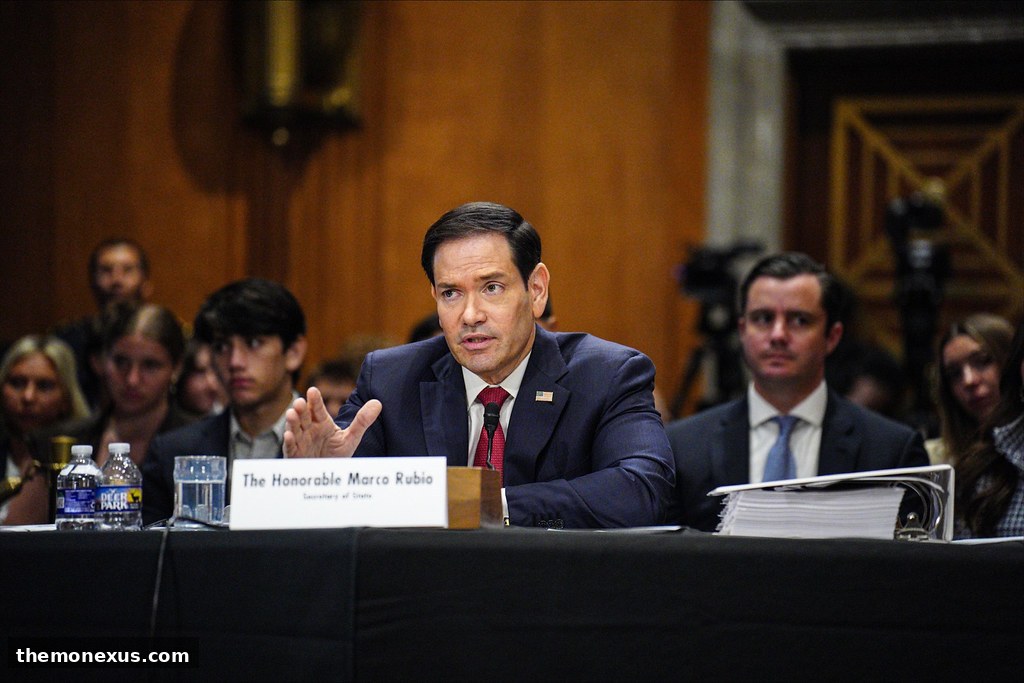
It was held in April. A shooter breached a security checkpoint and the annual gathering of journalists and officials was disrupted. Now it is being rescheduled. Near Latina, in the Italian countryside, four farm workers died inside a minivan when — according to Italian police — two people blocked the doors from outside and ignited an accelerant. Two suspects have been arrested. The dinner will go on. The fire, too, will be processed.
What this reveals is not that one tragedy matters more than the other. It is that the machinery of response operates on a sliding scale determined less by the severity of the violence than by the social position of its targets.
When a shooter entered the perimeter of a Washington hotel where press secretaries, cabinet members, and broadcasters had gathered, the response was immediate and resourced. Security services mobilized. The dinner — afixture of the capital's media-political calendar since 1921 — was interrupted mid-event and is now being rescheduled for later this year. The political class, the press corps, and the security apparatus treated this as an emergency requiring full institutional weight. They were right to do so. Violence against anyone is violence against anyone.
When four farm workers burned alive in a van in the Italian countryside, the response followed a different track. Italian authorities arrested two suspects and released CCTV images showing what the police described as a deliberate attack. The victims were, by multiple accounts, migrant workers — people from somewhere else, doing agricultural labor under conditions that Italian unions and advocacy groups have long documented as exploitative. The fire and the arrests drew condemnation and calls for justice. But the language surrounding it defaulted quickly to policy registers: labour trafficking, fire safety regulations, immigration enforcement. The framing treated the Latina deaths as a problem of bad actors and bad systems rather than a political violence requiring the same full-weight institutional response as the Washington shooting.
This is the asymmetry worth examining. The Correspondents' Dinner has a security apparatus, a press apparatus, a political apparatus — all designed to protect a specific community of people whose protection serves the functioning of power. Migrant farm workers have a different institutional apparatus: labour inspectors, immigration enforcement, policy frameworks designed not to protect but to manage their presence in the economy. When violence strikes the first group, the machinery activates with visible force. When it strikes the second, it is processed as a regulatory failure.
There is a reason the WHCD shooting dominated headlines for days and will generate security reviews, congressional briefings, and sustained media attention. The dinner is where the people who write the news and the people who make the news gather to perform mutual legitimacy. When that gathering is disrupted by a shooter, the response is designed to reaffirm that the machinery of power protects its own. With the Latina fire, the reaffirmation takes a different form — it is processed as an exceptional crime by bad actors, not as a structural failure of the systems that concentrated vulnerable people in dangerous labour conditions in the first place.
The question is not whether both incidents deserve serious investigation. They do. The question is whether the differential response reflects something built into how Western institutions process political violence — and whether we have the vocabulary to hold both truths simultaneously: that the Washington shooting was a genuine emergency, and that the deaths of four farm workers in a van fire were equally a failure of a system that had the capacity to protect them and chose not to.
The dinner will resume. The Latina suspects will face prosecution. The structural conditions that produced both incidents — the scapegoating, the exploitation, the inadequate protection of the most vulnerable — will remain. That is the uncomfortable measure of what political violence reveals about who counts, and who does not.
Wire provenance
This editorial synthesis draws on the following public wire/social posts:
- https://t.me/BBCWorldoffl/19254
- https://t.me/BBCWorldoffl/19251