A close call on Everest: how a missing Sherpa's funeral outran his rescue
A Nepali Sherpa guide missing for nearly a week on Mount Everest was found crawling toward base camp on 4 June 2026, in a near-miss that lays bare the thin line between presumed death and survival in the mountain's high-altitude zone.
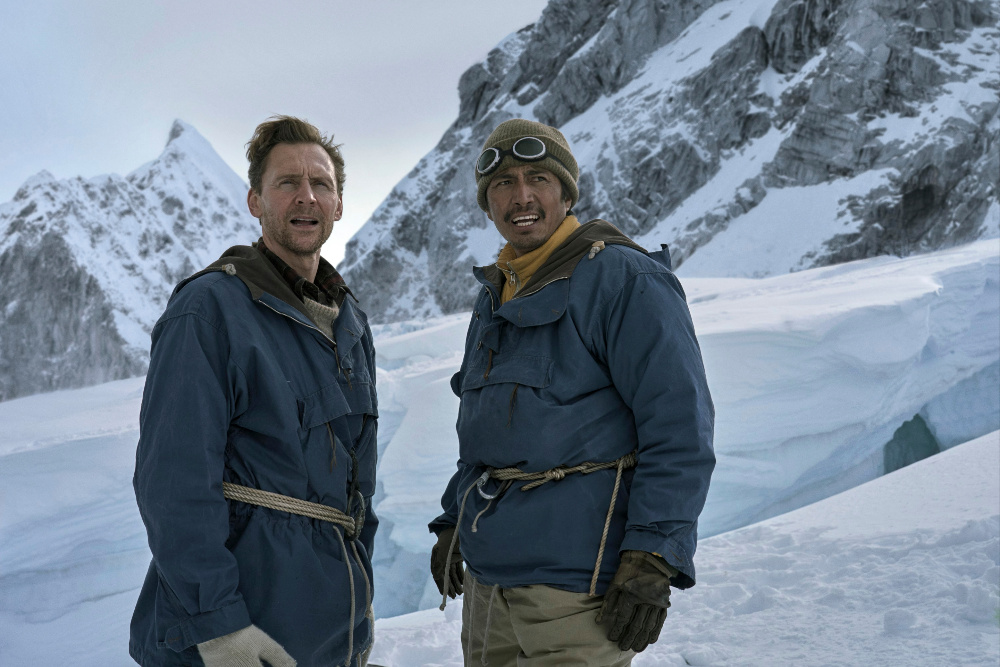
A Nepali Sherpa guide who had been the subject of memorial rites on Mount Everest was rescued on 4 June 2026 after being found crawling toward base camp almost a week after he was last seen — a case that lays bare the thin line between presumed death and survival in the mountain's deadliest terrain.
The guide, Hillary Dawa Sherpa, was located by a climbing support team and is now receiving medical care, according to a wire report circulated on 4 June. The news of his rescue followed days during which those close to him had reportedly begun funeral arrangements, treating the disappearance as a fatal outcome.
The episode is unusual not because someone has survived against the odds on Everest — the mountain has a long, well-documented history of improbable recoveries — but because the rituals of mourning had already begun. It is a near-miss in a place where near-misses are usually the prelude to obituaries rather than rescues, and it raises familiar questions about the speed at which an absence turns, on the world's highest peak, into a verdict.
Six days above base camp
According to the wire report, Hillary Dawa Sherpa was last seen nearly a week before his rescue, on a portion of the standard Everest route that sits well above base camp and inside what mountaineers call the "death zone" — the altitude band, generally above 8,000 metres, where the human body is no longer capable of sustaining itself indefinitely. He was found making his own way back toward base camp, weak but moving, and was evacuated by a climbing support team.
The wire summary does not specify the exact altitude at which he was located, nor the route section on which he disappeared. The sources do not give a precise day for when he was last seen, beyond the rough "almost a week" framing.
What is clear is the structure of the episode. A worker on the mountain disappears. Presumption of death sets in. Memorial rites begin. The man believed lost is, instead, recovered alive. The reversal is stark enough that the report circulated as international news on the same day his survival was confirmed — a fact that says something about the rarity of such outcomes, and about the appetite of climbing-world media for the narrative shape of "the one who came back."
Why the verdict of 'gone' is so common
The structural context matters. Everest is, by some distance, the most heavily trafficked of the 8,000-metre peaks, and its commercial guiding industry has expanded significantly since the 1990s. The death toll on the mountain has accumulated steadily; recovery of bodies in the upper sections is often impractical, and the mountaineering community has, over decades, developed a working consensus that a Sherpa or climber missing in the high zone for an extended period is, in operational terms, presumed dead.
That presumption is not casual. It is grounded in the physics and physiology of altitude. Above roughly 8,000 metres, sustained exposure accelerates the deterioration of muscles, the cardiovascular system and the brain; frostbite, exhaustion and oxygen deprivation can disable a climber within hours; storms can pin people down for days. The mountain's history — including the 1996 disaster that killed eight climbers in a single storm, and the gradual accumulation of bodies visible on well-known routes — has hardened the working assumption that a missing person in the upper zone is, absent rapid contact, a fatality.
Against that backdrop, a week-long disappearance followed by a self-rescue is, in statistical terms, an outlier. The mountain's rules are not absolute, and there are documented cases of climbers surviving multiple days without supplemental oxygen above 8,000 metres. But the assumptions that govern Everest's working culture are built on long experience, and they generally hold.
The Sherpa workforce and the mountain's appetite for risk
The episode also draws attention, as Everest stories routinely do, to the labour structure of the mountain. Sherpas do the bulk of the route-preparation work — fixing ropes, carrying loads, stocking camps, and guiding clients through the highest-risk sections. The profession carries a disproportionate share of the mountain's mortality: in aggregate, more Sherpas have died on Everest than members of any other occupational group on the mountain, and the industry's reliance on their labour is the precondition for the broader commercial climbing economy.
The specifics of Hillary Dawa Sherpa's role and employer are not detailed in the wire report. The framing of the rescue as a "climbing support team" operation is consistent with the standard structure of high-altitude labour on the mountain: Sherpas are rescued by Sherpas, often the same teams they work with. That pattern of mutual dependence is part of why the case has circulated internationally as a piece of human news rather than as a pure operational incident — and part of why his colleagues reportedly began the rituals associated with a fatal outcome before his survival was confirmed.
What the climbing world still does not know
Several pieces of the story are not in the public record. The wire report does not name the expedition Hillary Dawa Sherpa was working with, nor the specific route on which he disappeared. It does not specify how he survived, what he was carrying, whether he sheltered in a crevasse, an ice cave, or simply lay low during a storm. It does not record his condition at the time of rescue beyond the fact that he was moving under his own power. The medical prognosis is not in the wire summary, and the account does not name any family members, climbing partners, or expedition leaders who might fill in the operational picture.
For now, the public record is the shape of the recovery, not its full mechanics. That is, in a sense, the most Everest-appropriate ending available: a story that ends with someone still moving, and with the details of how he kept moving left for the climbing community and the medical staff treating him to fill in.
Monexus framed this as a survival-and-labour story grounded in the structural realities of commercial Everest climbing, rather than as a sensational "miracle" recovery. The wire summary on which the piece is based is thin on operational detail; the article flags what is and is not in the public record.
Wire provenance
This editorial synthesis draws on the following public wire/social posts:
- https://en.wikipedia.org/wiki/Mount_Everest
- https://en.wikipedia.org/wiki/Sherpa_people
- https://en.wikipedia.org/wiki/1996_Mount_Everest_disaster