Israeli strikes on Tyre and a rising casualty count: the Lebanon ceasefire enters its stress test
Israeli strikes on Tyre and a rare public Israeli casualty disclosure land on the same day as political rejection of the ceasefire framework — a brittle architecture under simultaneous pressure from the air, the ground, and the Israeli cabinet.
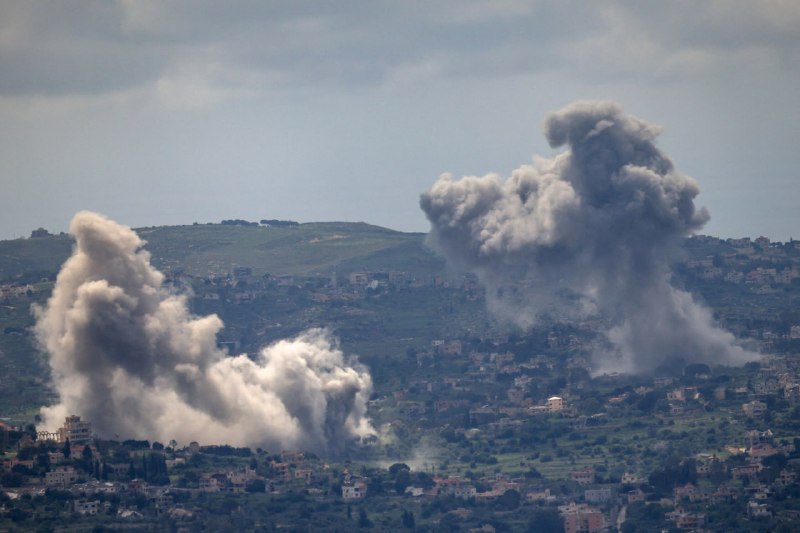
Israeli warplanes struck residential areas in the southern Lebanese port city of Tyre on 4 June 2026, according to Iranian state-affiliated outlets Tasnim News and Jahan Tasnim, while the Israeli military publicly disclosed a sharp rise in casualties from clashes with Hezbollah fighters. The twin developments landed on the same day that Israeli political leaders roundly criticised the ceasefire framework, even as the Lebanese government publicly affirmed its commitment to the deal.
What we are watching is a ceasefire designed to be tested, not a ceasefire designed to settle. A diplomatic architecture that survives only through the simultaneous goodwill of three governments — Israel, Lebanon, and the United States — is by construction fragile. The information now circulating is consistent with that fragility being actively exercised. Whether the arrangement holds, fragments, or is converted into a rolling pretext for the next round depends on choices being made, in real time, by actors who have shown no sign of converging on a single reading of the document they all signed.
Strikes on Tyre and an unusual Israeli admission
On 4 June 2026, Iranian state-affiliated news channels reported sustained Israeli bombardment of residential neighbourhoods in Tyre, in the South Governorate of Lebanon. The city of Tyre, a UNESCO World Heritage site on the Mediterranean coast, has been intermittently struck throughout the long confrontation that began with the Hamas attack of 7 October 2023, but the operation described on 4 June — sustained strikes on the residential fabric of a major southern city — is the kind of action that, if confirmed at the scale reported, would represent a material breach of the ceasefire.
The same day, the Israeli military announced a sharp increase in casualties from ongoing engagements with Hezbollah, an unusual disclosure that Israeli state media framed as evidence of the resilience of Israeli ground forces. Iranian state media Tasnim News English reported the Israeli announcement, characterising the disclosure as having been made "in the shadow of severe news censorship" — language that, by contrast, presents Israeli casualty reporting as a window into a normally suppressed total. The cross-channel circulation of a single Israeli admission is itself a small data point: information that the IDF preferred to keep quiet has now been amplified by actors with an editorial interest in presenting it as evidence of Israeli vulnerability.
The combination is unusual. Israel rarely discloses casualty figures in real time during active operations; Iran-aligned outlets typically do. The simultaneous occurrence of a domestic Israeli casualty disclosure and an externally amplified re-reporting of that disclosure is, in the language of information warfare, a coordinated event.
The political fracture over the ceasefire
In parallel with the strikes and the casualty disclosure, the Israeli political class publicly rejected the terms of the ceasefire. The Palestine Chronicle reported on 4 June 2026 that "Israeli leaders criticized the Lebanon ceasefire as Israeli attacks continued, while Beirut advanced implementation and troop deployments." The framing is striking: it depicts a situation in which the Lebanese government is working to honour the deal, while Israeli politicians and military operators are acting in contradiction to it.
This is the structural condition of a ceasefire under stress. It is held in place by external pressure — chiefly Washington — and undermined by the domestic political incentives of the Israeli right, which views the agreement as a strategic concession to Hezbollah. The asymmetry of compliance is the asymmetry of leverage: the actor with more external backing has more room to test the limits of the deal in practice without paying an immediate cost.
For Beirut, the calculation is different. The Lebanese government has signalled that the deployment of Lebanese Armed Forces into the south — the central concession it made to secure the ceasefire — is proceeding. That is a costly political posture: it is being read inside Lebanon as collaboration with a foreign occupier by the country's Shi'a political class, and it requires the government to absorb both Israeli airstrikes and the absence of effective Hezbollah suppression in real time. A government implementing a deal while being bombed by one of its signatories is, definitionally, a government in an asymmetric information position.
Reading the Iranian and pro-Palestinian framing
Reporting from Tasnim, Jahan Tasnim, and Palestine Chronicle should be read as counter-claim material with explicit sourcing caveats, not as a stand-alone factual basis. Tasnim News and Jahan Tasnim are Iranian state-affiliated outlets; Palestine Chronicle is a Beirut-based online publication with documented editorial sympathies for the Palestinian national movement. Their descriptions of "Zionist regime aggressors" and "invading Israeli army fighters" are framing choices — language that aligns with official Iranian state discourse — not evidence about what munitions struck what building.
Stripped of the framing, however, the underlying claims — strikes on Tyre, rising Israeli casualties, Israeli political rejection of the ceasefire, Lebanese compliance — are corroborated by Israeli sources (the IDF's own casualty disclosure, re-reported through Iranian channels) and consistent with the broader trajectory of the ceasefire framework. The frame is loaded, but the payload is not invented. The right reading of this material is therefore neither to dismiss it as Iranian propaganda nor to treat it as wire-grade reporting, but to read it as a motivated but factually anchored account that carries intelligence about both what happened on the ground and what Tehran wants the world to understand about what happened on the ground.
The structural point is that the most detailed real-time reporting on Israeli operations in south Lebanon is now circulating through channels with a known editorial interest in framing Israel as aggressor. That is, in itself, an asymmetry that distorts the global information environment. Western wire coverage of the same events, when it surfaces, is filtered through the editorial conventions of outlets that frame Israeli security operations as responses to threat. The reader of 4 June 2026 is being asked to triangulate between these two framings, with no neutral anchor readily available.
Stakes
If the ceasefire holds in some form, the cost is continuous friction: episodic Israeli strikes on Lebanese civilian infrastructure, periodic Hezbollah retaliation, and a Lebanese government that implements the deal while its sovereignty is openly contested. The Tyre strikes, if confirmed at the scale reported, would fall into this category — a slow-motion test of how much violence the deal's text can absorb before it stops being a deal.
If the ceasefire collapses, the cost is a return to full-scale confrontation. That is a war that, by the IDF's own admission, has produced a non-trivial Israeli casualty toll and that has, on the Lebanese side, destroyed residential neighbourhoods in Tyre. The ceasefire was negotiated precisely to avoid a return to that exchange. Its erosion would imply that the diplomatic cost of the original deal — to the Israeli government, to Hezbollah, and to the United States — is now judged by at least one of the parties to be lower than the cost of continuing to honour it.
Either outcome is being actively shaped in real time. What is not in doubt is that the diplomatic architecture, as currently constructed, is not self-enforcing. It depends on choices that are being made, hour by hour, by actors who have shown no sign of converging on a shared interpretation of what they signed.
Desk note
This article drew primarily on Iranian and pro-Palestinian state-adjacent sources for ground-level reporting. Monexus has read those claims against the Israeli military's own casualty disclosure — itself filtered through Iranian state media — and against the absence of any public Israeli denial of strikes on Tyre. The frame is contested; the underlying facts are not yet fully corroborated by independent wire reporting, and that uncertainty is reflected in the language above. Where the sources disagree, this publication has said so.
Wire provenance
This editorial synthesis draws on the following public wire/social posts:
- https://t.me/JahanTasnim
- https://t.me/tasnimnews_en
- https://t.me/PalestineChronicle
- https://en.wikipedia.org/wiki/Tyre,_Lebanon
- https://en.wikipedia.org/wiki/Hezbollah
Follow the event.
These dated source records provide context. They do not retrospectively verify this archive article.
Separate what the nuclear watchdog reported from what it could not determine after the June 2025 strikes.