Trump floats Hormuz-only exit as Iran war enters a quiet diplomatic phase
The Wall Street Journal reports the president would accept a full Hormuz reopening without a nuclear deal; Tehran's security official says nothing reopens until US forces withdraw, reparations are paid, and frozen Iranian assets are released.
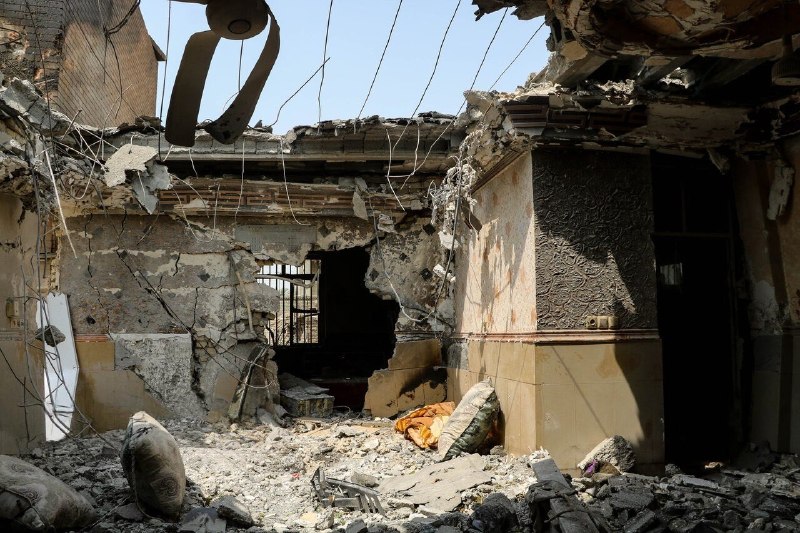
On 9 August 2026 at 23:30 UTC, the Telegram channel OSINTLive published a one-line assessment of a war the source did not name: "Trump is backing off." In the same post, OSINTLive relayed additional quotations it attributed to "Republicans against Trumptweet," a Republican anti-Trump account, including the lines "low-keying it," "we are only semi-negotiating with them," and a naval-blockade remark paired with a chess-game comparison. The provenance matters: in the thread evidence available, those quotations reach us through an aggregator that credits a partisan account, not through a primary on-record transcript.
The Wall Street Journal, relayed on X by Unusual Whales on 9 August 2026 at 15:45 UTC, reported that Donald Trump has privately told senior aides he could "walk away" from the Iran war without a nuclear deal, provided Iran fully reopens the Strait of Hormuz. Reuters followed seven hours later, citing an Axios interview in which Trump described the US posture as "low-keying it" and stressed economic pain. Iran's response, delivered through its top security official and carried on X by Unusual Whales on 8 August at 21:24 UTC, was categorical: the Strait stays closed until the US withdraws its military presence around Iran, pays war reparations, and releases frozen Iranian assets.
Read together, the dispatches describe a negotiation whose two sides are still describing different conflicts.
A deal without a nuclear file
The WSJ report, as relayed by Unusual Whales, sets the ceiling of the US opening position at a Hormuz reopening without a nuclear deal. The thread evidence does not specify what additional scope the WSJ account attaches to that concession, for instance whether enrichment curbs, IAEA concessions, or missile-file constraints appear in the body of the reporting or only in the headline framing, and this article does not independently establish the full content of the WSJ piece beyond what the relay excerpt contains.
Reuters's wording, "low-keying it", positions the US as deliberately understating its pressure campaign, which lets the administration claim credit for any economic damage Iran suffers while denying responsibility for the military dimensions. Reuters identifies the Axios interview as the venue for the line. The OSINTLive post, by contrast, attributes the same phrasing and additional quotations to "Republicans against Trumptweet"; the two sourcing chains are not reconciled in the available record, and a reader should treat the exact wording of the "low-keying it" line as having dual provenance.
Tehran's counter-frame
Iran's top security official, named in the aggregator dispatch only by title, did not confine himself to the maritime question. The conditions circulated on 8 August at 21:24 UTC listed three demands: withdrawal of US military forces from around Iran, payment of war reparations, and release of frozen Iranian assets. The choice to bundle those three, rather than treat the Strait as a separable commercial issue, signals that Tehran reads the war as a sovereignty question first, a financial-question second, and an oil-choke-point question third.
The structural asymmetry the available record leaves unresolved is sharp. The US side, per the WSJ and Reuters accounts, is willing to settle for a maritime concession. The Iranian side, per the official statement, will trade nothing until the military footprint is reversed, reparations flow, and frozen assets are released. Neither side is publicly acknowledging that those two positions might meet in the middle on a sequencing arrangement, Hormuz reopens first, withdrawal and asset-release follow on a verifiable timetable, which is the only configuration in which a deal of this shape would actually work.
What the framing is doing
Coverage routinely defers to the language of official spokespeople. In this case, both governments have reason to keep the public transcript aggressive: the Iranian side wants its three demands on the record to lock in domestic legitimacy, and the White House wants its "we could walk away" line on the record to keep oil markets from pricing in a Hormuz reopening that may never arrive. The OSINTLive channel's reading, wasted weapons, failed deals, spectacular camera footage, is a third voice in the room, and it belongs to a community that has been sceptical of US-administration claims of leverage since the spring. The "Republicans against Trumptweet" account that OSINTLive credits for the additional Trump quotations is, by self-description, an intra-Republican dissent channel; its presence in the sourcing chain is a reminder that what reads as a presidential line in an aggregator post may have travelled through a partisan filter before it reached the feed.
Monexus assessment: the most plausible read of the WSJ report is not that Trump has given up on a nuclear deal, but that he is preparing the political ground to settle for one. A walk-away framed as a Hormuz victory lets the administration claim a concrete deliverable without having to certify Iran's compliance with anything on enrichment. The risk Tehran is pricing in, fairly or not, is that any maritime concession will be treated in Washington as the final concession, with withdrawal, reparations, and asset-release left on the table as unfilled demands.
What to watch before the next dispatch
Three dates matter. First, any confirmation that the Axios interview has produced an on-record Iranian response through a state-aligned channel, the aggregator dispatch on 8 August pre-dates Trump's comments, so the order of public messaging has so far been Iranian demand, then US softening. Second, oil-market reaction when Asian trade opens on 11 August 2026: a Hormuz-only deal would likely compress the risk premium currently embedded in Brent; an Iranian rejection of the framing would widen it. Third, any IAEA or Gulf-state statement on the Strait's legal status during a declared ceasefire, since Iran's claim that the waterway stays closed until the US withdraws rests on an interpretation of sovereignty that several Gulf monarchies will not endorse.
The available source items do not specify whether any direct US-Iran channel is open, or whether the WSJ-cited "walk away" position has been transmitted through a back channel. They do not specify the size of any reparations figure under discussion, the volume of frozen assets Tehran is asking to be released, or whether Iran's demand for US withdrawal applies to carrier groups, forward-deployed air wings, or the broader CENTCOM posture. They also do not resolve the dual provenance of Trump's quotations: Reuters's Axios-cited line and OSINTLive's "Republicans against Trumptweet" attribution reach the same words through different routes. Those gaps are worth flagging rather than papering over: a story about a war ending is also a story about what the ending does not yet contain.
Desk note: Monexus is framing this as a sequencing negotiation rather than a collapse or a breakthrough. Western wires carry the US opening position in full; the Iranian counter-frame is relayed here through aggregator and X feeds that trace back to Iranian state-aligned channels. Where the two diverge on sequencing, both are presented as live positions, not as one side's negotiating posture and the other's reality.
Wire provenance
This editorial synthesis draws on the following public wire/social posts:
- https://x.com/unusual_whales/status/2086479000629543373
- http://reut.rs/4wRneM5
- https://x.com/Reuters/status/2086566986062897162
- https://x.com/unusual_whales/status/2086201818606915749
- https://t.me/osintlive/563099
Follow the event.
These dated source records provide context. They do not retrospectively verify this archive article.
Separate what the nuclear watchdog reported from what it could not determine after the June 2025 strikes.