Trump's Iran Tape: Reading the Offhand Register
A string of remarks about Hormuz, Hezbollah, Kuwait and a 'weekend' deal adds up to a coherent posture: an administration trying to keep every door open at once.
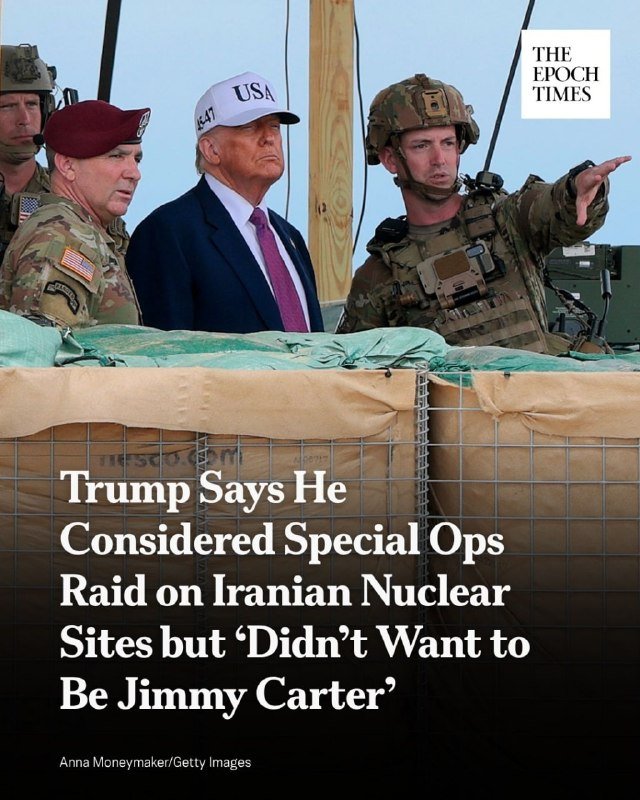
In a torrent of off-the-cuff remarks captured by Open Source Intel on 4 June 2026, Donald Trump offered a masterclass in the diplomatic grammar of the in-between. Israel, he said, "couldn't have done it without us." Iran "did something that wasn't a big deal." The Strait of Hormuz "would open quickly" once a memorandum is signed. A deal with Tehran, if it lands, "could be done over the weekend." And, almost as an afterthought: he "would rather not wipe Iran out."
The remarks — captured by Open Source Intel across a string of posts timestamped between 02:11 and 02:12 UTC on 4 June — are not a transcript of policy. They are a transcript of posture. Read in sequence, they sketch the shape of an administration that wants to keep every door open at once: war, talks, escalation, de-escalation, weekend diplomacy, three more weeks of bombing.
Strip the cadence and the message is a coherent one. Trump is signalling, in his own garbled register, that the Iran file is moving from military pressure to a transactional close — but on terms that require Tehran to read the ambiguity as opportunity, not surrender. The "would rather not wipe Iran out" line is the operative sentence. It is the most consequential single phrase an American president has said about the Islamic Republic in this episode, and it was delivered the way a real-estate pitch is delivered — fast, offhand, deniable.
The theater of the offhand
Trump's method is to compress strategic choices into throwaway sentences. The Hormuz line — that the strait "would open quickly" once a memorandum is signed — is the most telling. The Strait of Hormuz is the chokepoint through which roughly a fifth of the world's seaborne oil moves; its closure is the canonical Iranian lever against Gulf importers and the broader global economy. Anchoring a deal to a quiet reopening of Hormuz, rather than a public ceremony, lets both sides claim the result they need: Washington gets a flow of oil and a dent in Iranian leverage; Tehran gets to argue that it preserved its deterrent and was never "strangled" into concessions. The MOU framing — memorandum, not treaty, not even agreement — is the linguistic equivalent of the offhand register. It is structured to mean everything and bind nothing.
What "reciprocating" buys you
The remark on Iran-Kuwait attacks — that Iran "was reciprocating" — is the most politically dangerous of the cluster, and the one that will get the least scrutiny. The framing does two things at once. It normalises Iranian retaliation as a two-way street rather than an act of war. And it quietly binds the United States to a posture in which Iranian actions on Arab Gulf soil are intelligible responses to a sequence that began in Washington and Tel Aviv. That is not the framing Tehran's adversaries in Kuwait and the wider Gulf want. It is, however, the framing an administration running out of appetite for escalation needs. In the journalistic register of the war, "reciprocating" is the word that turns an attack into a counter-move. The structural effect is to compress the narrative: a Gulf state gets hit, but the story is about the exchange between the United States and Iran.
Hezbollah talks, Lebanon "separate"
The most surreal of the remarks was Trump's claim that the United States "actually spoke with Hezbollah for the first time" and "didn't know they spoke" — followed by the stipulation that "the Iran and Lebanon wars are separate." The contradiction is the message. The United States is talking to a movement that has, in its Iranian-aligned wing, spent four decades being treated as the canonical proxy of the regime Trump is also trying to close a deal with. The official line — that Lebanon and Iran are separate files — preserves the option of striking Hezbollah's Lebanese infrastructure while negotiating with Tehran. Practically, the two fronts are fused by supply lines, training pipelines, and the political alignment of a movement that still answers, in significant respects, to Tehran. The "separate" framing is therefore not a description; it is a diplomatic claim. It says: we reserve the right to treat them as separate. Whether that holds on the ground is a question the next two weeks will answer.
The weekend that might not be
A deal "over the weekend" is, in serious diplomacy, an absurdly compressed timeline. The phrase reveals less about Tehran's willingness to move than about Washington's need for a deliverable. Every previous Trump-era opening with a hostile state — the 2018 Singapore text, the Abraham Accords, even the phase-one China understanding — required months of formal negotiation behind a public posture of momentum. The Iran file is being run on the opposite timeline: public posture of momentum, with the formal negotiation still skeletal. The MOU language, the "two to three weeks" contingency, the "anything can happen" disclaimer — these are the things a negotiator says when he is trying to convince counterparties that the window is closing. The closing line — that Trump "would rather not wipe Iran out" — is the same sentence, translated into the only register the man has ever used to discuss the use of American power. It is not a threat. It is a tell.
What is at stake in the next ten days is not a Middle East settlement. It is whether the United States can extract a tactical accommodation from Iran — on Hormuz, on the nuclear file, on the restraint of Hezbollah — without paying a price in regional credibility that the Gulf states, the Israelis, and the domestic American right will all notice. If the deal lands, Trump can claim to have ended a war without losing it. If it doesn't, the "two to three weeks" line is the runway for escalation he has been keeping in his back pocket. The Iranian counter-reading of the same remarks — that an American president publicly conceding he "would rather not wipe Iran out" is an admission that the war aims were never what the hawks said they were — is the structural fact the deal has to absorb. A memorandum of understanding is the only document that can carry that much weight without breaking.
The weekend will pass. The MOU will, or will not, be signed. The offhand register will be back on Monday. That is the point.
Wire provenance
This editorial synthesis draws on the following public wire/social posts:
- https://twitter.com/Osint613/status/2062273872162910624/photo/1
- https://twitter.com/Osint613/status/2062269022712766943/photo/1
- https://en.wikipedia.org/wiki/Strait_of_Hormuz
- https://en.wikipedia.org/wiki/Hezbollah