Trump pairs $700m wartime coal push with Iran endgame as Defense Production Act questions mount
The administration is using Iran-war authorities to underwrite a US coal base that markets had been writing off — while telling Tehran the uranium is no longer the prize.
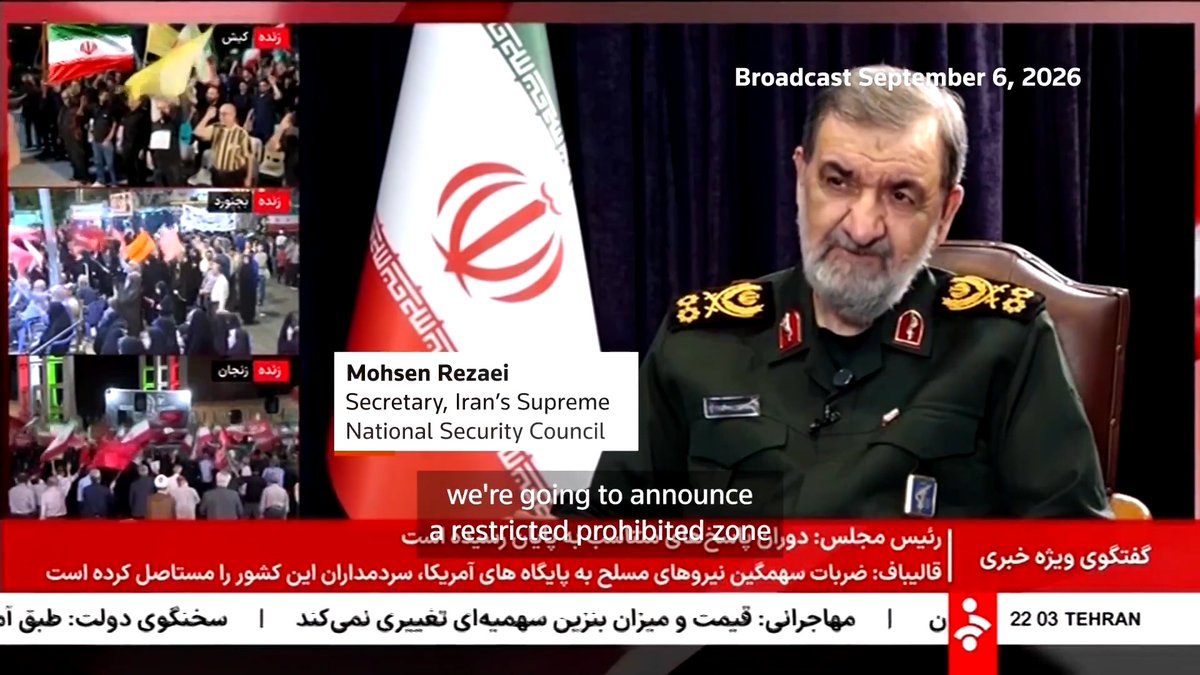
The Trump administration announced on 4 June 2026 a $700 million federal investment in coal production, invoking wartime authorities to direct capital into a fuel source that private markets have been abandoning for the better part of a decade. The move, disclosed by the president in remarks to reporters and reported by BBC News, comes against the backdrop of a war with Iran that the same administration now describes as being in its final negotiating stage.
The investment is the clearest signal yet that the White House intends to use the conflict as cover for an industrial-policy turn that domestic climate and market pressures had foreclosed. The wartime authorities being invoked — most plausibly the Defense Production Act, last used at scale during the COVID-19 supply shock — would let the federal government underwrite coal production and processing capacity outside the normal appropriations process. The justification on offer: the Iran war is driving up energy costs for American households.
But the announcement lands at a moment of profound strategic ambiguity. President Trump told reporters, also on 4 June, that the US was in the "final negotiations" to end the war with Iran, and that he would be "honored" to meet Iran's Supreme Leader. Separately, on 5 June, Trump said the US did not in fact need a deal with Iran to obtain its enriched uranium — a position that, if it holds, would remove one of the most cited material incentives for a war whose end is now being advertised.
A reader trying to square these three statements ends up with a picture of an administration that is, simultaneously, escalating industrial mobilisation at home and negotiating the war down abroad. That is not a contradiction. It is a doctrine: war as both coercion abroad and industrial cover at home.
The wartime coal play
The $700 million figure is small relative to the Inflation Reduction Act–era clean-energy programmes it implicitly supplants, but its political significance is much larger. Coal generation in the United States has fallen for sixteen consecutive years; the remaining fleet is older, less efficient, and increasingly expensive to run, even before the recent energy-price spike attributed to the Iran war. Federal underwriting changes that arithmetic for a defined set of producers, even if it does not change the global energy trajectory.
The legal vehicle matters. The Defense Production Act, originally passed in 1950 during the Korean War, grants the President broad authority to direct private industry in support of national defence. Recent invocations include pandemic-era medical supply chains and, in the early months of 2025, preliminary industrial-base actions. A coal-investment designation under the Act would treat fuel supply as a defence-production priority, an interpretation that fits the administration's broader framing of the Iran conflict as a sustained national emergency.
The intended audience is two-fold. Nationally, the move supplies a rhetorical answer to voters facing higher electricity bills and to coal-state legislators who have spent three years watching the federal policy posture tilt away from the fuel. Internationally, it sends a signal — to Tehran, to Gulf energy partners, to Asian importers — that the US is willing to absorb the political cost of expanding its coal footprint in the short term. The expansion is not, on the administration's own argument, a long-run plan. It is a war measure.
The diplomatic ambiguity
If the wartime coal play is one half of the doctrine, the Iran negotiation is the other. Trump's 4 June statement that the US was in "final negotiations" to end the war, combined with his stated willingness to meet Iran's Supreme Leader, suggests a settlement track is genuinely active. The Supreme Leader meeting, in particular, would be a striking diplomatic event — the first such encounter since the 1979 revolution, and one that would have to navigate Iranian constraints on a sitting US president.
Yet the same president, in remarks the following day, said the US did not need a deal to obtain Iran's enriched uranium. The Reuters report carrying that quote frames the position as a deliberate negotiating tactic: the administration wants Tehran to believe it has alternatives. Whether those alternatives are real — unilateral action, third-party arrangements, or some form of coercion short of resumed strikes — is not specified in the public reporting. Polymarket's same-day summary of the "honored" remark treated the Supreme Leader overture as a separate but parallel track.
For now, the two postures coexist. They are easier to reconcile if one assumes the war's end is being negotiated on terms that leave the uranium question unresolved. They are harder to reconcile if one assumes the uranium question is the war's central purpose. Public reporting does not yet resolve which read is operative.
The structural frame
The pattern on display is not novel. American administrations have repeatedly used wartime or emergency authorities to push domestic industrial agendas that would not survive normal political scrutiny. The Korean War accelerated steel and aluminium investment; the post-9/11 defence procurement boom entrenched a set of contractors; the COVID-19 response was the largest single industrial intervention since the 1950s. Each time, the same logic applied: emergency authorities compress timelines, sidestep ordinary review, and create facts on the ground that the political system then ratifies.
The current case adds a new variable: the war and the industrial policy are happening against a backdrop of accelerating global energy transition. Coal investment, in particular, is a stranded-asset play even on the administration's own horizon. The economic case for federal coal money rests entirely on the assumption that wartime price pressures persist long enough to justify the underwriting — and that those pressures are politically sustainable long after the war ends.
That is not a stable equilibrium. The administration is, in effect, betting that the political benefits of the wartime energy narrative will outlast the war itself. The historical record is mixed: Korean War–era industrial interventions were largely absorbed into the post-war economy; pandemic-era supply-chain investments were partially unwound by 2024. The question is whether coal money flows into a permanent political constituency, or whether it gets unwound in a post-conflict budget reconciliation that no one is currently planning for.
The international frame is the parallel concern. The 2015 Joint Comprehensive Plan of Action took roughly two years of multilateral negotiation to assemble and was a delicate balance of uranium-enrichment limits, sanctions relief, and verification arrangements. A US-Iran deal that emerges from the present conflict, if one emerges, will be evaluated against that template — and against the question of whether Washington's declared indifference to a deal on enriched uranium is a posture or a final position.
What remains uncertain
Three things remain genuinely unsettled in the public reporting.
First, the legal basis. The White House has not, in the disclosed remarks, named the specific statute being invoked. "Wartime powers" is shorthand; the operative authority may be the Defense Production Act, the National Emergencies Act, or a combination. The choice matters because each carries different oversight requirements and sunset provisions. Congress will, in due course, get a chance to ask.
Second, the recipient list. The $700 million is a headline number, but the announcement does not specify which companies, mines, or regions will receive the capital. Coal producers have been consolidating for years; the federal money is likely to flow to a small number of well-capitalised operators, with downstream effects on labour markets in Wyoming, West Virginia, and the Illinois Basin.
Third, the trajectory of the war itself. The "final negotiations" framing, combined with the Supreme Leader meeting offer, suggests a settlement may be closer than at any point since the conflict began. The "no deal needed" framing on uranium suggests the opposite. Public reporting does not yet disclose whether the two tracks are running in parallel or in sequence, and the same president has been explicit that any killing of US troops would, in his view, be a reason to restart the conflict.
For now, what the sources confirm is the simultaneity: a wartime coal mobilisation at home, a final-stage negotiation claim abroad, and a hard line on the war's ostensible prize. The pattern is consistent with an administration that has decided wartime is useful — both abroad and at home.
Desk note: Monexus reads the $700m coal announcement as a policy event first and a wartime measure second. Wire coverage has largely framed it as a response to energy-price pressure; this publication adds the industrial-policy context, the legal-vehicle question, and the diplomatic-ambiguity angle.
Wire provenance
This editorial synthesis draws on the following public wire/social posts:
- http://reut.rs/4eoQRxl
- https://en.wikipedia.org/wiki/Defense_Production_Act
- https://en.wikipedia.org/wiki/Iran%E2%80%93United_States_relations
- https://en.wikipedia.org/wiki/Enriched_uranium
- https://en.wikipedia.org/wiki/Coal_in_the_United_States
- https://en.wikipedia.org/wiki/Joint_Comprehensive_Plan_of_Action
Follow the event.
These dated source records provide context. They do not retrospectively verify this archive article.
Separate what the nuclear watchdog reported from what it could not determine after the June 2025 strikes.
- http://reut.rs/4eoQRxl
- https://en.wikipedia.org/wiki/Defense_Production_Act
- https://en.wikipedia.org/wiki/Iran%E2%80%93United_States_relations
- https://en.wikipedia.org/wiki/Enriched_uranium
- https://en.wikipedia.org/wiki/Coal_in_the_United_States
- https://en.wikipedia.org/wiki/Joint_Comprehensive_Plan_of_Action