Hormuz stays shut: Iran's counter-message after Trump's reopening claim
Tehran's Strait authority insists the waterway stays closed until its conditions are met, contradicting US presidential claims and pushing tanker traffic to near three-month lows.
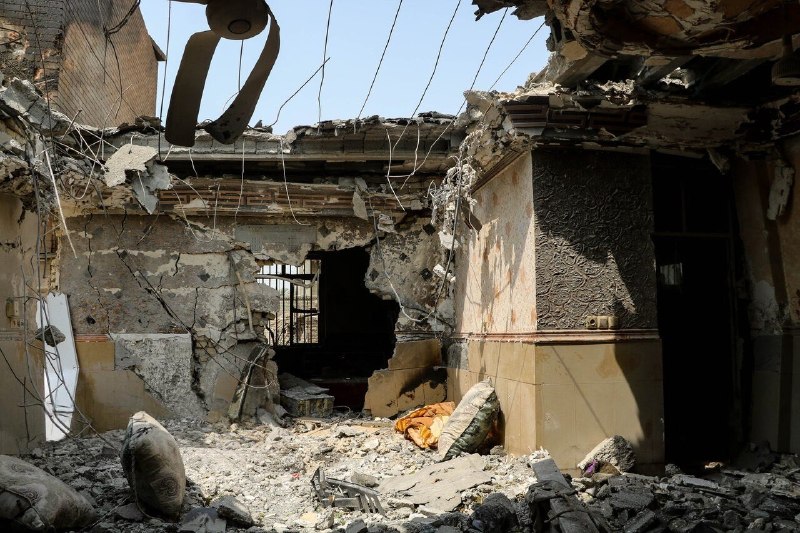
At 02:25 UTC on 13 August 2026, the Persian Strait Gulf Authority, the Iranian body that administers transit through the narrowest point of the Persian Gulf, declared that the Strait of Hormuz "remains blocked and will not be reopened until Iran's conditions are accepted." The statement, reported by CNBC, landed directly on top of a US presidential claim that the waterway had been reopened, and it pushed measured tanker traffic to near three-month lows.
The dispute is not a confusion of detail. It is a counter-message. Iran has, in effect, told Washington that the world's most important oil chokepoint remains a lever until its terms are met, and that assertions to the contrary are part of the bargaining, not the reality on the water.
What Tehran actually said
The Persian Strait Gulf Authority's position, carried in English by CNBC, is unambiguous: the strait stays closed until Iran's conditions are met. State-aligned channel CGTN repeated the line within hours, reporting at 05:30 UTC that Iran "vows to keep Hormuz Strait closed until US meets demands." PressTV, the Iranian state broadcaster's English feed, ran the message in two registers. A 04:54 UTC post quoted analyst Saeb Shaath arguing that Trump's claims were "a desperate attempt to keep market prices low," insisting "the loss is global, especially for the Western allies of the US." A separate 05:10 UTC post broadened the frame, accusing the United States, Israel and their allies of causing "environmental pollution in the Strait of Hormuz" and demanding that remediation form "an integral part of any future administration" of the corridor.
Two registers, one political aim. The first defends the closure as economic pressure. The second relocates the dispute into environmental governance, a register in which Iran has long argued it is the wronged party, not the disruptor.
Why the traffic numbers matter
CNBC's reporting frames the dispute in market terms: transit through Hormuz has fallen to near three-month lows. That detail is doing real work. Roughly a fifth of seaborne crude, and a comparable share of liquefied natural gas, transits the strait on any given day; even a partial, contested closure moves price benchmarks within hours. The Iranian message is that the cost of the closure is being shouldered by Iran's adversaries, while Tehran retains the option to release the valve. Shaath's framing, that the closure's pain is "global, especially for the Western allies of the US," is the same logic dressed in analyst's clothing.
The market reaction cannot be read off the source items alone. What can be read is the political direction: Iran is leaning into the closure as leverage, not seeking a face-saving formula to reverse it.
The bargaining that sits underneath
Iran's demands are not spelled out in the four source items. What they specify is the structure of the dispute. Tehran is communicating in two channels at once. In one, it is talking to global markets through the Persian Strait Gulf Authority and through analyst commentary on state media. In the other, it is signalling to Washington that unilateral American statements about the strait's status will not bind it. The environmental framing, with its reference to US and Israeli "pollution," is a reminder that Iran has built a parallel narrative ready to deploy in any future multilateral administration of the waterway.
Monexus analysis: the Iranian posture is best read as a deliberate mismatch with US presidential messaging. Each side is talking past the other, and the goal of each is to set the price of any eventual settlement. The US side is trying to lower the political cost of the standoff. The Iranian side is trying to keep the cost high until its terms are met. The shipping data, with traffic at near three-month lows, suggests the bargaining is producing exactly the kind of pressure both sides anticipated, but not the kind either side is yet willing to call a win.
What remains uncertain
The source items do not specify what conditions Iran has attached. They do not state whether the closure is being enforced by Iranian naval units, by mining, by harassment of individual tankers, or by administrative fiat. The CNBC reporting references "Hormuz remains blocked" as the authority's position; it does not describe the operational picture on the water. Monexus cannot, from these four items alone, confirm whether traffic at three-month lows reflects fewer tanker transits, more vessels holding off the approaches, or both. A fuller picture would require tanker-tracking services, port authority notices from Fujairah, Jebel Ali, or Ras Tanura, and statement of work from the International Maritime Organization. The available reporting gives us the political shape of the dispute. The operational shape will need independent corroboration before any of the more dramatic reads (mining, naval interdiction, near-total shutdown) can be carried as fact rather than as the framing of one side.
How Monexus framed this versus the wire: where the CNBC-led Western coverage led with the market impact and the contradiction between Trump's claim and the Iranian authority's position, this piece treats the Iranian messaging as a deliberate bargaining move rather than as a confusion to be corrected. The environmental framing, which the Western wire largely ignores, is given equal weight, because it is the language Iran is most likely to deploy in any eventual settlement.
Wire provenance
This editorial synthesis draws on the following public wire/social posts:
- https://www.cnbc.com/2026/08/13/us-iran-war-trump-hormuz-irgc.html
- https://news.cgtn.com/news/2026-08-13/Iran-vows-to-keep-Hormuz-Strait-closed-until-US-meets-demands-1PzjIs9Z3u8/p.html
- https://x.com/CGTNOfficial/status/2087773643694858471
- https://t.me/presstv/202577
- https://t.me/presstv/202576