Trump freezes Iran strike until after US midterms, citing 'productive' nuclear talks
President Donald Trump confirmed on 8 October 2026 that the United States will not strike Iran before the 3 November midterm elections, while insisting sanctions-related pressure on Iranian oil exports continues in full.
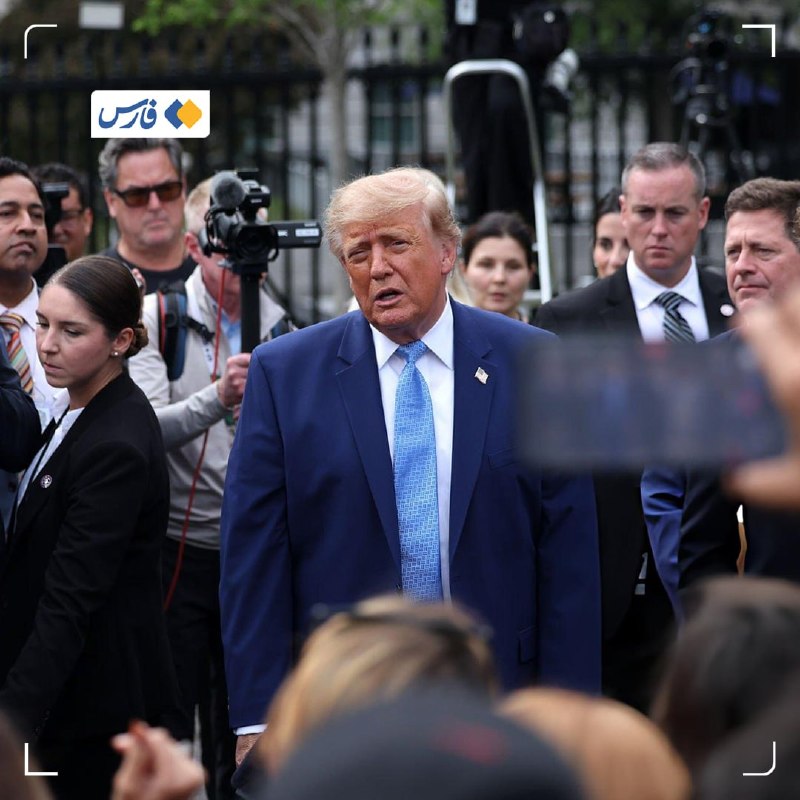
At 16:23 UTC on 8 October 2026, President Donald Trump told reporters that the United States would not strike Iran before the 3 November midterm elections, framing the pause as an election-window courtesy while insisting that economic pressure on Tehran would continue. The remarks, relayed across Telegram channels minutes later, describe "productive discussions" with the Islamic Republic that have so far produced neither agreement nor breakdown, and place the burden of any escalation squarely on the post-election calendar (https://t.me/Middle_East_Spectator/37508; https://t.me/ClashReport/100187).
The statement is the clearest on-the-record electoral horizon yet attached to a potential US-Iran military confrontation. Trump framed the choice in transactional terms: talks continue, sanctions continue, and the option of force is held in reserve past 3 November rather than taken off the table. The energy consequence is immediate. Markets that had been pricing a tail-risk of strikes on Iranian oil infrastructure now price that risk to a date certain rather than to an open-ended crisis clock, which is its own form of geopolitical risk being compressed into a futures curve.
The election arithmetic behind the pause
Trump's remarks, as carried by Iranian state-adjacent outlets that tend to publish US presidential statements in full, frame the no-attack pledge as conditional on an unfinished negotiating track. The blockade, in Trump's words, "will continue in full force" even as diplomacy proceeds (https://t.me/tasnimplus/127090). That distinction is what makes the statement useful rather than pacific: it removes the near-term tail risk for oil traders while preserving the threat that sanctions enforcement will continue to pinch Iranian export receipts, regardless of whether a deal materialises.
The immediate market read is that any kinetic option has been formally shelfed until after 3 November. The structural read is more uncomfortable: a sitting US president is openly tying a major-power military option to a domestic electoral calendar, which subordinates Middle East escalation management to partisan turnout considerations. The argument that the pause reflects strategic patience in negotiations competes with the argument that it reflects campaign management. The two readings are not mutually exclusive, and US allies in the Gulf and in Europe will be recalibrating around both.
What Iranian outlets chose to publish
Iran's state-aligned channels carried the statement in nearly identical form, a tell that the text was treated as a deliberate signal to Tehran as much as a message to the US electorate. Tasnim, the Fars news agency, and the Abu Ali Express channel each published what they presented as "full remarks," in the same minutes-long window after Trump's comments (https://t.me/farsna/467120; https://t.me/abualiexpress/131586; https://t.me/abualiexpress/131587). The uniformity suggests an official Iranian readout of the same primary statement, not independent reporting.
The framing inside those outlets has its own politics. Iranian coverage read Trump as conceding that Iran is negotiating from a position that is, in the president's own words, "in very bad condition, both Economically and Militarily" (https://t.me/ClashReport/100186; https://t.me/ClashReport/100187). The implication Tehran wants its domestic audience to draw is that the talks are happening because pressure has worked, not because Washington is seeking a face-saving way to de-escalate. Both characterisations have evidentiary support in the statement itself.
Monexus analysis: where this sits in the oil-and-sanctions stack
Monexus analysis: the practical effect of the statement is to convert an open-ended war risk into a dated optionality. Iran's crude exports have been operating under US secondary-sanctions pressure that has shaped the discount at which Iranian barrels clear, particularly into Asian buyers, even as Tehran's volumes have continued to circulate through intermediaries and dark-fleet arrangements. A confirmed pre-3-November no-strike pledge reduces the probability premium attached to a Strait of Hormuz closure scenario in the near term, without changing the underlying sanctions architecture that keeps Iranian exports under continuous pressure. That is a meaningful shift for crude benchmarks that had been spiking on episodic headlines about Israeli-Iranian tit-for-tat strikes, but it does not amount to sanctions relief.
The thread sources do not specify any new sanctions measure, any new export quota, or any specific diplomatic channel beyond the president's own description of "productive discussions." Readers should treat the statement as a posture-setting exercise rather than the disclosure of a deal in progress. The next hard data points will come from Iranian export-tracking services, from the State Department's routine sanctions designations, and from any confirmed Israeli response to the pause, since Israel's planning cycle on Iran has not historically waited for US electoral calendars.
Stakes between now and 4 November
If the statement holds, the next twenty-six days become the most valuable window Tehran has had in this sanctions cycle: talks nominally open, oil still flowing, no strike premium priced in. Tehran's incentive is to milk that window without offering Washington a verifiable nuclear concession that would invite a domestic US backlash before 3 November. Washington's incentive is to keep the negotiating template alive through the midterms without appearing to soften on sanctions enforcement. Each side has reason to delay, and each side has reason to keep claiming progress, which is precisely the equilibrium that produces headline flow without a written agreement.
The harder question is what happens on the morning of 4 November. If Republicans perform well, the White House gains a freer hand on Iran and the Israeli window reopens. If they do not, a second-term political logic changes, congressional pressure to wind down a two-front Middle East posture increases, and the negotiating calculus shifts toward a deal that the current Congress might not have accepted. The 26-day pause is therefore not a peace dividend. It is a campaign-finance timeline in which the world's most strategically placed oil chokepoints are temporarily held hostage to US ballot mathematics. Iran International and Gulf-based outlets will be watching for any sign that the Israeli side is not, in practice, observing the same pause; Western wires will be watching for any movement on the sanctions designation docket that would contradict the "in full force" language. Those are the two falsification tests that determine whether the statement is a real de-escalation or a campaign prop.
Desk note: Monexus carried Trump's statement as relayed by Iranian state-aligned and Middle East aggregator Telegram channels because the US primary-source record on these remarks was not present in the supplied thread. The interpretive frame, that an electoral calendar is now formally attached to US Iran escalation risk, is this publication's reading of the text, not an assertion drawn from any single cited source.
Wire provenance
This editorial synthesis draws on the following public wire/social posts:
- https://t.me/Middle_East_Spectator/37508
- https://t.me/ClashReport/100186
- https://t.me/ClashReport/100187
- https://t.me/tasnimplus/127090
- https://t.me/farsna/467120
- https://t.me/abualiexpress/131586
- https://t.me/abualiexpress/131587
- https://t.me/englishabuali/80251
- https://t.me/englishabuali/80252
Follow the event.
These dated source records provide context. They do not retrospectively verify this archive article.
Separate what the nuclear watchdog reported from what it could not determine after the June 2025 strikes.