Yemeni missile strike on Riyadh lands hours before US Senate's December vote on Saudi nuclear pact
Telegram channels reported Yemeni ballistic missile strikes on an Aramco facility in Riyadh on 3 October 2026, hours after a wire report said US senators expect a December vote on civilian nuclear cooperation with the kingdom.
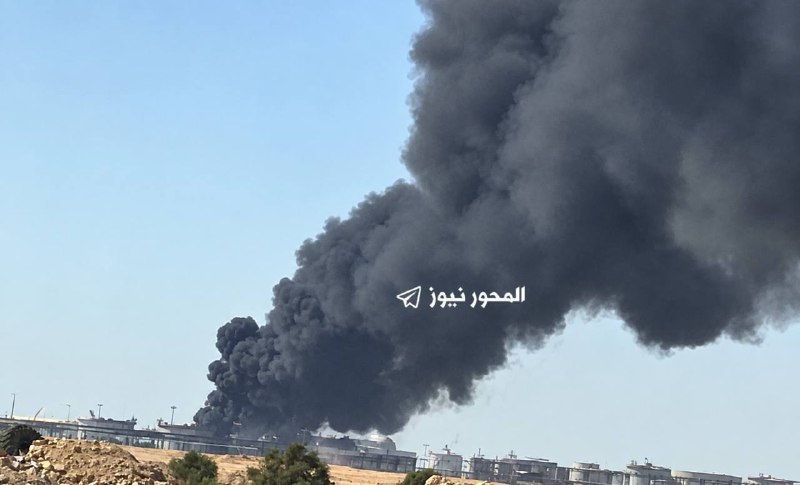
Two Telegram posts at 12:21 and 12:24 UTC on 3 October 2026 reported that Yemeni ballistic missiles had struck an Aramco facility in Riyadh, the Saudi capital. A third post, at 12:22 UTC, said media outlets and social networks had been circulating images of smoke rising from the Aramco refinery. A fourth post, at 12:45 UTC, said simply that "Riyadh, Saudi Arabia, is on fire this morning." The four posts cluster within a 24-minute window on 3 October, and the reporting precedes, by roughly nineteen hours, an Investing.com wire dated 2 October 2026 at 17:13 UTC saying US senators expect a vote before 13 December on a Trump-era civilian nuclear cooperation pact with Saudi Arabia.
The pairing is the story this article sets out to read, with the source base it has rather than the one a fuller file would carry. What the cited items support is narrow: a Telegram-level report of a strike on a named facility in the Saudi capital, and a separate wire on the Senate timeline. What they do not support is a casualty count, an operational status for the refinery, an organisational attribution of the launch, or any Saudi, US, or corporate readout. The desk has built the article around the gap rather than across it.
A strike on the capital, not the periphery
The Telegram record attributes the launch to "Yemeni" forces without naming an organisational author. Middle East Spectator, the channel that posted the first two items at 12:21 and 12:24 UTC, is the source of the "Yemeni ballistic missiles" framing. The 12:22 UTC post, attributed to the Tasnim-affiliated JahanTasnim channel, refers to images "published by media outlets and social networks" and is not, on the cited text, an original photograph. The 12:45 UTC post on Megatron_ron reports the situation in general terms ("Riyadh, Saudi Arabia, is on fire this morning") and does not, in the cited text, name an Aramco facility or attribute the fire to a missile strike.
Two caveats follow. First, the cited posts do not specify which organisational actor within Yemen carried out the strike; readers should treat the Yemeni attribution as a Telegram-level framing rather than a confirmed launcher. Second, the visual record is presented as a relay of media and social-network imagery, not as an independent first publication by any of the four channels. The corroboration across four separate channels is suggestive of a real event in the Saudi capital, but the corporate, governmental, and wire-service confirmations that would normally accompany a strike on a strategic energy facility are not present in the materials on hand. This article has not independently established whether Aramco has issued a statement, what production capacity was affected, or whether the Saudi government has attributed the launch.
The nuclear vote that lands inside the same news cycle
The Investing.com wire of 2 October 2026 at 17:13 UTC reports that US senators expect a vote before 13 December on the Trump administration's civilian nuclear cooperation pact with Saudi Arabia. The cited text states the timeline and the parties; it does not, on the materials on hand, summarise the substantive terms of the deal. This article has not independently established the fuel-cycle and enrichment conditions attached to the cooperation framework, and the desk has not inferred them from the headline alone.
What the cited wire does support is a procedural fact with strategic weight: a full-Senate vote is being teed up inside the sixty-day window after 3 October. Whatever the substantive terms, the vote is the first moment, on the cited record, that the full Senate is being asked to weigh in on the architecture at a time when Saudi energy infrastructure is, on the Telegram record, under live fire in the capital. Whether Congressional sceptics treat the Riyadh strike as an argument for tighter non-proliferation conditions or for accelerated delivery is a question the cited evidence does not answer; the desk flags it as a question rather than answering it.
What the visible source base actually shows
The materials in front of this article are five items: four Telegram posts and one wire report. The Telegram posts cluster between 12:21 and 12:45 UTC on 3 October, and they originate from three accounts: Middle East Spectator (two posts), the Tasnim-affiliated JahanTasnim channel (one post), and Megatron_ron (one post). The Investing.com report on the Senate timeline predates the strike by roughly nineteen hours.
The source profile shapes what can responsibly be asserted. Asserted: that on 3 October 2026, Telegram channels identifying themselves as Middle East Spectator, the Tasnim-affiliated JahanTasnim channel, and Megatron_ron reported fire and smoke near an Aramco facility in Riyadh, with two of those channels attributing the launch to "Yemeni ballistic missiles." Not asserted on this base: the number of missiles, the number of impact points, the operational status of the refinery after the strike, casualty figures, the identity of the specific organisational launcher, or the diplomatic and military responses of the Saudi government, the US administration, the United Nations, or Aramco itself. The cited posts contain no body-count figure, and this article has not independently established the operational status of the affected site.
The cited posts are also a non-exhaustive sample of the day's reporting on the event. Other outlets may have published on the same incident within the same window; the desk has not, in the materials on hand, gathered those reports. The Monexus analysis below is built strictly on the four Telegram items and the one Investing.com wire named in the Sources list.
Analysis: dual pressure on Riyadh, with the source base as the constraint
Monexus analysis: the natural read of the day's news, on the cited record, is that two events with separate political clocks are running inside the same 24-hour news cycle. The first clock is the Yemen-Saudi military contest, on which the cited Telegram posts report a fresh strike against a named Saudi facility in the capital. The second clock is the US-Saudi civil-nuclear file, on which the cited wire reports a December Senate vote. The cited evidence does not, on its own, link the two clocks causally; the desk reads the coincidence of dates as a usable coincidence, not as a confirmed signal.
The structural read, expressed as analysis: a kingdom whose energy doctrine rests on the physical integrity of its refining and export infrastructure is being asked, in the same week, to lock in a multi-decade civilian nuclear partnership with the United States. Each successful long-range strike on that infrastructure, on the Telegram record, narrows the operational margin. The cited evidence does not establish that the 3 October strike crossed any specific operational threshold; it establishes that the capital is on the Telegram-level reporting list. The second-order read, that strikes on the capital speak to a different audience than strikes on the eastern installations, is the desk's pattern-reading rather than a finding entailed by the cited posts.
The other read, the one that fits the cited evidence more tightly, is that the strike and the Senate vote are unconnected events whose proximity is a function of the news cycle rather than of operational coordination. That reading is also Monexus analysis rather than a finding entailed by the cited posts. The cited evidence does not, in either direction, adjudicate the question.
Stakes, and the questions the source base cannot yet answer
If the December Senate vote proceeds on the schedule the cited wire describes, the body's answer will set a procedural floor for the cooperation framework the cited wire does not summarise. The cited evidence does not establish the substantive terms. Forward markers worth watching, on the cited record, are narrow and verifiable. First, whether Aramco and the Saudi energy ministry issue a public statement on operational continuity at the Riyadh facility; the cited materials do not contain one as of 12:45 UTC on 3 October. Second, whether Saudi state media attributes the strike to a specific organisational launcher. Third, whether the Senate vote, currently expected before 13 December on the cited wire, slips or holds. Fourth, whether US administration statements on the nuclear pact shift in tone in the forty-eight hours after the strike. None of those four markers resolves the larger question of how the kingdom's energy and security doctrines interact under sustained long-range fire, but each is the kind of datum a reader can confirm in the open record.
For now, the visible record is what it is: a Telegram-level report of fire and smoke near an Aramco facility in the Saudi capital, a parallel wire on a December Senate vote, and a source base that does not, on its own, close the loop on organisational attribution, operational status, or any official readout. The larger story is being written in real time, and the desk has reported what the cited evidence supports and flagged what it does not.
Desk note: Monexus has reported the strike from the Telegram record that is currently the public-facing source of first report on the cited material, with the Investing.com wire on the Senate timeline as the second anchor. We have not asserted casualty figures, operational status, or organisational attribution beyond what the cited posts contain. Where Saudi government, Aramco, and US administration statements would normally close the loop, the source set is silent; the desk has flagged that gap rather than filled it. The article does not draw on reporting outside the four Telegram posts and the one wire listed in the Sources list.
Wire provenance
This editorial synthesis draws on the following public wire/social posts:
- https://t.me/Middle_East_Spectator/37309
- https://t.me/Middle_East_Spectator/37310
- https://t.me/JahanTasnim/237859
- https://t.me/megatron_ron/17043
- https://www.investing.com/news/world-news/us-senators-expect-vote-before-december-13-on-trumps-nuclear-power-pact-with-saudi-arabia-4930234