Tokyo's Tightrope: A 1% Bank of Japan and the China Question Washington Can't Solve
On 9 June 2026, two cables crossed the same wire. The Bank of Japan is preparing to lift its benchmark rate to 1.0% from 0.75% at the 15–16 June policy board meeting, the highest level in a generation. Hours earlier, the same outlet reported that the Trump administration has formally asked Beijing to resume rare-earth exports to Japan, citing growing concern about supply chains for defence and advanced manufacturing. The two stories, read separately, look like a tidy central-bank normalisation plus a routine trade complaint. Read together, they describe a different animal.
The structural argument is plain. A credible Japanese rate floor at 1% ends an era in which Japanese institutional capital was structurally short the yen and long everything else. At the same time, the United States is publicly lobbying China — publicly — for the inputs that Japanese industry cannot source at scale anywhere else. Washington is not asking Tokyo to devalue. It is asking Beijing to deliver. That is a confession about how the post-1990 settlement actually worked, and how brittle it has become.
The rate that took a generation
For three decades, Japan's rate regime functioned as the quiet plumbing of global finance. With the policy rate pinned near zero, Japanese banks, insurers, and pension funds routed trillions of yen outward — into US Treasuries, into European sovereigns, into the carry trades that funded everything from Silicon Valley buyouts to emerging-market sovereign borrowing. The yen was a funding currency by design. A hike to 1% does not unwind that. But it does set a floor under the currency, raise the marginal cost of that carry, and signal that the Bank of Japan, after years of declaring normalisation "on the horizon," has finally arrived.
The political economy of the move is the part the wire briefings tend to underplay. The governing coalition in Tokyo has tolerated an extraordinary squeeze on household real incomes — real wages have lagged inflation across the relevant period — to get to a 1% rate without rupturing public confidence. The decision to keep going is a bet that the cost-of-living pain is now behind the curve, and that a credible rate floor will, over time, pull wage settlements upward. Whether that bet pays depends on labour-market data the Bank of Japan will not have for another quarter.
The rare-earths call Washington is making
The second story, on its face, is narrower. China's export controls on the heavy rare earths — the dysprosium, terbium, and yttrium needed for the permanent magnets inside EV traction motors, wind turbine nacelles, precision-guided munitions, and the actuators of advanced fighter aircraft — have tightened materially over the past year. Japanese industry is the canary: Hitachi Metals, TDK, and the magnet cluster around them source refined oxides and alloys overwhelmingly from Chinese processors. The Trump administration's intervention, reported on the same day, is the first explicit, on-record US request that Beijing carve out Japan from the current licensing regime.
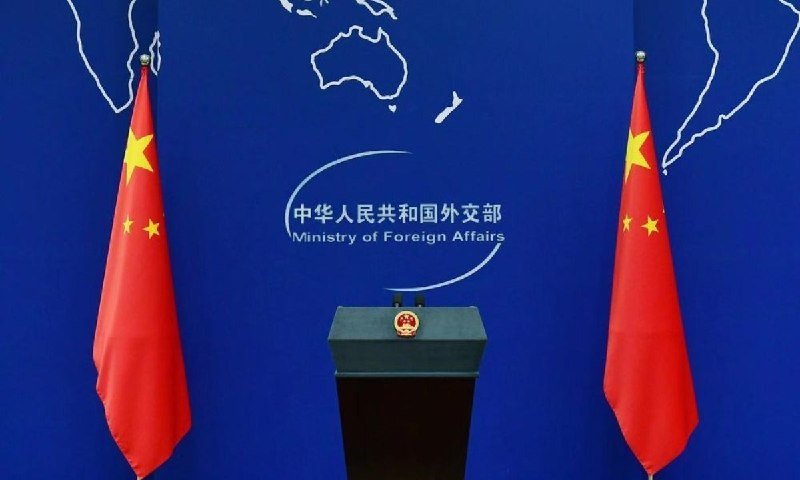
The Chinese position is straightforward and not unreasonable on its own terms. Beijing argues that the controls are a national-security measure, comparable to US export rules on advanced lithography and AI chips, and that downstream diversion to military end-uses in third countries is a documented risk. Chinese MFA briefings have framed the licensing regime as targeted, lawful, and reversible if downstream verification is assured. The Western framing — coercion, leverage, supply-chain hostage-taking — captures something real, but it is not the whole picture. The structural context is that Japan, the United States, and Europe spent two decades offshoring the mid-stream of the rare-earths supply chain in the name of cost efficiency, and the strategic cost of that optimisation is now being priced in.
A confession dressed up as a trade request
This is where the two stories fuse. A Japan running a 1% policy rate, with a credible currency floor, with capital that may gradually rotate back home, is a Japan whose industrial policy can be financed on domestic terms rather than on the assumption of a permanently weak yen and cheap imported inputs. The Trump administration's rare-earths request is, in effect, a request that China continue to subsidise that older arrangement a little longer — that the external imbalances of the post-Bubble settlement be preserved in their present shape, even as Tokyo and Washington each, in their own way, try to reconstruct something more autonomous.
There is a counter-reading worth taking seriously. One can argue that the rare-earths request is a narrowly transactional fix: keep Japanese magnet lines running, keep US rearmament on schedule, and decouple the conversation from broader strategic competition. On that read, Washington is not confessing dependence; it is buying time. The defence of that read is that Washington has, in parallel, been funding domestic rare-earth processing and allied-state diversification in Australia, Canada, and Vietnam. The evidence against it is that the diversification is not yet at scale, and the request is on the record.
The stakes, in concrete terms
If the Bank of Japan delivers the 1% rate on 16 June and holds, the yen will likely strengthen through the back half of 2026 — modestly at first, more sharply if the Federal Reserve begins to ease in parallel. That is good news for Japanese households and for the central bank's stated objective of escaping deflationary psychology. It is bad news, in the short term, for Japanese exporters whose margins were built on a cheaper currency, and for the global carry trades that have leaned on the yen as funding.
If China refuses, or strings out, the rare-earths request, the pressure moves downstream. Japanese magnet producers will draw down inventory and pass costs through; US defence procurement timelines for the systems that depend on those magnets will slip; and the case for industrial-policy subsidies in the US, Japan, and Europe — already politically loaded — will become politically irresistible. Beijing's leverage is real, and it is finite. The structural answer to that leverage is processing capacity outside China, which is being built, slowly.
What remains genuinely uncertain is the sequencing. The sources do not tell us whether Washington's rare-earths request is the opening posture in a longer negotiation, or a one-off. The Nikkei reporting on the rate decision is explicit on the destination (1.0%) but silent on the path of subsequent moves. And the diplomatic traffic between Washington and Beijing on the licensing regime is, by nature, the part least visible to readers. Those are the questions the next thirty days will answer, or at least narrow.
A desk note: Monexus has framed this as a single story about the unwinding of the post-1990 settlement — rate normalisation in Tokyo and rare-earth leverage in Beijing read against each other — rather than running them as parallel wires. The mainstream wires have largely run them separately; the analytical case for reading them together is on the page above.
Wire provenance
This editorial synthesis draws on the following public wire/social posts:
- https://t.me/NikkeiAsia/
- https://t.me/nikkeiasia/
- https://t.me/NikkeiAsia/
- https://t.me/nikkeiasia/