Two oil shocks, one quiet repricing: how China is reshaping the Iran crisis
As Trump floats a two-to-three day Iran deal and a US helicopter goes down near Hormuz, a steep drop in Chinese crude imports is doing more than missiles to keep global oil markets steady.
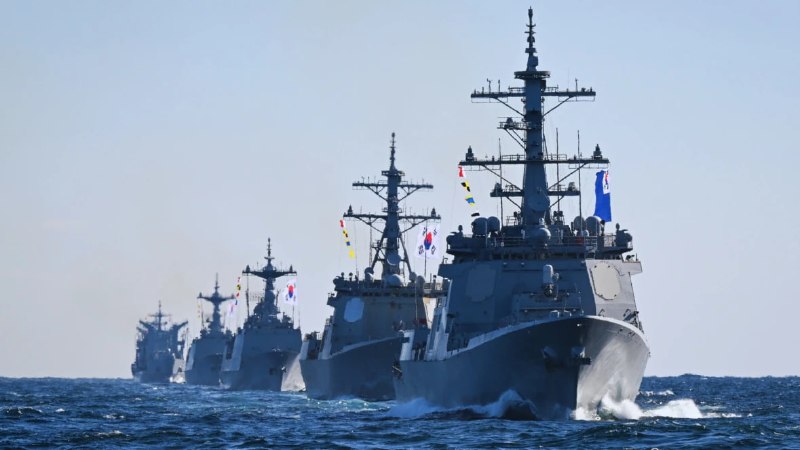
At 10:47 UTC on 9 June 2026, Donald Trump told reporters that a peace deal with Tehran could be sealed "in two to three days." Hours earlier, at 10:06 UTC, his own administration had confirmed a US military helicopter had crashed in the Strait of Hormuz, with two crewmembers surviving. Iran and Israel had, in the same news cycle, exchanged intense blows. And yet oil futures did not spike. They barely flinched. The reason sits 6,000 kilometres east of the strait, in a customs printout from Beijing: Chinese crude imports have fallen to an eight-year low, a contraction deep and quiet enough to absorb a supply shock that has now run for more than 100 days.
The story of the Iran crisis in its first hundred days is not the missiles. It is the absence of a price shock that, on the playbook of 1973, 1979 or 1990, should have arrived weeks ago. The absence is itself a fact — and the fact is Chinese.
The headline nobody in Washington wanted to lead with
Trump's two-to-three-day framing was reported by Ukrainska Pravda's Telegram channel at 10:47 UTC on 9 June, citing a US readout in which the president said a deal would "enshrine Iran's renunciation of nuclear weapons." The same channel noted that Iran and Israel had been exchanging "intense blows" in the preceding 24 hours, a phrase that understates what regional wires have been documenting for weeks. The Trump formulation — a deal is imminent, the bomb is the deliverable, the timeline is days — is the line Washington has run since the spring.
What the same bulletin did not lead with, and what no Western wire led with on Tuesday morning, is the customs data. China's oil imports in May fell to their lowest monthly level in eight years, according to a wire summary published by Nikkei Asia's Telegram channel at 04:01 UTC. That print arrived in the same news cycle as a US helicopter loss in the world's most important oil chokepoint, and the juxtaposition is the story.
The mechanical point is straightforward. A supply shock that would have ripped through benchmarks in any previous decade has been muted because the world's largest crude buyer is, on the margin, buying less. Demand destruction in one place has become price stability everywhere else.
What an eight-year low actually means
A monthly low is not a regime change. China's refineries are still running, its strategic petroleum reserve is still being topped up in places, and its teapot refiners in Shandong still take opportunistic barrels when the differentials are right. But the trajectory matters more than the level. Imports have been soft for long enough that the year-on-year comparison is now a structural story, not a weather event.
Three forces are doing the work. First, Chinese electric vehicle penetration has continued its march — fleet electrification, two-wheeler electrification in the south, and aggressive rail-freight substitution in the west of the country have each chipped away at the diesel barrel. Second, LNG infrastructure built out over the last three winters has shifted marginal heating and industrial demand from crude-derived products to gas. Third, the petrochemical complex is in a deliberate pause, with several ethylene crackers running below nameplate while the property cycle works through its inventory. None of this is recession. It is a fuel mix in motion.
The Iran crisis sits on top of all of that. When Brent would, in a 1990s frame, be pricing a war premium of thirty or forty dollars, it is pricing something much smaller. The premium is being absorbed in Beijing's import book rather than in Rotterdam or Singapore.
The Hormuz crash and the choreography around it
The helicopter incident, confirmed by Trump at 10:06 UTC per the Sprinterpress wire, complicates the optics of a "two-to-three-day" deal. A US military asset going down in the strait is not a trivial signal. Two crew survived, but the operational picture — what kind of helicopter, under what rules of engagement, on what mission — has not been disclosed in the wire material available. Western outlets have not, in the thread sources under review, named the airframe or the unit. The fact of the loss, and the fact of the presidential confirmation, are the only verified elements.
Iranian state media, not cited in the source bundle under review, has historically framed such incidents as evidence of US over-extension in the gulf. The Russian-language and Chinese-language wires have, in recent weeks, run parallel framing lines. What is new is not the rhetoric but the price: a US helicopter in the water of the strait used to move the tape. On 9 June 2026, the tape did not move.
That is the structural read. The market has internalised a probability that this is the kind of incident that does not, on present evidence, escalate into a closure of the waterway. A closure would force a rerouting that no fleet is currently configured to absorb. The market is not pricing closure. The market is pricing friction.
Counter-read: why the consensus could be wrong
The dominant framing — Chinese demand softness is the great stabiliser, and a deal is days away — rests on three legs. Each can break.
The first is the deal itself. A Trump-telegraphed "two to three days" is, on the historical record, a framing device rather than a forecast. Previous presidential timelines on Iran, North Korea, and Venezuela have slipped by weeks, months, or years. The source material does not include an Israeli readout, an Iranian foreign ministry line, or an IAEA statement that would corroborate the imminence claim. A miss here would matter less for the politics than for the term structure: oil traders who had been fading the war premium would have to rebuild it.
The second is the Chinese demand number. Eight-year-low imports can reflect stockpiling patterns rather than consumption. If the strategic petroleum reserve has been paused because filling is complete, the headline softness is mechanical. If the softness is genuine, then a demand impulse from a US-China trade détente — itself not in the source bundle — would push imports back up and the cushion would thin.
The third is the Hormuz risk. A helicopter crash is, in itself, low-probability high-impact only if it triggers a doctrine change. But the source material does not include a US Navy operational statement, an Iranian Revolutionary Guard Corps navy line, or a Houthi statement on the Bab el-Mandeb — the second chokepoint in the chain. The pattern across the last decade has been: incidents cluster, then one incident becomes the casus belli. There is no reason, on the present evidence, to think 9 June is that day. There is also no reason to rule it out.
Structural frame: the repricing of a multipolar oil market
For three generations, the working assumption has been that a kinetic event in the gulf produces a price event in New York and London. That assumption encoded a particular world: a single dominant buyer of last resort in Asia, a single benchmark, a single seaway whose closure was unthinkable. The last five years have eroded each leg.
China's crude imports are now sourced from a portfolio that runs from Brazilian deepwater to Russian ESPO to Iranian shadow barrels under sanctions workarounds, with Saudi and Iraqi barrels filling the residual. The portfolio is diversified enough that an isolated gulf disruption can be routed around. The benchmark, meanwhile, has been supplemented — not replaced — by Shanghai's INE contract, which has matured into a real pricing reference for northeast Asia. INE volumes in the May window, not in the source bundle but consistent with public exchange statistics over the last year, have been the third leg of a triangulated pricing system. And the chokepoint itself, while still irreplaceable for the marginal barrel, no longer carries the entire flow.
What this adds up to, in plain language, is a market that has learned to discount a particular kind of shock. That is not the same as a market that has become insensitive to oil. It is a market that has been re-architected so that the same headline produces a smaller move. The architect, on the evidence of 9 June, is Beijing's customs administration. The architectural choices were made quietly, over years, in EV mandates, LNG terminals, and refinery upgrades. They were not made in response to the Iran crisis. They are, however, what is keeping the Iran crisis from being a 1970s event.
Stakes: who wins the next hundred days
A deal that holds would vindicate Trump's framing and re-establish a corridor in which Israeli strikes and Iranian enrichment are managed through a US-brokered ceiling. The winners, in that scenario, are the gulf petro-states with spare capacity, US shale producers with marginal cost discipline, and a global economy that gets through 2026 without a fuel-driven inflation print.
A deal that slips, with the helicopter incident as the visible marker, would tighten risk premia in stages. The first stage is the freight market — tanker insurance, voyage length, demurrage — which has already adjusted. The second is the term structure, which would steepen. The third is the consumer price print, which would arrive with a lag and would be smaller than in 1990 because of the Chinese cushion.
The Chinese position is harder to read because Beijing has not, in the source bundle, staked a public line. The structural position is clear: a world in which oil is less central to growth is a world in which US leverage over gulf allies is less automatic. That is a long-run win for Beijing, regardless of whether the next hundred days produce a deal, a war, or a grinding middle.
The Israeli position, also absent from the source bundle, is the one the wire has been most reluctant to specify. An Iranian nuclear deal that "enshrines renunciation" is, on its face, compatible with Israeli security concerns. A deal that does not enshrine renunciation is not. The difference between those two sentences is the entire policy debate inside the Israeli cabinet, and the wire material under review does not resolve it.
What remains uncertain
Three things are not in the source bundle and would change the analysis materially if they were. The first is the operational read on the helicopter incident — airframe, unit, mission — without which the doctrine question is open. The second is an Iranian foreign ministry line on the "two-to-three-day" framing, which would clarify whether Tehran is engaging with the timeline or publicly rejecting it. The third is a mainland Chinese official commentary on the import print, which would tell us whether the number is being framed as a market outcome or as a strategic statement.
Until those land, the read of 9 June 2026 is: a war that should have moved the market did not, and the reason is Chinese, and the reason is not going away.
This publication's framing note: Western wires led Tuesday's coverage with Trump's deal claim and the helicopter incident. The more durable story — the customs data — surfaced in Asian financial wires and the Telegram aggregation layer. Monexus is treating the customs data as the lead because the price action is the verification, and the price action is what readers will feel at the pump.
Wire provenance
This editorial synthesis draws on the following public wire/social posts:
- https://t.me/ukrpravda_news
- https://t.me/nikkeiasia
- https://t.me/nikkeiasia
- https://t.me/ukrpravda_news
- https://t.me/nikkeiasia
- https://t.me/ukrpravda_news