The Strait Toll That Isn't About Money
The EU says Iran's planned Hormuz transit levy violates international law. The dispute is really about who writes the rules of the world's busiest oil corridor.
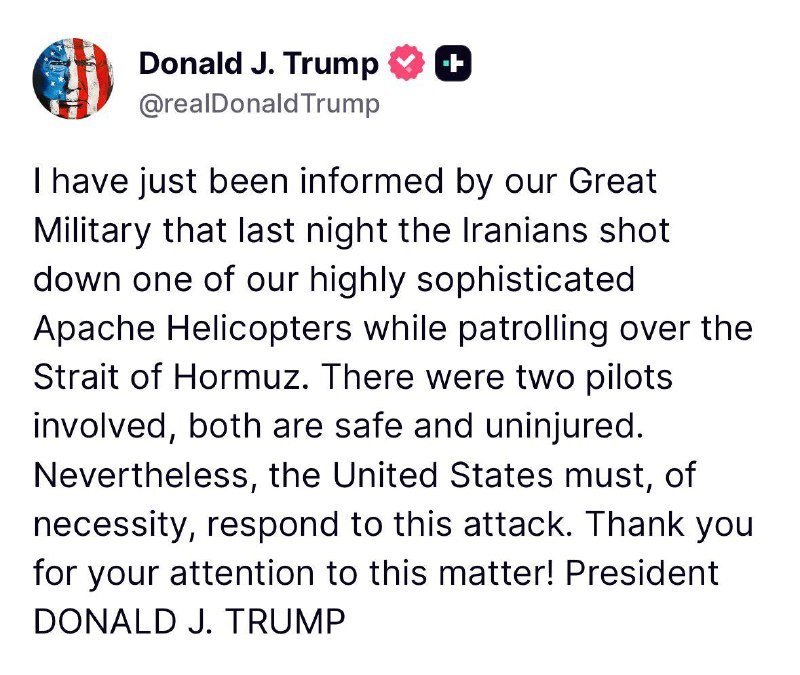
On 8 June 2026, the European Union declared that a planned Iranian toll on vessels transiting the Strait of Hormuz violates international maritime law and infringes the right of passage guaranteed to all states. The framing is precise, the language familiar, and the dispute anything but technical. The Strait of Hormuz is the narrow chokepoint through which roughly a fifth of global seaborne oil moves each day. Whatever regime governs it shapes who pays, who profits, and — ultimately — whose navy calls the shots in the Gulf.
A toll, or a claim of authority?
The EU's objection, delivered in Brussels on 8 June, rests on the United Nations Convention on the Law of the Sea, the 1982 framework that has governed passage through narrow straits for four decades. Under its terms, transit passage through straits used for international navigation must remain free and unimpeded; coastal states may not levy charges that obstruct the movement of ships or aircraft. From the EU's vantage, the proposed levy is a straightforward breach.
Iran's position is older than the convention. Tehran has long argued that it bears the environmental, security, and infrastructure costs of being the strait's custodian, and that a toll — or a transit regime of some kind — is a reasonable price for the right to use its waters. The framing is not new: it echoes the logic of coastal states from Singapore to the Bosphorus, where transit fees, pilotage requirements, and reporting obligations have been the norm for years. The dispute, in other words, is less about a toll than about whether UNCLOS's open-passage regime is genuinely universal or whether a major revision is overdue.
Why now
The timing matters. The corridor has been the subject of recurring seizures, drone attacks, and shadow-fleet skirmishes since 2024, and Tehran's regional position has hardened as sanctions have bit deeper. A formal toll mechanism would, in effect, monetise the de facto control Iran already exercises over its coastline and airspace. Western naval powers — with the US Fifth Fleet based in Bahrain and a French and British presence nearby — have, until now, treated the strait as a free commons policed by their own task forces. A legal claim by Iran to levy a toll is a claim to a different kind of authority.
The European Commission framed its objection in technical terms, citing the infringement of transit rights. But the policy substance is bigger than the legal one. If the EU acquiesces, other chokepoints — the Bab el-Mandeb, the Malacca Strait, the Turkish Straits — face parallel pressures. If it pushes back hard, it risks a prolonged legal and possibly kinetic standoff with a regional power that has demonstrated both capability and willingness to disrupt traffic.
The structural picture
What is unfolding in Hormuz is one expression of a wider reshuffling of who sets the rules of global trade. The post-1945 architecture — UNCLOS, the International Maritime Organization, dollar-cleared oil markets — was designed under American stewardship and assumed Western navies would police the commons. That assumption is creaking. The dollar's reserve status remains intact, but the corridors it relies on are being quietly contested. Iran is not the only actor: Houthi pressure on Red Sea shipping, Turkish insistence on NATO-expansion-free Black Sea transit, and Singaporean and Indonesian tightening of Malacca reporting are all threads in the same fabric.
In that light, the EU's legal objection reads as defence of the existing order. That is a defensible position — but it should be argued as such, not dressed up as a neutral application of the law. Iran, for its part, is making an argument about equity: that the country sitting on top of the world's most consequential oil chokepoint should have a recognised economic stake in its use. Whether that stake is realised through UNCLOS reform, a regional agreement, or unilateral tolling is the question that will define the next decade of maritime governance.
The stakes for readers
For European importers, the immediate stakes are concrete. Roughly half of Gulf crude lands in European refineries via Hormuz; a functioning tolling regime, with or without EU acquiescence, would mean higher delivered prices and a more volatile shipping-insurance market. For oil-importing economies in Asia — China, India, Japan, South Korea — the calculus is different again: a Hormuz toll would, over time, accelerate the diversification already underway toward Russian, African, and Latin American crude, much of it priced outside the dollar system.
The deeper stake is institutional. The post-war maritime order worked because the major powers accepted it as legitimate, even when it constrained them. A successful Iranian toll, contested but ultimately tolerated, would mark the first formal breach of the transit-passage regime in a chokepoint of this scale. It would not collapse the system overnight. It would, however, mark the moment that the system's universality became a polite fiction rather than a working rule.
This publication framed the EU's objection in its strongest form — a defence of a legal regime under live pressure — and gave equal weight to Iran's structural claim that the country sitting on the strait bears costs it is not compensated for. The dispute is older than the present crisis and will outlast it; the question is whether the next round is negotiated in advance, or settled by who can hold the corridor longest.
Wire provenance
This editorial synthesis draws on the following public wire/social posts:
- https://t.me/The_Jerusalem_Post