The numbers in Gaza, and the question Western media keeps ducking
Gaza's health authorities have published another toll. The harder question is why Western editorial desks keep treating such tallies as either unspeakable or unverified.
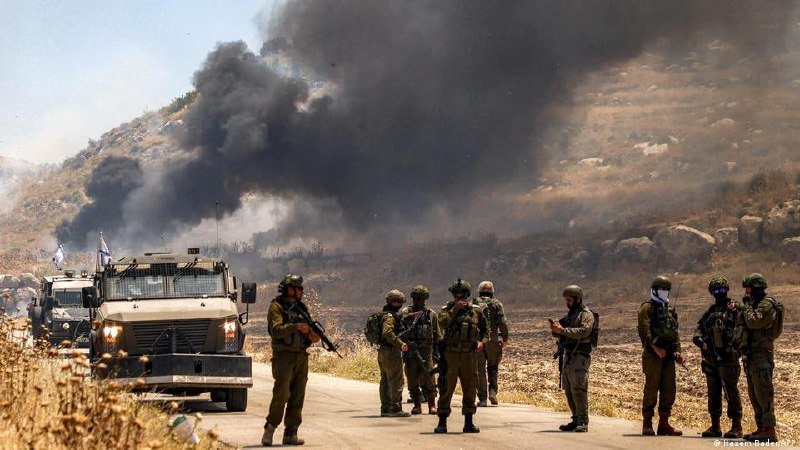
The figures from Gaza arrive with metronomic regularity, and with them a quiet editorial problem the Western press has not solved. On 9 June 2026, the Palestinian Ministry of Health in the Gaza Strip reported that the cumulative death toll since the start of the war had reached 72,988, with eight more Palestinians killed and 34 wounded in the preceding 24 hours, according to the Iranian-aligned outlet Tasnim, which republished the ministry's update at 07:40 and 07:34 UTC. Separately, at 07:27 UTC, the Beirut-based outlet Al-Alam cited the same ministry in reporting that Israeli forces had arrested seven Palestine Red Crescent Society ambulance crew members while they were performing their duties. Roughly forty minutes later, Al-Alam carried a second item, citing Palestinian sources, describing a checkpoint on Salah al-Din Road in central Gaza set up by militias described as cooperating with the occupation, where citizens including two paramedics were detained. Each of these is a single day's data point. Read together, they describe a war in which the count of the dead and the count of the living who can no longer reach them are both still climbing.
The editorial problem is not whether the numbers are exact. The editorial problem is that, in much of the Western press, they are treated as either too high to print or too contested to lead with — and that posture, repeated over months, has itself become a kind of framing. The dominant narrative in the Anglo-American press, particularly since the collapse of the most recent ceasefire, has been to lead on Israeli casualty figures, hostage footage, and the diplomatic choreography of mediation, and to treat the Palestinian toll as background colour. That is a choice. It is defensible editorially, but it is a choice, and it deserves to be named as one.
The arithmetic of attention
For the better part of two years, Gaza's health authorities — a body operating under Hamas administration but staffed by career civil servants and historically treated by UN agencies and aid organisations as the most reliable available data source on the strip's casualties — have published daily counts. The methodology is imperfect: it relies on hospital records, morgue intake, and a reporting network that has itself been degraded by strikes on medical infrastructure. Independent verification, where it has been attempted by outfits including the UN's Office for the Coordination of Humanitarian Affairs and the London-based Airwars project, has tended to corroborate the order of magnitude while flagging specific incidents that are difficult or impossible to confirm.
A reader who relied solely on the Western wire services for the first half of 2026 could be forgiven for thinking the war had already wound down. Ceasefire negotiations, hostage-trance phases, and the occasional surgical strike fill the columns. The slow accumulation of bodies, eight here and thirty-four wounded there, day after day, appears mostly in the data tables at the foot of humanitarian agency reports rather than in the lede. The arithmetic of attention — front-page real estate, airtime, the size of the photo a desk is willing to crop — has steadily diverged from the arithmetic on the ground.
The paramedics, the checkpoints, and the question of who counts as a combatant
The two Al-Alam items at 07:27 and 06:47 UTC deserve a closer look, because they sit in a category of incident that Western desks have been most reluctant to adjudicate. The first describes the arrest of seven Red Crescent ambulance crew members. The second describes a checkpoint on Salah al-Din Road, the strip's main north-south artery, run by armed groups described in the reporting as cooperating with Israeli forces, detaining citizens including two paramedics. Both reports originate with Palestinian sources and pass through outlets with documented regional alignments. They are not, on the strength of the thread materials alone, independently verifiable.
But the structural problem here is familiar from previous wars in Iraq, Syria, and the Balkans: when armed actors operate alongside an occupying force and detain medical personnel, the line between combatant and civilian becomes a function of who is doing the describing. The international humanitarian law framework is clear on the protected status of medical workers under the Geneva Conventions. Whether that protection is honoured in practice in central Gaza in June 2026 is a question the relevant UN bodies and the International Committee of the Red Cross are institutionally positioned to answer — and on which the thread materials are silent. The point worth holding is that the absence of a corroborating wire report is not the same as the absence of an event. It is, more often, the absence of a press access regime that would make the event filmable.
The framing lane and its limits
There is a respectable case for editorial caution. Numbers emerging from a health ministry embedded in a wartime political structure cannot be uncritically laundered. The October 2023 Hamas attack killed roughly 1,200 Israelis and took more than 250 hostages, an atrocity that any honest accounting has to keep on the page. The structural critique of Palestinian governance is real. The desire to avoid, in particular, the cinematic register of past Western coverage of Middle Eastern wars — bodies on sand, children in rubble, the recurrent framing of the region as a site of eternal suffering — is a legitimate professional instinct.
The respectable case, however, becomes a cover for selective attention when it is applied asymmetrically. Eight Palestinians killed in a day in Gaza, on 9 June 2026, is a fact of the same order as a single Israeli civilian killed by rocket fire on the same date. Both deserve the same evidentiary standard and the same editorial weight. When only one of them reliably appears in the morning's lead, the framing has done the work of the policy — and no one has had to write the editorial that says so.
Stakes, and the part that remains uncertain
If the trajectory continues, the cumulative Palestinian toll will pass a threshold — 75,000, 80,000 — at which the gap between diplomatic language and arithmetic becomes impossible to bridge with euphemism. The harder question is whether the Western press will arrive at that moment with a clear-eyed ledger of what it did and did not print along the way, or whether it will treat the threshold as a sudden surprise. The honest answer, on the evidence of 9 June 2026, is that the press has had the numbers all along. What it has not yet had is the editorial language to put them where they belong.
This article reflects Monexus's editorial posture of reporting Palestinian civilian harm with the same evidentiary weight as Israeli civilian harm, and of treating the structural question of who is being counted — and who is doing the counting — as the lead rather than the footnote.
Wire provenance
This editorial synthesis draws on the following public wire/social posts:
- https://t.me/JahanTasnim
- https://t.me/JahanTasnim
- https://t.me/alalamarabic
- https://t.me/alalamarabic