Tehran Turns the IAEA Into a Stage: What Gharibabadi's Board of Governors Gambit Actually Means
Iran's envoy to the IAEA used the 9 June 2026 Board of Governors session to recast the agency as an accessory to military aggression — a framing that puts the inspectors' mandate, not the file, at the centre of the fight.
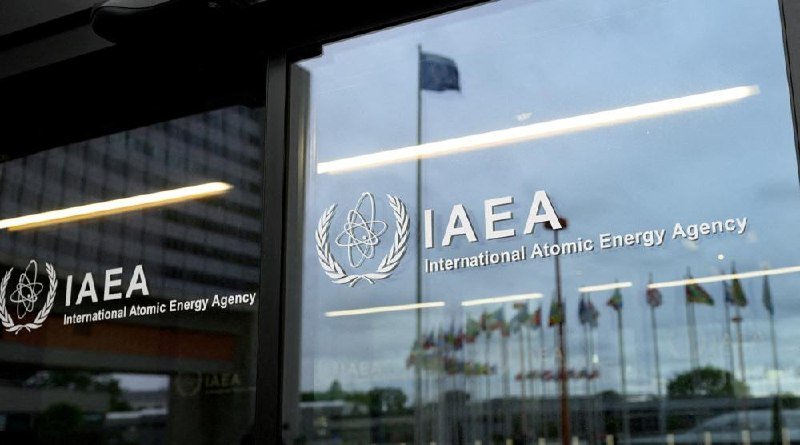
At 15:28 UTC on 9 June 2026, Iran's envoy to the International Atomic Energy Agency told the Board of Governors in Vienna that the chamber should not be "a place to launder military aggression and transfer its costs to the victim state." Two minutes later, at 15:30 UTC, the same envoy added that attacks on protected facilities should be treated as "international responsibility for its perpetrators," and that the agency must be "returned to the technical and neutral path." The remarks, carried by Al Alam Arabic's urgent wire, were not routine diplomacy. They were an attempt to reframe the IAEA's mandate from inside the institution that grants it legitimacy.
The gambit is straightforward. By converting the language of nuclear verification into the language of victimhood and aggression, Iran's representative is asking the Board to do something it was never designed to do: assign blame for a war, rather than adjudicate a safeguards file. The political appeal is obvious; the institutional cost is less so. An IAEA that audits battlefield conduct alongside uranium enrichment is an IAEA that loses the one thing its 35,000 inspectors and 180 member states have historically demanded of it — that technical work stay technical.
What the envoy actually said
Three threads of argument ran through the wire. First, that facilities under the agency's supervision were attacked, and that the disruption of verification is itself a politically loaded act. Second, that the Board should treat those attacks as a matter of international responsibility — diplomatic code for state-level accountability. Third, that the agency should be "returned" to a technical and neutral path, a phrase that implies it has been diverted. Read together, the three claims are an instruction: the IAEA should not just report on what it cannot now inspect, but should name who made inspection impossible.
This is a recognisable Iranian rhetorical move of the past two decades. Tehran has long argued that the file is inseparable from the broader security environment, and that an agency operating in a contested region cannot pretend otherwise. The novelty is the venue. The Board of Governors is a technocratic body, and its resolutions are technical instruments. Treating it as a tribunal is a category error that Iran is happy to commit in public, because the cost of the error falls on the institution rather than on any single state.
The counter-narrative Western capitals will push
The Western-allied read, predictably, is the opposite. From Washington, London, Paris and Berlin, the dominant framing is that the safeguards file is the file: inspectors were denied access, material was moved, and questions remain. Under that framing, the Iranian mission's appeal to the Board is procedural obstruction dressed up as moral principle — a way of converting a compliance debate into a sovereignty debate. The argument is that the IAEA's job is to verify, not to litigate, and that the more the room talks about victims and aggressors, the less it talks about centrifuges.
That framing has institutional weight. The Board of Governors is the only IAEA body that can refer a file to the UN Security Council, and the Western line is that this referral power is what gives the agency its teeth. Strip the framing of accountability, the argument goes, and the agency becomes a recording studio for technical reports no one enforces.
The structural read — why neither side is wrong
Both framings are coherent, and that is the problem. The IAEA was built in 1957 on the premise that technical verification could be insulated from geopolitics. That premise held through the Cold War because both superpowers agreed, for different reasons, that it should. It frayed in the 2000s over Iraq, cracked over Syria, and now, in mid-2026, is being openly tested by a state that wants to convert the institution's moral language into a shield for its own file.
The structural pattern is familiar: when a verification regime is asked to do political work, the regime's authority contracts. Inspectors are not lawyers, courts are not Boards, and resolutions are not verdicts. The more the Board speaks in the grammar of aggression and victimhood, the less its technical findings carry the weight that member states once assumed they would. That is true whether the speaker is Tehran, Washington, or anyone else.
Stakes, and what to watch next
The concrete stakes are narrow but real. The next quarterly Board session will determine whether the file is referred, whether a special inspection is requested, and whether Iran's declared enrichment activity is rolled into a wider sanctions motion at the Security Council. The Iranian mission's 9 June performance is an attempt to pre-position the Board against any of those moves. If even a handful of middle-power delegations adopt the "victim state" framing, the language of any resolution softens; if they do not, Tehran's move reads as a procedural feint that bought time.
The longer stakes are institutional. An IAEA that survives this round is an IAEA that has proven it can absorb a member state's attempt to politicise it without being captured by the attempt. An IAEA that does not is an agency that has, for the first time in its history, allowed its chambers to be used as a forum for adjudicating wars it was built to monitor. Tehran's envoy is not asking the Board to win a debate. He is asking it to become a different kind of body. That is a question the member states — not Iran, not the United States, not Israel — will have to answer in the coming weeks.
This piece sits inside Monexus's wider MENA file on the IAEA safeguards crisis. Where Western wires have led with the technical file, this article treats the 9 June statement as a deliberate institutional move by the Iranian mission — a framing the wire did not foreground but the underlying statements support.
Wire provenance
This editorial synthesis draws on the following public wire/social posts:
- https://t.me/s/alalamarabic
- https://t.me/s/alalamarabic
- https://t.me/s/alalamarabic
- https://en.wikipedia.org/wiki/International_Atomic_Energy_Agency