Hezbollah frames Iran's missile response as a defence of Lebanon, in a tightening axis of statements
Two parallel Telegram statements from Hezbollah, carried by Iranian and Beirut-aligned channels, present the latest Iranian missile strikes on Israel as defensive support for Lebanon — a framing that, by the group's own account, doubles as a message to the Zionist entity and to the Lebanese street.
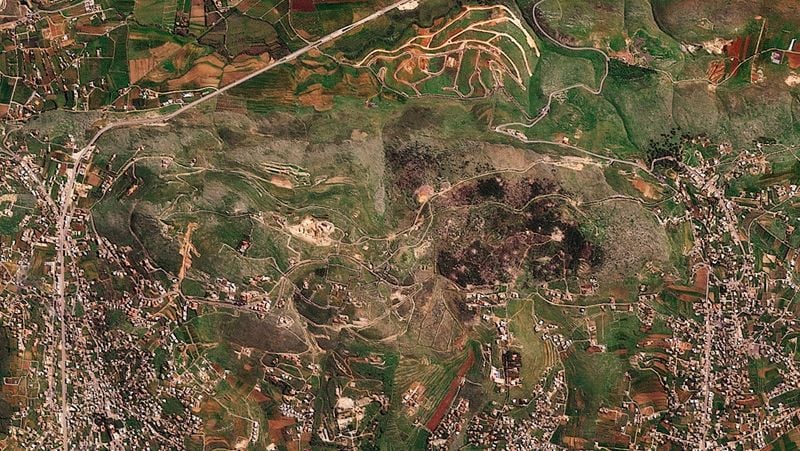
Two near-simultaneous statements from Lebanese Hezbollah, distributed on 9 June 2026 across Iranian and Beirut-aligned Telegram channels, frame Iran's latest missile strikes on Israel as a defence of Lebanon and of "the Islamic Republic's" regional posture. The framing is not incidental. It marks a moment in which the group's public messaging collapses the distance between Lebanese and Iranian security narratives, and presents Tehran's fire as a service rendered to a Lebanese constituency.
The pattern matters because the messaging is doing two things at once: reasserting the alliance inside Lebanese politics, and broadcasting it outward to Tel Aviv and to Western capitals still calibrating policy on the axis.
The statement in plain language
The longer of the two readouts, distributed by The Cradle Media's Telegram channel at 09:25 UTC on 9 June, characterises the Iranian missile strike as "a message of moral, p[olitical and]…" — the copy truncates in the source thread, but the headline framing is explicit: the strike is presented as defensive, in "defence of our Lebanese people," and addressed to "the Zionist entity." A second, shorter readout circulated at 09:27 UTC via Tasnim News English, an outlet of the Iranian state, and again at 09:07 UTC via Tasnim's main Persian-language channel, extends the same line: Iran's missile response, the statement says, "proved that Tehran stands by Lebanon." Both wire items foreground "appreciation of Lebanon's resistance to the Islamic Republic of Iran" — the precise English is slightly scrambled in the Tasnim copy, but the intended reading is clear from context: the movement frames itself as the resistance partner that Iran is standing behind, and that Iran has now demonstrated it is willing to back with force.
Three points are worth taking from the wording. First, the word "response" implies a prior act attributed to Israel. The thread context does not specify that prior act, and the Israeli side has not, in the items available to Monexus, released a corresponding readout in the same window. Second, the statements name the addressee of the strike as "the Zionist entity," not "Israel" — a deliberate lexical choice that aligns Hezbollah's framing with the broader axis's official lexicon, including Iranian state media. Third, the audience for the message is plainly dual: outward to Israel and to Western governments that have spent the past two years trying to limit the missile and drone programmes of the axis, and inward to the Lebanese public, for whom the question of whether the movement's patrons will still bleed for it is now an open political variable.
What the wire sees versus what the axis says
Mainstream Israeli and Western coverage of the wider exchange has, in recent cycles, emphasised interception rates, salvo size and the limits of Iran's missile inventory. Reuters, the BBC, The Guardian and Al Jazeera English have all, at various points in 2026, framed Iranian missile salvos as instruments of coercion whose strategic value is bounded by air-defence performance and by the political cost of escalation. Israeli establishment voices have, by the same token, framed the Lebanese front as a managed arena in which Hezbollah's capacity has been degraded since late 2024.
The Hezbollah-Tasnim line sits squarely in opposition to that read. In the framing on offer in the Telegram items, the strike is not coercion but solidarity; the addressee is not the Israeli public but the "Zionist entity" as a structural opponent; the audience that matters is not the Israeli cabinet but the Lebanese one. The claim is not that the strike worked militarily. The claim is that it was performed, and that its performance is itself the deliverable.
That is the version of the event the axis is choosing to publish, and the version a reader in Beirut or Tehran is more likely to encounter on their morning feed.
The structural picture, in plain editorial prose
The two channels carrying the statement are not neutral wires. Tasnim is an outlet of the Iranian state, operating inside the Islamic Republic's official media architecture. The Cradle is a Beirut-based outlet that, while editorially independent of any party, has consistently been read in Western and Israeli analytical shops as sympathetic to the resistance axis. To treat their near-identical copy on 9 June as two independent confirmations of the same news would be naïve. The pattern is closer to coordinated release: one English-language wire copy aimed at the global audience, one Persian-language item aimed at the Iranian domestic one, and a sympathetic English-language amplification in Beirut that lends the package a pan-Levant gloss.
The structural read is therefore not "Hezbollah and Iran said the same thing." It is: the public-communication infrastructure of the axis is functioning in a coordinated way, on a short fuse, and is putting a single, polished line into circulation. That is worth noting on its own terms, separate from whether the underlying missile event is as the statement describes.
What the sources do not say, and what to watch
The thread items carry no casualty figures, no salvo size, no identified launch sites, no specific Israeli targets and no Israeli or Western readout in the same time window. The framing of "response" to a prior Israeli act is asserted in the Hezbollah copy; the prior act is not specified in the materials available to Monexus at the time of writing. The interception picture, the diplomatic follow-through in Cairo, Doha and Washington, and the reaction of the Lebanese government — none of which is a Hezbollah-allied actor — are not in the wire as of 09:27 UTC on 9 June.
What can be said with confidence is narrow. Two statements were issued in the 09:07 to 09:27 UTC window, by Hezbollah, distributed through Tasnim and The Cradle. Both place Iran's missile strikes inside a narrative of defence of Lebanon and of standing-by a partner. The rest of the story — what was struck, with what, and at what cost on either side — is for the next round of reporting.
Desk note: Monexus has carried the axis's own framing in full and in its own words, on the principle that a reader evaluating Middle East escalation needs to see the message as its senders shaped it. The Western and Israeli wire line, centred on interception and on the bounded coercive value of the salvo, is the necessary counterweight; the Telegram items in our thread do not yet contain it.
Wire provenance
This editorial synthesis draws on the following public wire/social posts:
- https://t.me/tasnimnews_en/
- https://t.me/thecradlemedia/
- https://t.me/JahanTasnim/
Follow the event.
These dated source records provide context. They do not retrospectively verify this archive article.
Separate what the nuclear watchdog reported from what it could not determine after the June 2025 strikes.