Iran's Security Committee Puts Armed Forces on Alert as Rhetoric Hardens
On 9 June 2026, Iran's parliamentary security spokesman and a senior Supreme National Security Council official both framed the country as standing at a 'critical historical stage,' with armed forces placed on heightened alert.
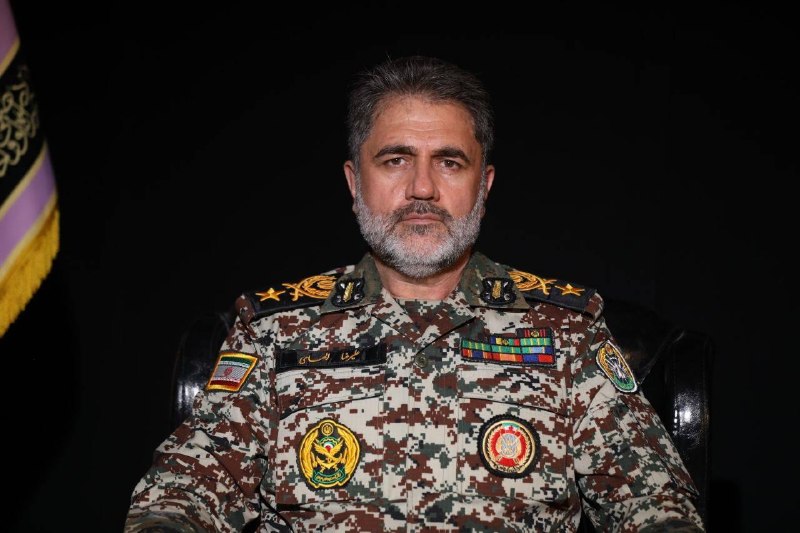
On 9 June 2026, at roughly 18:51 UTC, Al-Alam Arabic's breaking-news ticker carried a one-line message from the spokesman of Iran's parliamentary National Security and Foreign Policy Committee: the country's armed forces, he said, were "on alert to confront any evil or aggression at the highest level." Within the previous hour, Ali Bagheri Kani — Deputy Secretary of Iran's Supreme National Security Council and a former nuclear-deal negotiator — had given an interview to Al-Mayadeen in which he described the Iranian people as having "shown exemplary resistance at this critical stage of history," attributing that resilience to a national belief in "their own capabilities." Two separate Iranian officials, speaking through two different channels, on the same late afternoon, had chosen to put the country on a wartime rhetorical footing.
The timing matters. The two statements, taken together, do not describe a specific incident: there is no mention of a strike, an attack, a downed aircraft, or a maritime seizure. They describe a posture. The committee spokesman, an elected lawmaker rather than a military officer, was amplifying an alert status; Bagheri Kani, a civilian security official, was framing the alert in civilisational language. The combination is the kind of carefully staged alignment that Tehran typically deploys when it wants a foreign audience to read the same message at the same moment — the armed forces prepared, the political class resolved, the public rallied.
What was actually said
The committee spokesman's words, as carried by Al-Alam Arabic's Telegram channel, are short and conditional. They invoke readiness — the armed forces "on alert to confront any evil or aggression at the highest level." The phrasing leaves the trigger ambiguous: the alert is not described as a response to a named event. It reads as a state of preparation, not a state of engagement.
Bagheri Kani's remarks, carried in parallel by Tasnim and Jahan-Tasnim, are longer and more ideological. The Iranian nation, he told Al-Mayadeen, has "shown exemplary resistance at this critical historical stage." The framing is one Tehran has used before: that the country is simultaneously under pressure and proving itself. The mention of "their own capabilities" is a pointed signal to a domestic audience that any confrontation will be borne by Iranian means, not by appeals to outside powers.
Neither statement names an adversary, neither quantifies a threat, and neither is paired in the thread with an English-language wire confirmation. That is the limit of what the publicly available material establishes. The remaining question — what specifically prompted the alert language on this particular afternoon — is not answered by the source set.
How the messaging is layered
Iran's security communications under stress typically operate on two tracks. The first is institutional: the armed forces, the IRGC, and the Ministry of Defence speak in operational terms about readiness, force posture, and deterrence. The second is political-ideological: senior officials of the Supreme National Security Council, the foreign ministry, and parliamentary committees speak in terms of national will, civilisational continuity, and historical mission. The 9 June 2026 sequence obeys that division. The committee spokesman, speaking in operational register, signals force readiness. Bagheri Kani, speaking in ideological register, frames the readiness as a function of national character.
The two channels that carried the Bagheri Kani remarks — Tasnim News in English and Jahan-Tasnim in Persian — are both closely aligned with the Iranian establishment, and Al-Mayadeen, the recipient of the interview, is a Beirut-based outlet sympathetic to the Tehran-Beirut-Damascus axis. The Al-Alam channel that carried the committee statement is itself the Arabic-language outlet of Iranian state broadcasting. The audience for the combined message is therefore composite: a domestic Iranian audience receives the readiness line, an Arab-language regional audience receives it through Al-Alam, and a wider resistance-axis audience receives Bagheri Kani's framing through Al-Mayadeen. Western wire services are not the primary target of this communications sequence, and indeed none of the four thread items comes from a Western wire.
The structural read
Two things are worth saying plainly about a moment like this. First, the alert language is not, in itself, evidence of an imminent operation. Iranian officials have used nearly identical formulations in past months when the country was calibrating a negotiating posture rather than preparing a kinetic action. The combination of a parliamentary committee statement and a security-council interview is consistent with that pattern: signalling to multiple audiences that the country is prepared to escalate, without committing to escalation.
Second, the absence of a named trigger is itself a piece of information. When a state announces an alert in response to a specific attack, the attack is named — sometimes within minutes, sometimes within hours. When a state announces an alert as a posture-setting move, the absence of a named trigger is deliberate. It preserves ambiguity, which is the diplomatic asset the alert language is designed to produce. Tehran, in this reading, is buying optionality. It is telling every audience that the armed forces are ready, while reserving the right to define later what, if anything, the readiness was for.
The structural frame here is familiar. A regional actor under sustained external pressure — sanctions architecture intact, nuclear-file diplomacy suspended or slowed, periodic exchanges of strikes with Israel, periodic maritime confrontations in the Gulf — uses a publicly visible alert to recalibrate expectations. Domestic audiences are reminded that the state is vigilant. Foreign adversaries are reminded that the cost calculus is not zero. Negotiating counterparts, if any are engaged in back-channel contact, are reminded that the Iranian side is not operating from a position of fatigue.
Stakes and what to watch next
The immediate stakes are limited but real. The alert language raises the political cost of any miscalculation, both for Iranian security forces on the ground and for any external actor whose movements Tehran would read as provocative. Maritime traffic in the Strait of Hormuz, overflights in the Gulf, and the posture of Iranian-backed formations in Iraq, Syria, and Lebanon all become more sensitive for the duration of the heightened rhetorical phase.
The medium-term stakes are larger. If the alert language is the opening of a new pressure cycle — the kind that has, in past episodes, been followed within weeks by a nuclear-step announcement, a tanker detention, or a direct strike on an Israeli target — the diplomatic cost of de-escalation rises for all parties. If, alternatively, the alert is a calibrated move inside a continuing negotiation track, the language is meant to be read as serious but not as terminal. The thread items do not resolve that question. They establish that the language was used, that it was used by named officials in named institutional roles, and that it was distributed across multiple aligned channels within a single afternoon.
The uncertainty is worth naming. The source set for this article consists entirely of Iranian-aligned and Iran-sympathetic channels: Al-Alam Arabic, Tasnim News, Jahan-Tasnim, and Al-Mayadeen as the interview platform. None of the four items is independently corroborated by a Western wire, by an Israeli or Saudi counterpart statement, or by an international organisation. That does not mean the statements were not made — they were, and the channels that carried them are recognisable vehicles for the officials named. It means that a reader looking for the response from the other side of the alert — from Washington, from Tel Aviv, from the Gulf states, from the IAEA — will not find it in the material available here. The alert is real. The counter-alert, if there is one, is not yet on the record.
What this publication will be watching, in the hours and days ahead, is whether the alert language produces a follow-on announcement — a nuclear step, a proxy operation, a diplomatic opening, or a quiet stand-down. The pattern from past episodes is that the first twenty-four to seventy-two hours after this kind of message determine which of those four paths the country is on. Until then, the most honest reading of the 9 June 2026 sequence is the narrow one: that two senior Iranian officials, on a single afternoon, chose to put the country on a wartime footing in public, without naming what put them there.
Desk note: Monexus has reported this story strictly from the Iranian-aligned source set that carried the original statements. Western-wire confirmation, regional counter-statements, and independent verification of the alert's operational status are not yet available; the article has been written conservatively to reflect that gap, and will be updated as corroboration arrives.
Wire provenance
This editorial synthesis draws on the following public wire/social posts:
- https://t.me/alalamarabic/
- https://t.me/alalamarabic/
- https://t.me/tasnimnews_en/
- https://t.me/JahanTasnim/
- https://t.me/alalamarabic/
- https://t.me/tasnimnews_en/
- https://t.me/JahanTasnim/
- https://t.me/alalamarabic/