Israel's envoy to Washington tells CNN: 'We hope the war with Iran ends within two weeks'
Israel's ambassador in Washington tells CNN a Trump–Netanyahu call was 'friendly' and expresses hope the war with Iran ends within two weeks — even as Israel Hayom reports Rubio persuaded Trump to back a Beirut strike.
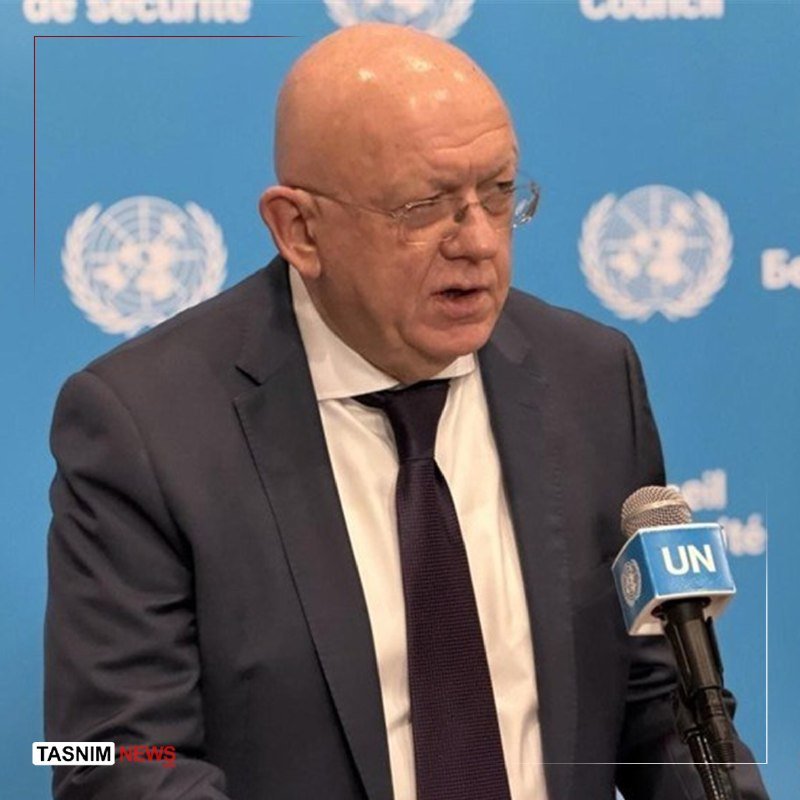
Israel's ambassador to the United States told CNN in the early hours of 9 June 2026 that Israel and the United States "entered the war with Iran together and I believe we will end it together," and that he hopes the conflict concludes "within two weeks." The interview, reported by Al Alam Arabic in a series of urgent posts timestamped between 01:40 and 01:46 UTC, frames a fast-moving diplomatic window in which Washington is being asked to underwrite, not just rhetorically but operationally, the endgame of a war that began less than a week ago.
The envoy's appearance is the cleanest public statement yet that Israel is no longer managing the war as a solo campaign. It is being run, in his telling, as a joint project with the Trump administration, with shared objectives — the dismantling of Iran's nuclear and ballistic-missile programmes — and a shared horizon. The two-week target is, on the face of it, an order of magnitude shorter than the timelines most Western analysts have been quietly assuming since the opening strikes.
What was actually said
Three separate Al Alam Arabic dispatches, all sourced to the CNN interview and timed within six minutes of one another, lay out the Israeli position. The first, at 01:40 UTC, carries the ambassador's hope that the war "will end within two weeks." The second, at 01:42 UTC, sets out the Israeli end-state: an Iran with no nuclear weapon and no missile programme. The third, at 01:46 UTC, characterises the Trump–Netanyahu call as "friendly" and reiterates the joint-entry, joint-exit framing. Read together, they are a tightly-scripted rollout, not a slip — the kind of coordinated messaging an embassy deploys when it wants the precise wording to land.
The Rubio variable
If the ambassador's interview was the public face, the operational backstory is more pointed. At 01:21 UTC on 9 June, Al Alam cited a report by Israel Hayom — the free daily aligned with Prime Minister Netanyahu's political base — claiming that the previous night's strike on the southern suburbs of Beirut was carried out "in coordination with Washington," and that Secretary of State Marco Rubio had "convinced Trump to support 'Israel' to respond to Iran." Iran's Tasnim news agency picked up the same Israel Hayom report at 01:17 UTC, attributing the persuading role explicitly to Rubio.
The Tasnim framing of the same Israel Hayom report matters less for what it adds than for what it confirms: the Israeli press itself is publishing, on the morning after, that the Beirut escalation and the wider Iran campaign now travel through a US political authorisation chain in which Rubio is a principal broker. That is a heavier claim than "coordination." It implies a White House decision, taken on advice, to green-light a strike that put Lebanese civilians in the blast radius of a campaign nominally aimed at Iran.
Why the two-week clock is doing real work
The ambassador is not offering a forecast. He is offering a price. Two weeks is the period in which the diplomatic architecture Israel wants — an end-state in which Iran is verifiably stripped of both the weapon and the delivery means — can plausibly be sold as the outcome of military action rather than a face-saving climbdown. Beyond that window, the campaign risks the fate of the 2006 Lebanon war, or worse: an open-ended commitment that no occupant of the White House, facing a midterm cycle, is willing to underwrite indefinitely.
The structural reading is straightforward. A hegemonic patron does not need to fight a war to end it; it needs to control the terms on which the war ends. The two-week line is the terms. It tells Tehran, and tells the Arab capitals watching from the side, that the United States intends to own the off-ramp. Whether Tehran accepts that off-ramp is the only question that matters in the next fortnight.
What remains genuinely uncertain
The thread of reporting does not specify what "end" means in operational terms. Does it mean a ceasefire? A collapse of Iran's air-defence and missile-production network? A negotiated denuclearisation framework signed under duress? The ambassador's two formulations — no nuclear weapon and no missile programme — are broader than anything previously on the table and harder to verify. Western wire reporting on the precise contents of the Trump–Netanyahu call has not, as of the timestamps above, been published in the items available to this publication; the Israeli read is being carried by Israel Hayom via Al Alam and Tasnim, and the Iranian state-aligned Tasnim framing should be read with that sourcing chain in mind. The most that can be said with confidence is that Washington and Jerusalem are publicly aligned on a short clock, and that the Beirut strike is now being described, by the ally of the Israeli prime minister, as an American-authorised act.
If the clock holds, the next two weeks will produce either a deal or a deeper escalation — and the answer will tell the region more about the Trump administration's appetite for Middle Eastern entanglements than any of the rhetoric so far.
Desk note: Monexus is leading with the Israeli ambassador's own CNN framing, and carrying the Israel Hayom claim of US coordination as attributed counter-narrative material — a sourcing distinction that matters when the same report travels through both Al Alam and Tasnim.
Wire provenance
This editorial synthesis draws on the following public wire/social posts:
- https://t.me/alalamarabic/1
- https://t.me/alalamarabic/2
- https://t.me/alalamarabic/3
- https://t.me/alalamarabic/4
- https://t.me/JahanTasnim/1