Forced to flee twice: how Israel's evacuation orders in Lebanon are outrunning the people they target
UN officials say Israeli evacuation orders across southern and eastern Lebanon are physically impossible to comply with. The orders themselves are now part of the war.
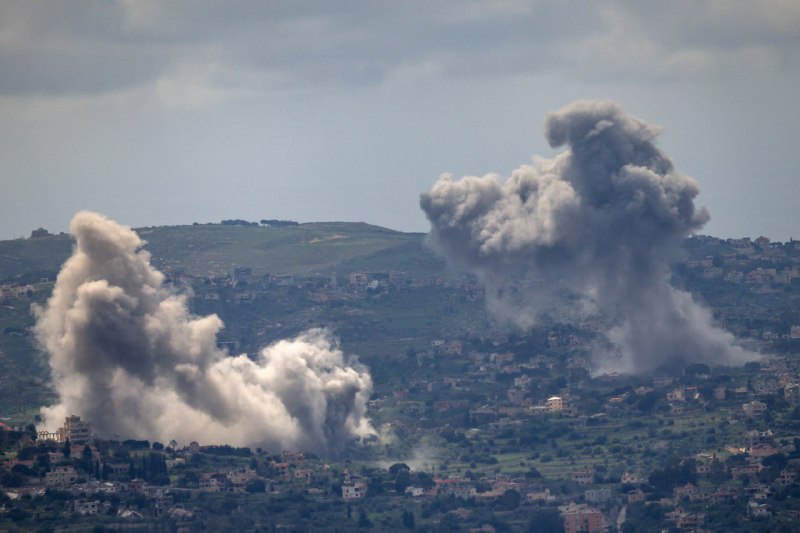
The warning reached a village in southern Lebanon shortly after 01:00 UTC on 8 June 2026, the way every Israeli-issued evacuation order has reached the south in recent months: by text, by loudspeaker, by word of mouth, and by the sound of the warplanes that almost always follow. A UN spokesman, briefing reporters in New York in the early hours of 9 June UTC, said the cumulative scale of the orders now in circulation — directing civilians out of areas of southern and eastern Lebanon, in many cases with hours of notice — is, in the UN's formal language, "nearly impossible to follow." The phrasing is diplomatic. What it describes, on the ground, is a population being told to move in directions that lead only into other places they have already been told to move from.
The orders themselves are no longer adjuncts to the war. They are the war's principal civilian-protection instrument on the Lebanese side, and they are failing in a way that is now visible to every agency that watches the country's roads. That failure is doing more than producing a humanitarian crisis; it is reshaping how the fighting itself is conducted.
What the UN is actually saying
The UN spokesman's remarks on 9 June 2026, as carried by Al Jazeera's breaking-news wire, were not a general complaint about the humanitarian situation in Lebanon. They were a specific legal and operational critique of the evacuation orders themselves. The orders, the UN argued, ask civilians to do three things at once: leave densely populated areas in the south and east, do so within compressed time-windows, and reach destinations that are themselves under active bombardment or already saturated with displaced people. The geometry of that request, on a country whose road network runs in narrow corridors parallel to the border, does not work. The UN's pointed use of the word "illegal" in describing the cumulative effect of the orders is a deliberate escalation in language: not "concerning," not "inadequate," but in breach of the duty to spare civilians.
The orders, when they come at all, vary. Some are village-specific and tied to a named operation; others are sweeping regional warnings broadcast across multiple districts. Reports from the ground over the past week describe families in Nabatieh, in the Bint Jbeil district, in the Marjayoun plain, and along the Bekaa Valley's eastern edge receiving orders to move north or west, then being directed again as targets shift. The pattern is consistent enough that humanitarian agencies have begun publishing their own mapping of the orders, on the basis of which the UN's blanket characterisation now rests.
The counter-narrative from Tel Aviv and the IDF
Israeli framing, as conveyed through IDF Spokesperson briefings and Times of Israel reporting in recent days, treats the orders as a necessary, if imperfect, expression of the duty to warn. The argument runs that Israel gives notice because Hamas infrastructure, tunnel shafts, weapons stores and launcher cells are routinely embedded inside civilian areas in southern Lebanon, and that without prior warning the casualty toll on the Lebanese side would be far higher. The orders are, in this telling, the lesser of two harms: the alternative to warning is striking without it.
This framing has internal logic. It is also incomplete. International humanitarian law requires that warnings be feasible — that the civilian population be able to obey them. The UN's 9 June statement is, in effect, a finding that feasibility has collapsed. The orders have, in the lawyers' phrase, become "unworkable." An evacuation order that is impossible to obey is not, in the relevant legal sense, an evacuation order at all; it is a formality. The Israeli position, in other words, has not so much been rebutted as rendered moot by the scale of the displacement its own operations are generating. Once the southern road network is choked with the previous wave of evacuees, the next warning has no road left.
A second, quieter Israeli counter-argument is that the UN's language is calibrated for a media cycle, not a battlefield. This is the harder objection to dismiss. The spokesman's remarks, with their use of "illegal," arrive in the same news cycle in which projectiles launched from Lebanon into northern Israel were intercepted on the afternoon of 8 June UTC, as flagged by social-media monitoring accounts tracking the exchanges. Israel, in this reading, is being asked to conduct more discriminate war in a tighter time window than the threat picture permits, by a body whose own monitoring presence in southern Lebanon has been limited. There is a real tension here, and the wire coverage does not resolve it.
What the data is and is not telling us
The most striking feature of the present moment is what the official record does not contain. There is no consolidated public count of how many Israeli evacuation orders have been issued across Lebanon in 2026, how many distinct localities they cover, or what the median notice period has been. The UN's 9 June characterisation is qualitative; it asserts impossibility without enumerating. Israeli briefings, conversely, point to specific operations and named target sets without aggregating the cumulative effect of the warnings attached to them. Two different kinds of opacity are operating at once, and the civilian population in between is left to act on whichever warning is loudest at the moment.
The Polymarket contract pricing an Israeli withdrawal from Lebanon by the end of June 2026, which closed 8 June at a 6% implied probability, is the only public, market-clearing estimate of how the war is expected to end in the near term. A 6% number, sitting where it does, tells the reader that the informed betting population does not expect a clean exit inside the month. That is a single data point, not an analysis, but it sharpens the question: if the orders are not designed to clear space for a withdrawal, what is the longer military plan they are part of?
The structural reading, put plainly, is that Israel has substituted an air-and-notice regime for a ground occupation in southern Lebanon. The orders create a population vacuum that the IDF can then operate inside with reduced friction from incidental civilian presence; the displaced are pushed north, into cities that are already hosting previous waves of displacement. The arrangement is cheaper in Israeli lives than a ground hold and more politically defensible than annexation. It is also, by the UN's 9 June reading, in tension with the legal duty to direct civilians to safety rather than to a different kind of danger.
What the Lebanese state can and cannot do
The Lebanese government's room for manoeuvre here is narrow and getting narrower. Beirut's formal position, as conveyed through caretaker channels in the past week, is that Israel bears responsibility for civilian protection and that the orders as currently constructed do not satisfy that responsibility. The Lebanese army, itself constrained by the country's political paralysis and by parallel armed structures inside the south, has limited ability to organise orderly movement or to police the routes. Civil society and the major displacement-response organisations — UNRWA is not the lead agency here, since the displaced population is Lebanese; the lead is UNHCR working with the Lebanese government — are filling the gap with a mixture of shelter, cash assistance and route-mapping. The capacity is real, but it is being asked to do work that only state actors can do at scale.
The political consequence is that the orders, whatever their legal characterisation, are now an instrument of internal Lebanese displacement on a scale that will outlast the current phase of fighting. The southern villages from which residents are being directed north are not being held in trust for return. Infrastructure in those areas is being damaged at a rate that will require multi-year reconstruction under any scenario. Each cycle of orders, each successful push north, transfers a durable burden onto the Lebanese state and onto the host cities — Saida, Tyre, the southern suburbs of Beirut, the Bekaa — that absorb the arrivals.
Stakes, and what the next two weeks will show
If the 6% Polymarket number is read as a floor rather than a ceiling, the implied trajectory is that the orders will continue, the displacement will continue, and the UN's legal characterisation will harden from "nearly impossible to follow" into something more specific. The next inflection point is administrative rather than military: whether the UN produces, in the next two weeks, a written finding that names the orders as a violation rather than a concern. That document, if it appears, will not by itself change Israeli practice on the ground. It will, however, change the diplomatic air around the aid flows and the southern-border crossing, and it will give European and Gulf donors a clearer legal hook on which to condition reconstruction assistance.
The harder question is whether the order-based regime can continue to function as Israeli practice intends. An evacuation order that civilians cannot obey is, from the IDF's own perspective, a signal that the warning system has lost contact with the population it is meant to protect. Once that signal becomes loud enough, the choice inside the Israeli system narrows to two: either move to a posture that does not depend on warnings — a ground hold, a declared buffer zone, a fait accompli — or accept the political cost of strikes that produce civilian casualties without the legal cover that warnings nominally provide. The orders, in other words, are not just failing the Lebanese. They are running out of utility for the Israelis who issue them.
What remains uncertain, and what the sources available do not settle, is the count. The wire does not yet give a consolidated number of displacement movements triggered by the late-May and early-June orders, nor a credible figure for civilians killed or injured in the period between issuance and attempted compliance. The UN's 9 June statement is firm on the legal characterisation and soft on the arithmetic. Until that arithmetic lands, the orders will continue to do the work of displacement in southern Lebanon, and the gap between Israeli framing and UN framing will continue to widen on the ground without resolving on the page.
Desk note: Monexus has framed the 9 June UN statement as a legal characterisation by the UN of Israeli-issued orders, not as a general indictment of Israeli operations in Lebanon. Israeli security concerns and the cross-border fire of 8 June are treated as first-order facts; the dispute here is over the feasibility of the warnings, not over the existence of the threat.
Wire provenance
This editorial synthesis draws on the following public wire/social posts:
- https://x.com/unusual_whales/status/
- https://en.wikipedia.org/wiki/South_Lebanon_conflict_(2023%E2%80%93present)
- https://en.wikipedia.org/wiki/2024_Israeli_invasion_of_Lebanon
- https://en.wikipedia.org/wiki/United_Nations_Interim_Force_in_Lebanon
- https://en.wikipedia.org/wiki/International_humanitarian_law
- https://en.wikipedia.org/wiki/Hezbollah
- https://x.com/unusual_whales/status/
- https://en.wikipedia.org/wiki/South_Lebanon_conflict_(2023%E2%80%93present
- https://en.wikipedia.org/wiki/2024_Israeli_invasion_of_Lebanon
- https://en.wikipedia.org/wiki/United_Nations_Interim_Force_in_Lebanon
- https://en.wikipedia.org/wiki/International_humanitarian_law
- https://en.wikipedia.org/wiki/Hezbollah