Israel's southern Lebanon operation grinds on: 48 soldiers wounded, helicopter evacuations, and a widening bill
Five days into an intensifying southern Lebanon campaign, the Israeli military acknowledges 48 wounded troops as helicopter evacuations, Tyre strikes and security incidents point to a sharper, more costly phase of cross-border fighting.
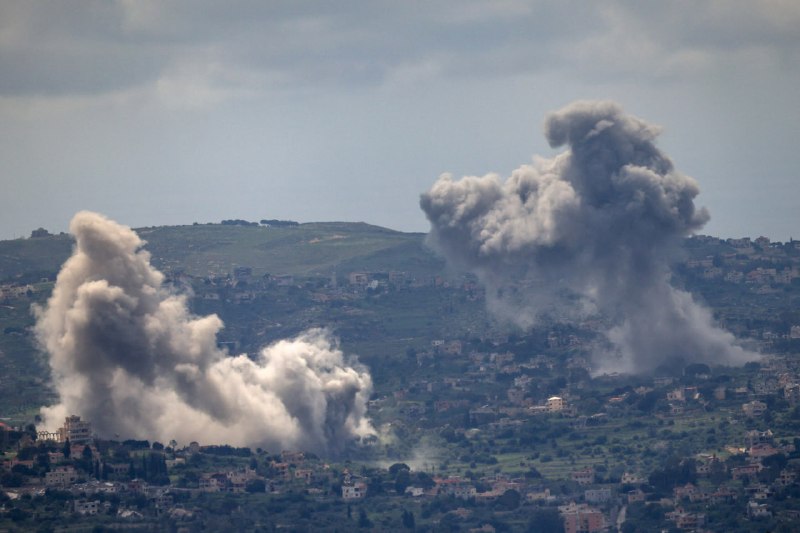
At 14:24 UTC on 9 June 2026, the Israeli military disclosed, via Al Jazeera, that 48 of its officers and soldiers had been wounded in southern Lebanon over the preceding five days. By 14:31 UTC, Telegram channels aligned with regional security monitoring reported that Israeli helicopters had been dispatched to evacuate dead and wounded from a fresh security incident inside the southern Lebanese theatre. A third report, timestamped 13:41 UTC, placed Israeli strikes on the coastal city of Tyre. Taken together, the three dispatches describe a single, recognisable phase: an Israeli ground-and-air operation in southern Lebanon whose casualty footprint, evacuation tempo and reach into Lebanon's major southern cities are all visibly larger than the routine cross-border exchanges of the past eighteen months.
The pattern is not new in kind. What is new is the public arithmetic. Five days, 48 wounded, helicopter medical evacuations, strikes on Tyre — the numbers and the logistics point to an operation that has moved past targeted counter-fire into something more sustained, and that the Israeli defence establishment is, for the first time in this phase, choosing to acknowledge in discrete, almost clinical updates rather than the customary denials or silence.
What the day's reporting actually shows
The three items cluster in a roughly fifty-minute window on the afternoon of 9 June and are mutually reinforcing. The earliest, at 13:41 UTC, logged Israeli strikes on Tyre — the largest city in southern Lebanon, a coastal urban centre of several hundred thousand residents and a long-standing Hezbollah political and logistical hub. The two later items, both around 14:24–14:31 UTC, conveyed a different kind of information: not what Israel was hitting, but what was hitting Israel. The 48-wounded disclosure, attributed to the Israeli military and carried in English by Al Jazeera, and the helicopter evacuation of dead and wounded from a security incident, suggest that contact along the border and in adjacent villages has been intense enough to overwhelm at least the initial layer of in-theatre medical handling.
That the Israeli military chose to publicise the 48-wounded figure at all is a small editorial event in its own right. During prior rounds of fighting, casualty acknowledgements have often been delayed, partial or relegated to lower-tier Hebrew-language press. The 9 June release, by contrast, surfaced inside the English-language wire cycle within hours — a deliberate signal, most plausibly, that the Israeli public, the northern Israeli communities most exposed to retaliatory fire, and the military's own reservist base are all meant to read the figure as a credible measure of cost.
The regional counter-narrative
Reporting from outlets aligned with the Iranian and wider Axis-of-Resistance ecosystem tells the same arithmetic a different way. Channels carrying these threads routinely frame the 48-wounded figure, and the helicopter evacuations, as evidence of attrition — the slow grinding-down of an expeditionary force that entered southern Lebanon to degrade Hezbollah's forward infrastructure and is now absorbing a return rate of fire it had not publicly forecast. The Tyre strikes, in that reading, are not the spearhead of a clean operation but the visible signature of an Israeli force that has had to push its operational depth further into Lebanese territory in order to suppress, rather than merely interdict, incoming fire.
This framing should be taken seriously as a reading of incentives, even if its claims about outcome remain unverified. The Israeli military's own release — 48 wounded in five days, with helicopter evacuations on 9 June — is the empirical floor on which the attrition argument rests. Whether the floor supports the ceiling the framing claims for it is a separate question. The two readings converge on a fact: the operation is producing Israeli casualties, in numbers the military has chosen to disclose, and it is producing them in a way that requires rotary-wing medical evacuation from inside the operational area. Neither of those facts, on their own, settles the larger strategic question.
What the public record does not yet settle
The thread material is unusually rich for a single afternoon window, but it is also thin in the specific places a long read needs to be solid. The Israeli military's 48-wounded disclosure does not, on the public record, break the figure down by cause of wound, by unit, by location inside Lebanon, or by severity — categories that, in earlier rounds of cross-border fighting, have sometimes surfaced days or weeks later in Israeli press accounts or in casualty notices issued by the IDF Spokesperson's unit. The Al Jazeera relay of the figure does not change that.
The Tyre strikes, similarly, are described in telegram reporting but not, in the material available for this piece, in an official Israeli targeting notice or a Lebanese civil-defence casualty statement. The helicopter evacuations are reported as a live event by channels with a track record of fast turnover and a bias toward scene-of-action photography; they are not, in this thread, corroborated by a defence-ministry press release, a UN Interim Force in Lebanon (UNIFIL) situation report, or a Lebanese Red Cross dispatch.
The 9 June reporting is, in other words, a snapshot of the first hour. It captures tempo and direction. It does not yet capture casualty figures on the Lebanese side, the scale of displacement from Tyre and the surrounding villages, the operational reach of any ground manoeuvre as distinct from stand-off fire, or the diplomatic activity — if any — that the operation is generating in Beirut, Doha, Paris and Washington.
The structural read
Step back from the day's three threads and the operation starts to look less like an isolated escalation and more like the working-out of a structural problem both sides have been deferring for the better part of two years. Since the November 2024 ceasefire arrangement ended the open phase of the Israel–Hezbollah war, the border zone has been governed by a quiet arrangement of mutual non-enforcement: a UN-monitored ceasefire on paper, regularised fire across the Blue Line in practice, and a series of understandings — brokered, by all credible accounts, with active US and French involvement — that gave each side a vocabulary for opting down rather than up. The 9 June reporting suggests that vocabulary is being tested.
What the public arithmetic shows is that the cost of staying engaged, for Israel, has moved from the low single digits per week to a sustained, multi-day rate that the military is now naming. That move has predictable second-order effects: pressure on the Home Front Command to extend or tighten restrictions in northern Israeli districts; pressure on the political leadership in Jerusalem to decide whether the current tempo of operations is a phase to be closed out, a step on the way to something larger, or a new equilibrium; and pressure, less discussed, on the Lebanese state, which has historically been unable to constrain Hezbollah's southern activities and which now faces an Israeli operation of a depth and intensity that the post-2024 architecture was supposed to prevent.
The most plausible reading of the 9 June cluster is that the post-2024 architecture is being thinned out in real time, by both sides acting within their own doctrinal logics, and that the diplomatic infrastructure designed to catch that thinning — the five-power monitoring mechanism, the US–France–UN channel — is being kept offstage, for now, by choice as much as by capacity. Whether that is a sustainable posture, or a slow drift toward a wider re-engagement, is the question the next seventy-two hours of reporting will have to answer.
What to watch next
Three near-term indicators will, taken together, give a much clearer picture of whether 9 June marks the high-water mark of a controlled phase or the opening of a wider one. The first is a fuller Israeli casualty disclosure: if the IDF Spokesperson's unit follows the 48-wounded acknowledgement with named notices, unit identifications and locations, the operation is being managed as a public, politically legible campaign. If the figure is allowed to stand alone, the message is more ambiguous.
The second is a UNIFIL situation report. UNIFIL's voice has been deliberately muted during the post-ceasefire period, but the presence of rotary-wing medical evacuations inside the operational area and strikes on a city of Tyre's size are exactly the kind of events that the mission's force commander is required, under its mandate, to characterise in writing. A UNIFIL statement — or a notable absence of one — is itself a data point.
The third is the diplomatic wire from Beirut. The Lebanese state, even under its current severe political constraints, retains a foreign ministry and a prime minister's office whose communiqués are tracked in real time by regional desks. A Lebanese government statement that names, rather than paraphrases, the operation, and that engages the ceasefire architecture by name, would suggest Beirut believes the diplomatic floor still exists. Silence, or a Hezbollah-channel-only response, would suggest it does not.
For now, the public arithmetic is what it is: 48 wounded in five days, helicopter evacuations on the afternoon of 9 June, and strikes on Tyre, reported within a fifty-minute window by three independent channels. It is a snapshot, not a verdict. But it is a snapshot of an operation whose tempo and visibility have moved into a register that neither side's post-2024 vocabulary was built to absorb.
This piece treats the Israeli security situation in the north as a first-order fact and reports the publicly stated Israeli military casualty figure without editorial trimming, while also reporting regional counter-framings of the operation's trajectory as legitimate readings of the same underlying arithmetic. The Lebanese civilian dimension is acknowledged in the structural section and flagged as a reporting priority for the next dispatch; the present source set does not yet contain a UNIFIL, Lebanese Red Cross or Lebanese government statement specific to the 9 June events, and that gap is named above rather than papered over.
Wire provenance
This editorial synthesis draws on the following public wire/social posts:
- https://t.me/Middle_East_Spectator
- https://t.me/thecradlemedia
- https://t.me/rnintel