Israel widens displacement order to cover all of Tyre as southern Lebanon's civilian crisis deepens
The IDF has ordered the evacuation of Tyre in its entirety, including the Christian quarter and surrounding camps, after a fresh wave of airstrikes — a step that places an entire coastal city under a forcible-displacement regime.
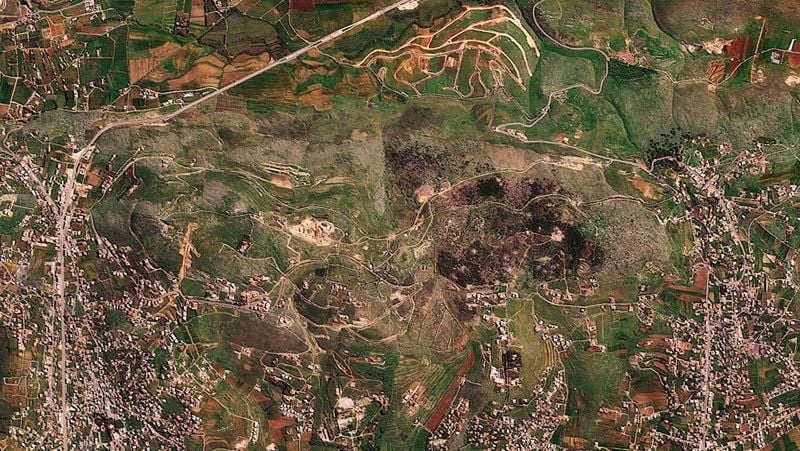
The Israel Defense Forces expanded a forcible-displacement order across the entire city of Tyre on the southern Lebanese coast on the morning of 9 June 2026, hours after a new wave of airstrikes struck the area. The order, confirmed by Middle East Eye and by the open-source mapping channel AMK Mapping, covers not only the city's residential districts but also its Christian quarter and the surrounding refugee camps. It is the broadest single-city evacuation directive issued by the IDF inside Lebanon since the present campaign began, and it places a major urban centre with a documented continuous habitation stretching back more than four millennia under a stand-down regime.
Tyre is no peripheral target. It is Lebanon's fourth-largest city, a UNESCO World Heritage Site, and the gateway to the south's road network. Telling its entire civilian population — including long-established Christian communities and Palestinian refugees living in camps on the city's edge — to leave, on a single day, is not a tactical adjustment. It is the imposition of a displacement regime at city scale. Israeli security concerns are legitimate, and the campaign's stated aim is to degrade armed formations that have, for decades, embedded rocket and missile capability inside the country's south. But a measure of this scope, applied to a city of Tyre's size, has consequences that go well beyond the immediate military objective, and it deserves to be examined on its own terms.
What was ordered, and what is now in force
According to Middle East Eye's reporting, the IDF's new directive applies to Tyre in its entirety. AMK Mapping's Telegram post, which surfaced the order in close to real time, was more specific: it named the Christian quarter and the surrounding camps — a reference to the Palestinian refugee camps clustered on Tyre's outskirts and the historic Christian neighbourhoods inside the old city — as falling within the same instruction. The two accounts, posted within minutes of each other, reinforce rather than contradict one another. The instruction is not a "leave the southern suburbs" alert, the kind the IDF has issued repeatedly in past months; it is a city-wide stand-down.
The displacement regime that follows from such an order is familiar from earlier rounds of the campaign. Residents are given a window — typically hours, occasionally a day — to move north of the Litani or to designated gathering points. Those who remain are told, by IDF Arabic-language broadcasts and leaflet drops, that they do so at their own risk. Property is left behind; hospitals, schools, and municipal services are partially suspended because staff cannot or will not move. The pattern has played out district by district across southern Lebanon since the start of the present phase of the war, but never across an entire city of Tyre's size in a single announcement.
The counter-narrative: what Israeli commanders say, and what it does not answer
Israeli military briefings accompanying earlier rounds of evacuation orders have emphasised two points. First, that armed formations have deliberately positioned rocket launchers, command nodes, and munitions stores inside or adjacent to civilian infrastructure, including in residential blocks and religious sites. Second, that warning civilians to evacuate before a strike is a legal and moral obligation the IDF takes seriously, distinguishing its practice from that of non-state armed groups that fire from inside populated areas without warning.
Both points are weighty, and the first is documented across years of United Nations reporting on the location of rocket and missile infrastructure. They are also, however, not a complete answer to the situation that is now in place. A forcible-displacement order that applies to an entire city does not, in itself, distinguish between neighbourhoods where the stated military threat is concentrated and neighbourhoods where it is not. The Christian quarter of Tyre, the historic crusader-era churches around the old port, and the refugee camps ringing the city do not present identical profiles from a targeting standpoint, and the Israeli public-facing rationale has not, in the materials available to this publication, explained why a city-wide order was preferred over a more granular one. The IDF's Arabic-language spokesperson unit typically points affected residents toward humanitarian corridors and Web-based alert maps; the gap between that guidance and the lived reality of an elderly Christian resident of the old city, or a Palestinian family in one of the camps, with no transport, no kin in the north, and no funds for a long displacement, is the gap the order creates.
The structural frame: when displacement becomes policy
What is unfolding in Tyre is best read as the continuation of a pattern, not a deviation from one. Across the southern districts — Bint Jbeil, Marjayoun, the western Tyre countryside — the IDF has for months applied a layered sequence: strike, warn, displace, hold. Each cycle shrinks the area in which normal life is possible. When a city is added to the sequence, the cycle is no longer about pacifying a border belt; it is about emptying a regional capital.
The structural concern is that forcible displacement, once it scales to a city, begins to operate as a governing instrument rather than a battlefield measure. The supply of housing in areas of refuge thins; rents in Beirut's southern suburbs, in Sidon, and in the northern Bekaa climb as arrivals compound; schools in receiving districts absorb children they are not equipped to teach; and the population that returns, if it returns, returns to a damaged city with thinned institutions. None of this is hypothetical: it is the trajectory the south has been on for months, and the Tyre order is the point at which the trajectory reaches a recognisable urban centre.
A second structural point concerns the information environment around the operation. Prediction markets are not a high-grade source on military reality, but they do aggregate trader assessments of probability. On 8 June 2026, the day before the Tyre order, the Polymarket contract on whether Israel would withdraw from Lebanon within the month priced that outcome at 6 percent — a figure that implies a very strong consensus among informed bettors that the campaign is intensifying, not winding down. The Tyre order, on the day after, is consistent with that read.
The civilian arithmetic
A city-wide displacement order for Tyre is best understood through the people inside it. The municipality's pre-war population is commonly estimated at roughly 200,000; the surrounding Tyre district, which the order touches at its edges, adds several hundred thousand more. Palestinian refugees in the camps ringing the city, principally from the 1948 generation and their descendants, face the additional complication that Lebanese residency rules restrict their movement and their access to work in much of the country. Christians of Tyre — Greek Orthodox, Maronite, and smaller communities — have, in many families, inhabited the old city for generations, and the order asks them to leave behind homes, churches, and small businesses that are not, in any realistic sense, portable.
The humanitarians who would normally accompany a large displacement are themselves under pressure. Hospitals in the south have been operating under recurring strike warnings for months. Medical staff have, in past rounds, evacuated alongside the population they serve. UN-coordinated humanitarian response, in earlier phases of the campaign, has been constrained by the security environment and by funding shortfalls. None of this is a reason to abandon the principle that civilians must be spared the worst of the war's effects; it is a reason to ask what the order will actually mean for the people it covers, and what accountability the issuing authority is offering for what happens to them.
The stakes, near and further out
In the near term, the Tyre order will accelerate population movement north and east, raise the cost of accommodation in receiving districts, and place a UNESCO-protected site at heightened risk of damage from any subsequent operation. It will also deepen the political pressure on the Lebanese state, which is in no position to mount a large organised evacuation of its own. The credibility of the Israeli campaign's stated distinction between combatants and civilians depends, in part, on how a measure of this scope is implemented, and on whether the city is held in a condition that allows return.
Further out, the question is whether the order marks a step towards a more permanent alteration of the south's demographics, or whether it is a temporary measure that the IDF scales back once a stated security objective is met. Israeli security concerns are real, and Lebanese armed formations that have operated from civilian areas bear responsibility for the exposure of the civilians around them. But the answer to that exposure cannot be the indefinite displacement of Tyre's population without a credible plan, visible to the public, for what comes after. A campaign that empties a city and offers no defined end-state for return is, in the working language of the international system, a forced displacement, and the term is not a rhetorical one.
What remains uncertain, on the evidence available in the immediate hours after the order, is the operational duration the IDF has in mind. The Middle East Eye and AMK Mapping dispatches describe the directive and its scope, but do not specify a horizon. The Polymarket read, taken together with the order, suggests that traders expect the campaign to continue; traders can be wrong, and the market price is not a plan. The most that can be said, with the materials at hand, is that an entire southern Lebanese city has now been placed under forcible-displacement instructions, that the order is the broadest of its kind issued to date, and that the consequences of that choice will be measured in the lives of a population that has already given up a great deal.
This publication treats forcible-displacement orders issued by any state with the same scrutiny, and credits Israeli security concerns as legitimate when the evidence supports them. Where the operational record leaves questions open, the questions are named rather than smoothed over.
Wire provenance
This editorial synthesis draws on the following public wire/social posts:
- https://x.com/middleeasteye/status/1
- https://t.me/AMK_Mapping
- https://x.com/polymarket/status/1