Misgav Am breach: a single border crossing, and the long shadow it casts over the Israel–Lebanon frontier
An armed fighter reached the fence near Misgav Am on 9 June 2026. The incident is small in tactical terms — but the geography and the broader trajectory make it hard to read as an isolated event.
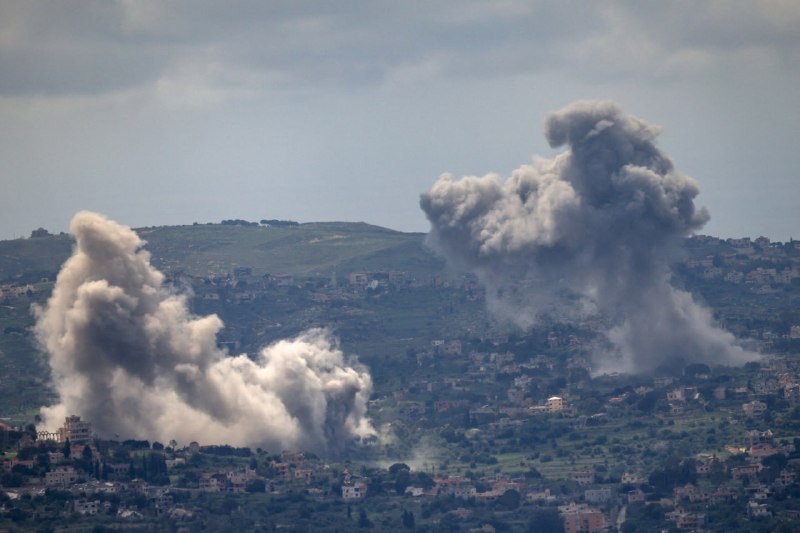
At roughly 12:18 UTC on 9 June 2026, Israeli media reported that an armed Hezbollah fighter had reached the perimeter fence of Misgav Am, a community on the northern border, and was killed by gunfire. The accounts, relayed first by Hebrew-language outlets and picked up within minutes by Israeli-affiliated Telegram channels, converge on a narrow set of facts: a single armed operative, on foot, close to the fence, engaged and eliminated before crossing. By 12:46 UTC, those same channels were reporting a second, related episode — at least two Hezbollah fighters still believed to be inside Israeli territory, having come in through the Ramim mountain ridge, a long, forested spine that runs east–west across the Upper Galilee and ends within rifle-range of several Israeli communities. The two items, read together, sketch a more uncomfortable picture than either does alone: not a probing attack so much as a coordinated approach across difficult terrain, by a militia that has spent two decades learning exactly where the seams in Israel's northern fence lie.
The incident matters less for the body count than for what it reveals about the state of the frontier. Israel and Hezbollah have spent much of the past eighteen months exchanging fire along a corridor that runs from the Mediterranean coast to the Hermon foothills. The exchanges have been, by the standards of the 2006 war, contained: kinetic, persistent, but bounded by an unspoken understanding that neither side wants a re-run of the ground campaign that flattened Lebanese villages and emptied Galilean towns. Misgav Am sits inside that corridor. The fact that a fighter reached its fence — and that a second, larger group appears to have made it across the ridge — suggests that the boundary the two sides have been redrawing in blood for months is, in places, more porous than either government in Beirut or Tel Aviv is willing to admit in public.
The geography of the breach
Misgav Am is not a generic border village. It is a moshav established in 1945, sitting on the Israeli side of the Blue Line in the Hula Valley, less than two kilometres from the Lebanese town of Khiam. The community's economy is agricultural; its population is small and tight-knit; its relationship with the border is the kind that the Israeli state has spent decades trying to render unremarkable, and that the past two years of cross-fire have made impossible to ignore. Tens of thousands of northern Israelis have been displaced from communities further west — Manara, Margaliot, Avivim, Dovev, Shlomi — and the evacuation orders have crept closer to Misgav Am with each escalation cycle.
The Ramim ridge, mentioned in the second report, is the natural feature that makes the area strategically distinct. The ridge is a long limestone spine that funnels movement from the Beqaa Valley and southern Lebanon toward the Israeli border, and it sits behind a patchwork of Hezbollah forward positions and observation posts. Crossing it on foot, in daylight, with Israeli air and ground assets operating in the area, is the kind of move that only an organised unit attempts. The channels reporting the incident described the fighters as crossing into Israeli territory — language that, in Hebrew operational usage, usually means the fighter has been positively identified west of the technical fence line, not simply observed near it.
The difference between "reached the fence" and "crossed into Israeli territory" is the difference between probing and penetrating. The first set of reports, issued at 12:12 UTC and again at 12:18 UTC, used the former language. The second, issued at 12:34 UTC, used the latter. The escalation in framing across twenty-two minutes is, by itself, a piece of information: it suggests that the IDF was still piecing together what had happened, and that initial confidence that the threat had been dealt with gave way to a more sober assessment that the situation was not yet contained.
What the wire is and is not telling us
The reporting chain for this incident is unusually narrow. The primary sourcing is Israeli — Hebrew-language media, IDF-adjacent channels, and Telegram accounts that aggregate Israeli broadcast and print reporting. The Lebanese side has not, as of the time of writing, been reached in the same loop. Hezbollah's own media operation, Al-Manar, has not yet (according to the channels that would relay such a statement) issued a claim of responsibility. That asymmetry is itself diagnostic: in incidents where Hezbollah wants credit, it is usually quick to claim; in incidents where the operation has gone wrong, or where the political leadership in Beirut is still deciding what story to tell, the silence is often the loudest signal.
The framing in the Israeli reports is also worth dissecting. The phrase "armed terrorist" — used in the original Hebrew reports and translated by the Telegram aggregators as "armed Hezbollah terrorist" — is the IDF's preferred term for any Hezbollah fighter killed on or near the border. It carries a legal designation (an armed member of a hostile organisation, engaged in hostile action) and a political one (the deliberate refusal to use "militant" or "fighter," terms that would imply a legitimate combatant status). Israeli legal and military spokespeople have, over the past year, become increasingly insistent on this vocabulary as the casualty toll on the Lebanese side has mounted.
The sources do not, at this stage, specify how many Israeli soldiers or civilians were involved in the engagement, whether there were Israeli casualties, or whether the fighters who crossed through the Ramim ridge were killed in place or withdrew. They do not specify the operational unit that engaged them — whether it was a routine border patrol, a quick-reaction force, or an aircraft. The thinness of the detail is consistent with a developing situation in which the IDF is still working through the operational picture, and Israeli media is reporting what it has been told to report.
The longer arc, and why a small incident reads large
Step back from the tactical picture and the pattern becomes clear. The Israel–Lebanon frontier has, since late 2023, operated on a logic that none of the parties are willing to describe in public. Hezbollah opened the northern front in solidarity with Hamas in Gaza, and Israel responded with a graduated campaign of strikes that has killed senior Hezbollah commanders, destroyed villages in southern Lebanon, and displaced roughly a tenth of Lebanon's population from the border region. The exchange has been described, with diminishing credibility, as "limited" — the word that both governments use when they mean "we are not yet at war, but the line is not where it used to be."
Within that logic, a single armed fighter reaching the fence at Misgav Am is not a surprise; it is the kind of probe that any professional border force expects from an adversary that has spent two decades studying its perimeter. What makes the 9 June incident notable is the apparent simultaneity of the two reports: one operative at the fence, a second group across the ridge. A single probe is intelligence-gathering. Two probes, in different locations, in the same operational window, is closer to a test — of response time, of coverage, of the rules of engagement that govern what Israeli forces are allowed to do when a Hezbollah fighter is identified in Israeli territory without firing.
The structural frame, in plain terms, is this: a border that was, for most of the post-2006 period, the most carefully monitored and least ambiguous in Israel's neighbourhood has become the most kinetic. The fences, the sensors, the forward outposts, the UNIFIL liaison — all of it is still there, and all of it is being tested daily by an adversary that has both the motive and the intelligence to find the soft spots. The Israeli state has responded with evacuation, with strikes, and with a public posture of confidence. The Misgav Am incident suggests that the confidence is, at the operational level, harder-won than the press conferences imply.
What is contested, and what remains to be seen
The single largest uncertainty in the reporting is whether the two episodes are in fact one incident or two. Israeli media has, in past episodes, used a single engagement to generate multiple headlines as details emerged; the alternative reading is that Hezbollah, or a Hezbollah-affiliated cell, attempted a more ambitious penetration than the initial reports suggested. The two possibilities imply very different things about Israeli force readiness and about Hezbollah's intent.
A second uncertainty is the political reading in Beirut. Hezbollah has, in the past year, calibrated its public statements carefully. A claim of responsibility for an attack that killed only the attacker would be unusual; a silence would be unsurprising. If, in the coming hours, a claim does emerge — or if it does not — that silence or admission will tell observers more about Hezbollah's strategic position in June 2026 than any number of communiqués from south Lebanon.
A third is the response. Israel has, in recent months, struck Hezbollah targets in the Beqaa Valley and in the southern suburbs of Beirut after incidents that were tactically similar to the one at Misgav Am. Whether the 9 June episode will be treated as a routine engagement — a problem solved at the fence — or as a breach serious enough to warrant a strategic response, is the question that will define the next forty-eight hours on the northern border.
The sources do not resolve any of these. They confirm that an armed fighter reached the fence, that at least two more appear to have crossed the ridge, and that Israeli forces engaged. Beyond that, the picture is one of an adversary that is still probing, a defender that is still responding, and a frontier that is, in the most literal sense, not where the maps say it is.
This article is part of Monexus's long-reads desk. The reporting is built from Israeli media accounts and Israeli-affiliated Telegram channels; the Lebanese and Hezbollah sides had not, as of publication, released their own on-record statement. Monexus has framed the incident as a breach at the operational level — a fighter at the fence, others across the ridge — rather than as a larger strategic attack, on the basis of the available sourcing.
Wire provenance
This editorial synthesis draws on the following public wire/social posts:
- https://t.me/englishabuali/xxxxx
- https://t.me/Middle_East_Spectator/xxxxx
- https://t.me/abualiexpress/xxxxx
- https://t.me/abualiexpress/xxxxx