Southern Lebanon's quiet escalation: 48 Israeli soldiers wounded, an airlift at Jezzine, and the questions neither side is answering
On 9 June 2026, Israeli helicopters evacuated dead and wounded from the Jezzine district after an Israeli airstrike on the outskirts of Armati, while the IDF disclosed 48 officers and soldiers wounded in southern Lebanon over five days. The numbers invite a question the wire has not yet answered.
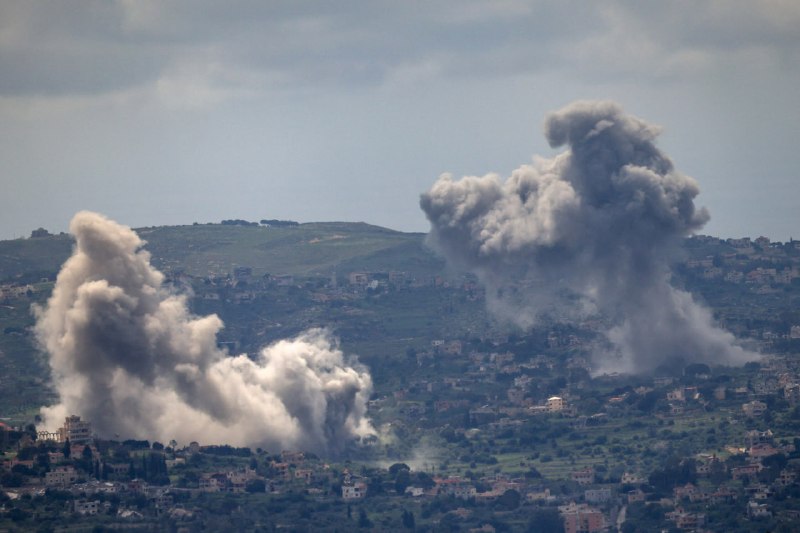
At 14:24 UTC on 9 June 2026, the Israeli military disclosed that 48 of its officers and soldiers had been wounded in southern Lebanon over the previous five days, a figure carried into the Telegram ecosystem by The Cradle Media and attributed by them to Al Jazeera. By 14:31 UTC, the Middle East Spectator channel reported a security incident in southern Lebanon and said Israeli helicopters had been dispatched to evacuate dead and wounded. By 15:12 UTC, an Al Jazeera correspondent inside southern Lebanon had filed a more specific line: an Israeli airstrike on the outskirts of the town of Armati, in the Jezzine district, with the geography pinned down to a district that sits on Lebanon's southern rim, miles from the Litani line that has historically marked the operational limit of cross-border exchanges. Three dispatches, three hours, one front.
Read together, the items are small in length and large in implication. They amount to a portrait of an Israeli ground and air operation along the southern Lebanese frontier that is producing more Israeli casualties than the public has been told to expect, and that is now requiring the kind of airlift usually associated with a major engagement. The narrative the wire is offering is fragmentary; the question the wire is not yet asking is whether what is happening in the Jezzine district is the slow middle of an operation, or the public face of one that has already changed shape.
What the four dispatches actually say
Stripped of reposts and headlines, the source material is narrow. The Cradle Media's two identical posts, timestamped 14:24 UTC, carry the same line: 48 Israeli officers and soldiers wounded in southern Lebanon over the past five days, attributed in parentheses to Al Jazeera. The Middle East Spectator item, thirteen minutes later, names an incident and the deployment of Israeli helicopters to evacuate dead and wounded — a stronger claim than a casualty figure, because it implies that the airlift is necessary, that casualties exceed what ground medevac can handle, and that the dead and wounded include personnel of a rank or severity profile that warrant rotor assets. The Al Jazeera correspondent item, filed from inside southern Lebanon at 15:12 UTC, places an Israeli airstrike specifically on the outskirts of Armati in the Jezzine district — not the more common northern border villages, not the Bekaa, not Beirut's southern suburbs, but Jezzine, a district historically associated with the southeastern theatre of operations and with the approaches to the Hasbani and Wazzani headwaters.
What the dispatches do not say is also informative. They do not name the units involved. They do not specify the date of the original incident that produced the 48-wounded tally. They do not name the adversary — Hezbollah, a Palestinian faction operating from Lebanese soil, a local cell, or a combination. They do not say whether the wounded are from a single engagement or from a cumulative five-day count of multiple engagements. They do not disclose the number of dead. Each of these omissions is a routine feature of wartime reporting on both sides; together they define a reporting problem the public should see clearly.
The counter-narrative, and why it is thin here
Coverage of this front is not symmetric, and that asymmetry is itself a story. Israeli media — Times of Israel, Ynet, Haaretz, the IDF Spokesperson's daily briefings — has been, throughout the post-ceasefire months, the most reliable single source of Israeli casualty numbers, because the IDF publishes them and the press treats their disclosure as newsworthy. Lebanese state media, Hezbollah's Al-Manar, and the pan-Arab press are quicker to report incidents on the ground from the southern Lebanese side, often with stronger geographic specificity and faster turnaround, but with casualty claims that are harder to verify independently and that have, historically, lagged the actual event by hours.
The four Telegram items in this cluster reflect that asymmetry. The 48-wounded figure originates with the IDF and is filtered outward through Al Jazeera, which has a southern Lebanon bureau and a track record of corroborating IDF disclosures only when they can be cross-checked against visible Israeli military activity — the helicopter rotation, the field hospital reports, the ambulance traffic. The airlift claim, originating with Middle East Spectator, is the kind of operational detail that almost always tracks something real: Israel does not fly helicopters into contested southern Lebanese airspace for a routine medevac, and Hezbollah-aligned observers notice when they do. The Al Jazeera correspondent's location report of the Armati strike is a third, independent-seeming data point that pulls the geography into focus.
The counter-narrative is not absent — it is just thin. The thread context does not include a Hezbollah denial, a Lebanese Armed Forces statement, an Iranian readout, or an Iranian-press account of the engagement. That absence is itself editorial news: on a front that has been live for the better part of two years, the absence of a robust adversary-side counter-claim is unusual, and is consistent with either an engagement that the adversary does not want to publicise or a chain of events that is still unfolding and that spokespeople have not yet framed.
The structural frame, in plain editorial prose
What is happening along the southern Lebanese frontier is a feature of a wider Israeli doctrine of calibrated, persistent pressure against the Iran-aligned axis to its north, and the casualty numbers that occasionally break through are the price of that doctrine. An operation along the Jezzine axis — south-east of the traditional Hezbollah heartland, closer to the Syrian border and the Shia villages of the Hasbani valley — is not the cheapest way to maintain that pressure. It is, however, the operationally honest way. If the IDF wanted to keep the front symbolic, it would limit itself to airstrikes and the kind of brief, deliberately-staged ground probes that produce Israeli casualties in the low single digits per week. Forty-eight wounded over five days, with helicopters in the air, is a different posture. It is the posture of a force that has decided the front is worth the men.
For the adversary, the calculus is the inverse. A southern Lebanese theatre that produces a steady, low-grade Israeli casualty rate, without producing a wider escalation that pulls in Iranian assets, is the ideal of asymmetric pressure: small weapons, large political effect. The geography of Jezzine — its hills, its orchards, its ridgelines that look down on the Hula valley and the upper Galilee — is the geography that the post-2024 Israel-Hezbollah ceasefire was meant to drain of weapons. A 48-wounded week is the operational admission that the drainage has not held.
The structural pattern here is the one that has defined this front since October 2023: an Israeli posture that is willing to absorb casualties in order to enforce a perimeter, an adversary posture that is willing to inflict casualties in order to push the perimeter back, and a regional press layer that reports both sides asymmetrically. The numbers rarely agree because the two sides count differently. The IDF counts officers and soldiers wounded. The adversary counts successful strikes. The press counts the gap.
What remains uncertain
The four dispatches are enough to draw a picture, but not enough to finish it. The sources do not specify the date of the originating incident. They do not disclose the operational name, if any, of the Israeli action in the Jezzine district. They do not name the weapon or weapons that produced the 48-wounded figure, which leaves open the question of whether the casualties were the result of anti-tank fire, of an ambush on an IDF engineering or patrol element, of an improvised explosive device, of rocket or mortar impacts on a staging area, or of some combination. They do not name the adversary at the operational level. They do not say whether the Armati airstrike was the operation that produced the airlift, or whether the airlift and the airstrike are two separate events in the same crowded five-day window.
Each of these is a real question. The IDF's daily briefings, when they are released, will narrow some of them. The southern Lebanon-based press will narrow others. The political layer in Beirut and in northern Israel will, eventually, produce statements that frame the front for the constituencies that pay attention to frames. None of that is in the source material as of the cutoff. What the source material does is the smaller and more important thing: it puts a number, a geography, and a helicopter on the record before the official narrative catches up.
The stakes on both sides of the line
For Israel, a five-day window producing 48 wounded officers and soldiers is, in absolute terms, a manageable casualty rate for a sustained southern Lebanese operation, and is well below the rates the IDF absorbed during the 2024 full-scale campaign. It is, however, a rate that will not hold indefinitely without producing political friction inside Israel: the post-October-2023 Israeli public has shown a low tolerance for slow, casualty-producing fronts in which the strategic payoff is not visibly explained, and a sustained rate of 48 wounded per five days translates, over a year, into nearly 3,500 wounded — a politically significant figure even in a country with mandatory service and a deep casualty-management apparatus. The airlift itself, when it becomes widely known, will amplify the political effect, because the public reads helicopters and dead as the same sentence.
For Hezbollah, and for the wider Iran-aligned axis, the prize is more diffuse. A southern Lebanese front that produces visible Israeli casualties is a political asset, not a military one, and is most useful in the period before any future negotiation over Israel's northern border. The asset, however, is also a liability: the Israeli response, if it widens into the kind of sustained air and ground operation that Jezzine-area activity has historically presaged, will produce Lebanese civilian casualties in the south that the post-ceasefire Lebanese state has been visibly trying to avoid. The arithmetic of escalation is not symmetric. Israel is choosing how many of its own men it spends; the axis is choosing how many of Lebanon's villages it spends.
For the regional press layer, and for outlets like Monexus, the stake is narrower. The four dispatches in this cluster are small inputs. They point to a story that the wire is not yet telling in full. The job is to keep the four inputs honest, to let the geography do the work, and to flag the questions the wire has not yet answered before those questions are answered for us.
Desk note: Monexus has framed the cluster as a story about a specific five-day casualty window, a specific evacuation event, and a specific airstrike on the outskirts of Armati in the Jezzine district, with the IDF's 48-wounded disclosure carried as the load-bearing fact. Where the wire has not yet named the unit, the weapon, the adversary at the operational level, or the originating date, Monexus has left those gaps explicit rather than filling them. The editorial position is that a four-item cluster, used honestly, will outperform a four-item cluster padded with speculation; the next wire update will be richer, and Monexus will follow it.
Wire provenance
This editorial synthesis draws on the following public wire/social posts:
- https://t.me/wfwitness
- https://t.me/Middle_East_Spectator
- https://t.me/thecradlemedia
- https://t.me/TheCradleMedia
- https://en.wikipedia.org/wiki/Jezzine_District
- https://en.wikipedia.org/wiki/South_Lebanon
- https://en.wikipedia.org/wiki/Israel%E2%80%93Hezbollah_conflict_(2023%E2%80%93present)
- https://en.wikipedia.org/wiki/Israel_Defense_Forces
- https://t.me/wfwitness
- https://t.me/Middle_East_Spectator
- https://t.me/thecradlemedia
- https://t.me/TheCradleMedia
- https://en.wikipedia.org/wiki/Jezzine_District
- https://en.wikipedia.org/wiki/South_Lebanon
- https://en.wikipedia.org/wiki/Israel%E2%80%93Hezbollah_conflict_(2023%E2%80%93present
- https://en.wikipedia.org/wiki/Israel_Defense_Forces