The Strait of Hormuz Helicopter and the Anatomy of an 'Accident'
Tehran frames the downing of a U.S. Army AH-64E Apache as a tragic mishap. The framing is doing more work than the wreckage.
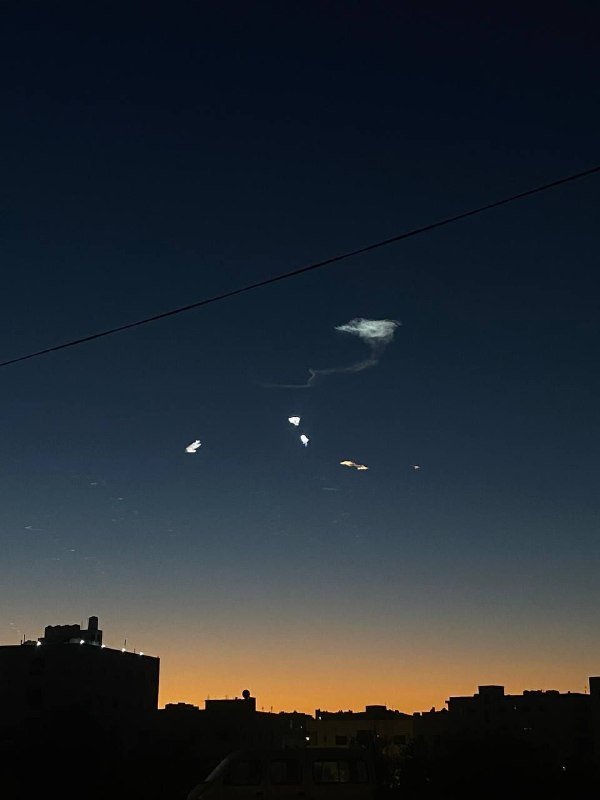
On 8 June 2026, a U.S. Army AH-64E Apache attack helicopter was struck over the Strait of Hormuz by what CNN, citing an informed source, identified as an Iranian Shahid one-way attack drone, an Iranian equivalent of the Shahed-136 design. By the following afternoon, two competing narratives were already in print. One, carried by Iranian Foreign Minister Abbas Araghchi, characterised the strike as a tragic mishap — the helicopter caught in the inevitable friction of "human errors, plain accidents, or potentially being caught in crossfire" near Iranian territory. The other, signalled by President Donald Trump's team and amplified through U.S. Central Command, treated the shoot-down as a deliberate provocation by a regime that has spent two decades learning to weaponise ambiguity. The helicopter is the immediate story. The framing is the real one.
The point of this piece is narrow. It is not to adjudicate what a single Iranian operator did or did not intend when the drone was launched. It is to read the way Tehran has chosen to package the incident in the hours since — the speed of the "accident" line, its repetition across every Iranian outlet from Mehr News to the foreign ministry's own social channels, and its pointed use of the word "accident" to draw a boundary around responsibility. That packaging deserves scrutiny, because the Strait of Hormuz is not a place where ambiguity is free.
What was actually said
Reporting on the incident has crystallised fast. By 18:08 UTC on 9 June, Mehr News was already carrying the CNN-cited line that an Iranian Shahid drone had shot down the American Apache. Within twelve minutes, Iran's Foreign Minister Araghchi was on X framing the outcome as an accident caused by foreign forces operating too close to Iranian territory. The geo-political monitoring account Middle East Spectator posted his elaboration: "To reduce risk, it is better for them [U.S. forces] to leave." The Russian-aligned channel rn_intel and the open-source feed OSINTdefender carried the same wording within minutes of each other, suggesting a coordinated distribution pipeline rather than a spontaneous quote.
That sequence matters. The factual claim — that an Iranian drone hit an American helicopter — was conceded by Tehran in roughly the time it takes to clear a press release. The interpretive claim — that this was an accident, and that the United States bears the responsibility for being there — followed immediately, in a vocabulary designed for international legal consumption, not for an Iranian domestic audience that already knows what a Shahid drone is and what it does.
The "accident" frame, in plain language
Calling a one-way attack drone strike an "accident" requires a particular theory of how the device got to where it was going. The Shahid-class loitering munition is not a heat-seeking missile that lost its lock. It is a propeller-driven airframe with a small warhead that flies a deliberate course until it hits something, or runs out of fuel. The relevant decisions are made by people on the ground: which targets are loaded into which waypoints, which controller gives the go-order, what engagement authority has been delegated down the chain. Calling the result a "plain accident" is a claim about command intent that goes well beyond the operational facts the public currently has.
This is not a counsel-of-perfection argument. Aircraft do collide, and misidentification is a real category in air defence. But the Iranian statement does not say "we are investigating a possible misidentification." It says the downing was an accident. It is a conclusion delivered in advance of any investigation the Iranian side has shared publicly. For a foreign ministry speaking in the immediate aftermath of a kinetic event involving a foreign military, that is an unusually confident posture.
Why the framing is doing more work than the wreckage
The Strait of Hormuz is one of the most surveilled and trafficked maritime corridors on earth. Roughly a fifth of the world's seaborne oil passes through it. Iran has, over decades, cultivated a portfolio of ways to make that traffic politically expensive — seizures of commercial vessels, harassment of tankers, the periodic threat to close the chokepoint outright. Each of those tools sits on a spectrum from deniable to overt. The downing of a U.S. military helicopter sits near the overt end of that spectrum, which is presumably why Tehran has reached so quickly for the accident frame. The overt end of the spectrum carries costs the deniable end does not.
The "accident" formulation also gives Tehran room to keep the diplomatic temperature manageable while signalling to a domestic audience that Iranian air defences are, in fact, operating. It is the same logic that runs through Iranian handling of previous incidents in the Gulf: concede the event, contest the intent, and treat the question of who was in the wrong as the actual battlefield. The structure of the message — "foreign forces in proximity to our territory are at constant risk on account of their own human errors" — is not a denial. It is a relocation of agency from the launcher to the launched-upon. The American helicopter, in this telling, shot itself down by being there.
The counter-read, and why it is uncomfortable for both sides
The most plausible alternative reading is also the simplest: that the Iranian operator intended to hit the helicopter, missed any wider political authorisation framework for the act, and the foreign ministry is now in clean-up mode. The Shahid drone family is built for exactly this kind of saturation use. The presence of U.S. rotary-wing assets over the Strait is a known, scheduled, public fact. If Iranian air defence command wanted to avoid striking them, the technical means to do so are not exotic. The accidental-strike theory requires a chain of small failures that, in a region where Iran devotes substantial resources to integrated air defence, strains credulity.
But the U.S. framing has its own weak points. Statements from the American side in the first 24 hours, as carried through the same Telegram channels, have emphasised the helicopter's routine mission profile and Iran's pattern of "provocations" without yet releasing the electronic, radar, or recovered-wreckage evidence that would let independent observers judge. The Trump administration's past statements on Iran have not always survived contact with later declassified detail. A reader who weights both sides will reasonably conclude that the official American line on intent is, for the moment, as much a political product as the Iranian one.
Stakes
If the "accident" frame holds in the international conversation, Iran absorbs the cost of a single helicopter loss and reasserts a long-standing position: that U.S. force presence in the Gulf is itself the destabilising variable, and that the United States should leave. If the frame does not hold — if Washington and its partners can demonstrate, with evidence, that the strike was directed — the diplomatic and possibly military cost to Iran rises sharply. The Strait of Hormuz is not a place where the United States can afford to absorb a deliberate strike without a response, and it is not a place where Iran can afford to be seen as having delivered one.
What remains genuinely uncertain is whether the public record will ever include the kind of granular evidence — flight data, radar tracks, the operator's authorisation chain — that would let outsiders resolve the question of intent. In similar past incidents, that evidence has tended to arrive late, in fragments, and shaped by whichever side is releasing it. There is no reason to expect this one to be different.
Monexus framed this as a story about diplomatic framing, not about an isolated helicopter. Telegram's open-source channels provided the raw sequence of Iranian statements; the wire confirmation came from CNN via Mehr News. Western official sources have, at the time of writing, declined to release technical evidence of intent.
Wire provenance
This editorial synthesis draws on the following public wire/social posts:
- https://t.me/osintlive
- https://t.me/mehrnews
- https://t.me/ClashReport
- https://t.me/Middle_East_Spectator
- https://t.me/rnintel
- https://t.me/GeoPWatch
- https://t.me/osintlive