A boo, a nap, and a halftime show: Trump's NBA Finals cameo becomes a US political referendum
A Game 3 appearance that was supposed to look like normalcy instead handed opponents a soundbite and supporters a grievance — and the cameras were rolling the whole time.
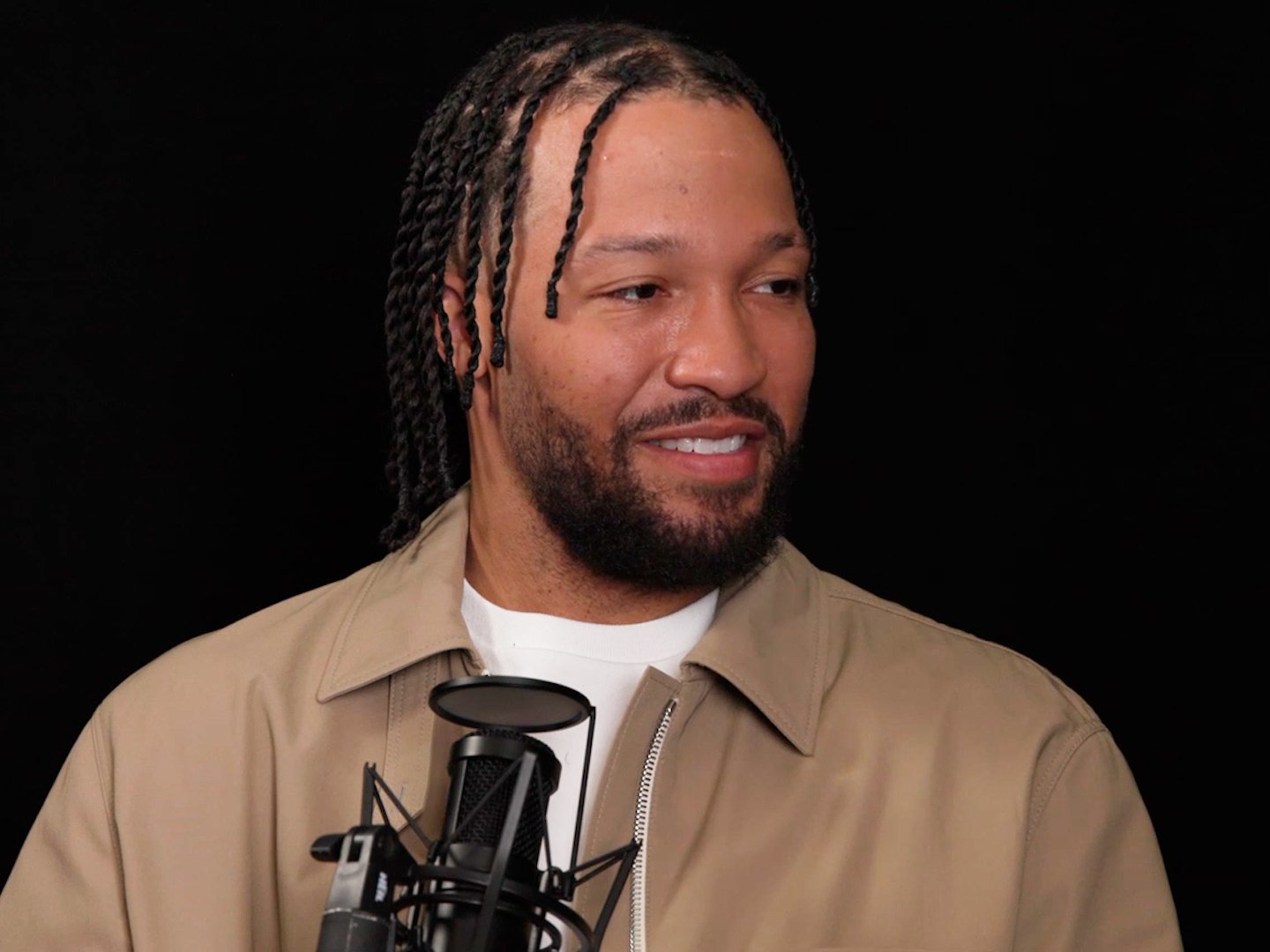
It was supposed to be a soft image-broadcast: the president of the United States in the front row of the NBA Finals, cameras catching a wave and a smile, the kind of optic that makes a White House communications team feel clever. Instead, the on-screen record from Game 3 of the NBA Finals on the night of 8 June 2026 — broadcast in the United States and picked up worldwide within minutes — has handed the second Trump administration something closer to a slow-motion problem. According to Al Jazeera, U.S. President Donald Trump was loudly booed when he was shown on screens before tip-off. According to a White House post relayed by the Telegram channel @wfwitness, the same on-screen moment was greeted by a mix of boos and cheers, a hedged framing the White House clearly prefers. Press TV, the Iranian state English-language outlet, pushed a third version, claiming the president appeared to fall asleep during the game. All three versions, contradictory in tone but identical on the underlying fact, were circulating online before midnight UTC, and the contradiction itself is now the story.
The political utility of a presidential sports cameo has always rested on a small assumption: that the crowd will, on balance, cheer. For a sitting U.S. president, the appearance is meant to read as a national-unifying ritual — the leader as fan, the leader as ordinary. When the arena responds with sustained booing, the ritual inverts. The camera does not editorialize; it simply holds. The crowd, captured live, becomes the editorial voice, and the president — whatever he is doing in the frame at that moment, applauding, waving, or, as Press TV's footage appeared to show, motionless — is rendered the subject of the verdict rather than the author of it. The result is a clip that can be cut, captioned, and redeployed across every platform for the rest of the news cycle, by both supporters and critics, and that is the structural problem: there is no off-ramp from the footage. It exists, it is short, and it will outlast any White House pushback.
A night the script did not survive
The evening had been assembled to look routine. According to a Polymarket account post on X dated 8 June 2026, the league's promotional plan for Game 3 included a halftime performance by Cardi B and listed both President Trump and New York City mayoral candidate Zohran Mamdani among the notable attendees. Mamdani's presence is itself a small data point: the 33-year-old democratic socialist, who won the Democratic primary for New York City mayor in June 2025, has built his public profile in part on a willingness to appear in unscripted settings, and a Finals game in the boroughs is exactly the kind of venue where a young politician can bank a soundbite without granting the White House a single frame. The optics war, in other words, was bilateral before the first note of the anthem.
The actual disruption came at the moment the cameras were most likely to be on the president — during the national anthem, the highest-attentive frame of any U.S. sporting broadcast. According to @wfwitness, the White House posted its own footage of the moment on X, a defensive editing choice that telegraphed the administration's awareness that the live cut was unfavourable. The audience, per Al Jazeera's reporting, was not subtle: a sustained, audible boo that required no translation. The White House's counter-cut, per the same channel, included the cheers it insists were also audible, a he-said-she-said construction the cameras can resolve faster than any spokesperson.
Then came Press TV's contribution. The Iranian state English outlet, which the Western wire services do not treat as a primary factual source but which has a measurable audience in parts of the Global South and in left-leaning Western online spaces, ran a clip asserting that Trump appeared to fall asleep during the game. The footage is short, easily remixed, and ideologically convenient. It is also exactly the kind of low-effort visual gotcha that travels fastest in 2026, when the half-life of a presidential misstep is measured in TikToks, not in news cycles. Press TV is not a neutral observer of U.S. politics, and its framing should be read as counter-claim material rather than reportage. But the footage exists, and on a platform-attention economy, existence is what matters.
Why the boo, why now
Crowd reactions to presidents at major sporting events are a small but persistent dataset. They tend to track underlying approval more honestly than applause lines at rallies, because the audience in the arena has paid to be there on its own terms and is not curated for affection. Sustained booing of a sitting president at a championship event is, historically, rare. The post-9/11 period effectively closed that possibility for nearly two decades. The 2020s reopened it.
There is a structural case to be made that the booing in this arena is not about basketball. The NBA's audience skews younger, more urban, more racially diverse, and more Democratic-leaning than the national median. A New York City crowd, in particular, is one of the most reliable anti-Trump audiences in the country — the same city whose mayoral primary Mamdani won running explicitly against the political economy the second Trump administration represents. None of that justifies reading the boo as a single-issue referendum, but it does help explain the volume. The boo is not an aberration from a baseline of national unity; it is the baseline, briefly allowed to make itself heard.
The administration's response has been predictable: dispute the framing, push competing footage, insist the cheers were at least as loud. This is also structurally predictable. A White House cannot concede that a live audience rejected its principal; the political cost of conceding is permanent, while the cost of disputing is limited to a single news cycle. The strategy is rational, even if the underlying footage is not on the administration's side. The cost shows up later, in the slow accretion of moments — a boo here, a courtroom clip there, a Senate floor statement — that together redraw the line between what a president can plausibly claim and what the cameras have already contradicted.
The second administration and the limits of image-making
The first Trump presidency treated image-broadcast as a competitive sport. The second has inherited the same instinct but with a thinner margin for error, both because the audience is more fragmented and because the administration's policy record is, by any honest measure, more polarising. A president who governs from a position of broad approval can absorb a single hostile crowd; a president who governs from a position closer to 50/50 cannot. The Finals cameo was meant to be the former. It landed as the latter.
There is also a counter-narrative worth taking seriously, even if the evidence currently favours the critical reading. The boo, as the White House footage insists, may genuinely have been mixed with cheering, and the camera cut that produced the most-circulated clip may have been selective. Crowd noise is a chaotic signal; algorithms and editors do the rest. A reader who watches only the boo clip will see rejection; a reader who watches only the White House clip will see the leader of the free world being warmly received at a championship event. Both are partial truths. The honest read is that the audience was mixed, that the cameras chose, and that the choice — whoever made it — is now the political fact.
The Press TV nap footage sits in a different category and should be treated as such. It is not a primary source on the president's alertness; it is an Iranian state outlet's editorial choice about which two-second window to publish. That is not to say the footage is fake. It is to say that its origin and its selective deployment mean it should sit alongside the Al Jazeera and White House accounts, weighted lower, not above them. The risk of treating Press TV's framing as primary is that it gives a state adversary's editorial line the status of a wire report. The risk of ignoring it is that the clip will still circulate, with or without Western cover. Monexus's position is the former: name the footage, characterise the source, decline to amplify the framing.
Stakes and the rest of the season
The political cost of the moment is, in the short term, bounded. The NBA Finals is a four-to-seven-game series. Game 3 will be eclipsed by Game 4, then by whatever news cycle the White House chooses to fill in the interim. The boo will be a TikTok sound for a week and a meme for a month. The bigger question is what the accumulated weight of such moments does to the second administration's capacity to project normalcy, particularly in cities and venues that are not pre-curated for the cameras.
For Mamdani, the appearance is, on balance, a small win. He was in the room; the cameras knew it; the crowd's boo served as an ambient endorsement of the political constituency he is trying to organise. For Cardi B, who performed at halftime and has previously been an outspoken critic of the administration's immigration policy, the appearance is its own kind of statement, though the halftime show is not yet detailed in the available reporting. For the league, the appearance is a reminder that championship basketball is no longer the unifying civic ritual it briefly became in the early 2000s; it is now, like the rest of American public life, a venue in which the country's divisions are simply made audible.
What remains genuinely uncertain, on the available evidence, is whether the booing was sustained or only momentary, whether the cheering was a real counter-current or only the White House's preferred edit, and whether the president was, as Press TV's clip suggests, asleep at any point during the game. Al Jazeera's reporting and the White House's own footage, taken together, suggest a mixed but visibly hostile crowd. Press TV's framing is best treated as an editorial choice, not a fact. The camera, in the end, is the only neutral arbiter in the room, and the camera recorded what the camera recorded. The rest is interpretation, and interpretation is, in 2026, the only commodity both parties in this fight have in unlimited supply.
— Monexus framed this as a moment whose political weight sits in the camera's eye, not in any one outlet's caption; the boo, the cheer, and the alleged nap are each given the weight the source allows, no more.
Wire provenance
This editorial synthesis draws on the following public wire/social posts:
- https://t.me/presstv/
- https://t.me/wfwitness/
- https://x.com/polymarket/status/