Türkiye and Canada Open Exploratory Talks Toward a Free Trade Agreement
On 9 June 2026, Trade Minister Ömer Bolat and his Canadian counterpart Mary Ng agreed to launch exploratory discussions toward a free trade deal — a procedural step that nevertheless reframes both capitals' mid-decade trade strategy.
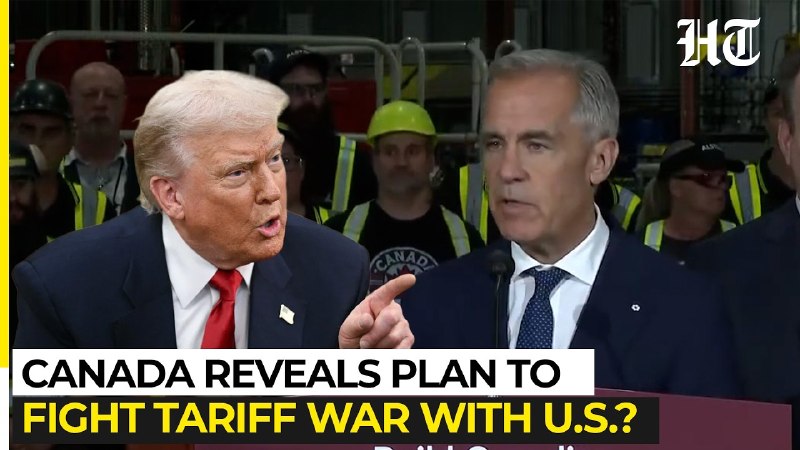
Türkiye and Canada announced on 9 June 2026 that they would open exploratory discussions on a bilateral free trade agreement, marking the first formal step in what would be a long-negotiated and politically delicate arrangement between two mid-sized G20-adjacent economies. The procedural move came out of a meeting in Ankara between Turkish Trade Minister Ömer Bolat and Canadian International Trade Minister Mary Ng, and was confirmed by Reuters on the day. (Source: Reuters via Telegram, wfwitness, 2026-06-09T13:55Z.)
The talks are exploratory only. There is no signed framework, no tariff schedule, no services chapter, and no timeline. What Ankara and Ottawa have done is signal to their respective exporters — Turkish steelmakers, auto-parts suppliers, machinery firms and an aggressive textile sector on one side; Canadian canola growers, potash miners, lumber operators and a service-heavy financial sector on the other — that a more durable market-access arrangement is now on the official table.
The procedural reality of an "exploratory" step
Trade negotiators treat the language carefully. "Exploratory discussions" typically means the two sides have agreed to spend roughly twelve to twenty-four months scoping the political feasibility, the sensitive-sector exemptions, the rules-of-origin architecture and the dispute-settlement model that would govern any eventual text. The Canadian side has used the same formulation when opening exploratory work with Mercosur, with the Association of Southeast Asian Nations, and with several African partners in recent years; Türkiye, for its part, has used it as a face-saving way to revive stalled conversations with the United States and with several Gulf states without committing to a hard negotiating calendar.
That the two governments have chosen to go public at this stage is itself the news. The communiqué serves three audiences at once. It tells Turkish industrial lobbies in Istanbul and Ankara that Ottawa is a serious counterparty. It tells Canadian premiers — particularly in Ontario and Quebec, where auto-supply chains run deep into North American value webs — that any eventual text will need to manage the question of Türkiye's customs union with the European Union, into which most of its industrial trade policy is already locked. And it tells external partners, particularly the United States, that both governments are diversifying their trade diplomacy in a moment of tariff turbulence.
What the parties actually want from each other
The commercial case is narrow but real. Canadian merchandise exports to Türkiye ran well under the country's overall European exposure, anchored mostly in pulses, canola, lumber and certain machinery categories. Turkish exports to Canada, by contrast, have grown steadily over the last decade, with apparel, processed foods, white goods, steel pipe, and an increasingly competitive automotive components sector all featuring prominently. A deal would, in principle, lock in preferential access for both flows and — more importantly for Ottawa — formalise rules on services, investment protection, and government-procurement access for Canadian financial and engineering firms that have so far operated without a bilateral framework.
Türkiye's incentive is more strategic than commercial. Its customs union with the EU does not, on its own, give Turkish exporters preferential access into the Canadian market. A bilateral would. It would also give Ankara a diplomatic counterpoint to the slow-moving EU accession file and to recent friction inside its existing customs union, where Brussels has periodically objected to the way Türkiye negotiates free trade deals with third countries that subsequently gain duty-free access to the EU market through Turkish ports. An Ottawa agreement would be among the first where Türkiye would have to negotiate explicitly with a third party that is also closely integrated into an Anglo-American economic ecosystem — a different negotiation than the one Ankara has run with Mercosur or with several Arab League partners.
The structural frame: middle powers rewriting the trade map
The more important story sits one level above the bilateral. Across 2025 and into 2026, mid-sized economies have been unusually active on the trade-diplomacy front — Türkiye with the Gulf states, with Egypt, and with several African economies; Canada with Mercosur, with ASEAN, and now with Türkiye. The pattern is consistent: capital-exporting economies that are uncomfortable with a world in which the major powers' trade policy is set increasingly by tariff threats and industrial-policy retaliation are quietly building a denser lattice of mid-power preferential agreements. None of these deals will, on its own, rewrite global trade flows. Together they form a hedge.
For Canada in particular, the Bolat meeting sits inside a broader reorientation. Ottawa has spent the better part of two decades leaning almost exclusively on the United States as its trade and investment counterparty, with the Comprehensive and Progressive Trans-Pacific Partnership (CPTPP), the Canada–European Union Comprehensive Economic and Trade Agreement (CETA), and the United States–Mexico–Canada Agreement (USMCA) doing most of the heavy lifting. The 2025–2026 tariff cycle has hardened a long-running argument inside Canadian policy circles: that single-counterparty dependence is itself a strategic vulnerability. A Türkiye deal would not displace USMCA, but it would add a fifth or sixth leg to a stool that has, until recently, rested on three.
Counterpoint: why this could stall
The plausible counter-read is straightforward. Türkiye's customs union with the EU constrains what Ankara can offer on industrial tariffs without Brussels' de facto blessing. The EU has previously objected to Türkiye's free trade negotiations with third parties on the grounds that they create a back door into the European market. Canadian negotiators will want clarity on rules of origin to make sure Turkish exports of European content do not flow into Canada duty-free, and EU officials may want reassurances that any eventual text does not undermine the customs union. None of that is unsolvable, but each item is a known friction point that has stalled other negotiations.
A second constraint is political timing. Canada's federal-provincial division of trade competence means that any eventual text would need buy-in from provinces that run their own procurement and labour rules. Ontario and Quebec, with their deep automotive supply chains, will study the implications for North American content rules carefully. On the Turkish side, the opposition-controlled municipalities and the business federations organised around Istanbul will press on services and visa access for business travellers. None of this is fatal; all of it is slow.
Stakes
If the exploratory track produces a signed text inside a three-year horizon, the immediate winners are Turkish apparel and processed-food exporters, Canadian canola and pulse growers, and the financial-services firms on both sides that would gain a rules-based market for the first time. The losers are the narrow import-competing sectors on each side — Canadian steel and certain processed-food categories on one flank, Turkish dairy and poultry producers on the other — which would face a more disciplined tariff regime than the MFN baseline.
The larger stake is symbolic. Two middle powers, neither of which is at the centre of the China-United States tariff story, are choosing to write a new rule book between themselves rather than wait for the great powers to finish their argument. That is a small data point. But small data points, accumulated over the better part of a year, are how the next phase of global trade architecture gets built.
What remains uncertain
The single announcement does not yet specify a negotiating calendar, a working-group structure, or which chapters will be prioritised. It also does not yet clarify whether the EU has been formally consulted, and whether Ottawa's eventual text will follow the CETA-style investment court model that has run into political resistance in Europe. Readers should treat the 9 June announcement as a diplomatic signal, not as a forecast of a deal. The Reuters wire on the day is the primary source for the announcement itself; everything downstream — the negotiating rounds, the leaked draft chapters, the eventual signature — will need to be verified against its own primary documents when it appears.
Desk note: The Monexus Americas desk framed this piece as a procedural but diplomatically meaningful signal from two mid-sized economies diversifying away from single-counterparty dependence. Wire coverage emphasised the announcement itself; this piece extends the frame to the customs-union constraint, the federal-provincial dimension, and the broader pattern of mid-power trade diplomacy in 2025–2026.
Wire provenance
This editorial synthesis draws on the following public wire/social posts:
- https://t.me/wfwitness
- https://en.wikipedia.org/wiki/Canada%E2%80%93Turkey_relations
- https://en.wikipedia.org/wiki/Turkey%E2%80%93EU_Customs_Union
- https://en.wikipedia.org/wiki/Comprehensive_and_Progressive_Agreement_for_Trans-Pacific_Partnership
- https://en.wikipedia.org/wiki/Comprehensive_Economic_and_Trade_Agreement
- https://t.me/wfwitness
- https://en.wikipedia.org/wiki/Canada%E2%80%93Turkey_relations
- https://en.wikipedia.org/wiki/Turkey%E2%80%93EU_Customs_Union
- https://en.wikipedia.org/wiki/Comprehensive_and_Progressive_Agreement_for_Trans-Pacific_Partnership
- https://en.wikipedia.org/wiki/Comprehensive_Economic_and_Trade_Agreement