Ali Akbar Pourjamshidian, secretary of the funeral committee for Iran's Supreme Leader, dies
Pourjamshidian, the deputy interior minister tasked with organising the funeral of Iran's Supreme Leader, has died, Iranian state media has reported.
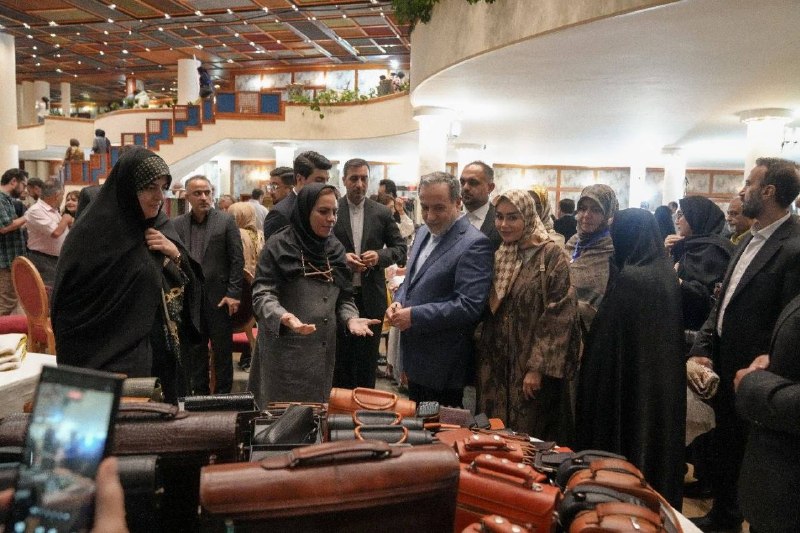
Ali Akbar Pourjamshidian, the Iranian deputy interior minister who held the post of secretary of the National Headquarters for the Funeral and Farewell to the Martyr of the Revolutionary Leader, has died, Iranian state media reported on Wednesday. The Telegram channel of Mehr News, the state-aligned news agency, carried the announcement at 16:36 UTC on 10 June 2026. No further details — including the date, place, or official cause of his death — were given in the initial wire. The opaque framing is itself a signal: in Iranian state communications, a deputy-ministerial official who is publicly eulogised is being treated as a politically significant figure, not a routine administrator, and the apparatus surrounding his passing will dictate how the news travels inside the country and, to a lesser degree, beyond it.
Pourjamshidian is best known outside Iran for a single, narrowly defined role: he was the senior official who would, in the event of Ayatollah Ali Khamenei's death, be responsible for marshalling the elaborate state rituals that surround the burial of a Supreme Leader — a multi-day funeral procession, a politically chosen successor's elevation, and a national security protocol that treats the interregnum as a moment of maximum regime vulnerability. His death, under whatever circumstances, raises an immediate and awkward question for the Islamic Republic's own continuity planning: who now coordinates a ceremony that, by the establishment's own logic, cannot be rehearsed in public, and whose logistics and symbolism are calibrated to convince the country — and the security services — that the system is durable beyond any one man.
The role, and what it signals
The "National Headquarters for the Funeral and Farewell to the Martyr of the Revolutionary Leader" is not a standing ministry. It is a temporary institution, dormant in normal times, that is constitutionally expected to spring into being at the moment a Supreme Leader dies. The position of secretary is, in effect, a contingency contract: the official appointed to it is trusted to coordinate between the office of the Supreme Leader, the Islamic Revolutionary Guard Corps, the regular military, the security services, the state broadcaster, the clerical establishment in Qom, and the families of senior clerical and political figures whose public posture in the first hours will be read as a signal of factional alignment. The deputy-ministerial rank is the bureaucratic vessel; the political trust is what is being deposited in it.
The fact that Pourjamshidian held the portfolio and was publicly named in connection with it — both during his tenure and in Wednesday's wire — is the political fact. The interior ministry, which has overseen the file, sits at the intersection of electoral administration, internal security, and the regime's political-coordination work. It is not the kind of ministry that produces household names; officials who remain there long enough to be eulogised by Mehr News are almost always those with a deeper function.
The institutional framing
Iranian state communications in 2026 have continued the pattern that has held for the entire post-1989 succession period: the institutions of the Islamic Republic project continuity in language, ritual, and personnel, while quietly ensuring that the levers of succession are in named hands long before they are needed. Reporting the death of a deputy minister by foregrounding his contingency role is itself a soft disclosure — a way of signalling, to the Iranian public and to the rival clerical factions that will eventually position themselves around a transition, that the relevant machinery has been thought through and that named individuals have been entrusted with it. The state does not need the world to take note. It needs the people inside the system to see the names.
The reading is consistent with the establishment's broader posture over the past decade, in which the internal mechanics of succession have been treated as a national-security matter and managed, insofar as the public record allows, through opaque personnel decisions rather than constitutional revision. The framing is not new; the personnel note is what is fresh, and it has come in the form of a death announcement rather than an appointment.
The information that is missing
Wednesday's Mehr News dispatch does not specify when Pourjamshidian died, where, or under what circumstances. Iranian state media has not, as of the time of writing, issued a follow-up wire naming a successor to the funeral-headquarters portfolio. The lack of detail is consistent with how the Islamic Republic has handled the deaths of senior political-security figures in the past: a brief, terse wire from state outlets, a controlled public acknowledgement, and a longer unfolding across state-aligned Telegram channels and the evening news bulletins. Foreign outlets rarely lead on the death of a deputy minister; the Iranian wire almost always does.
For now, the only verifiable claim is the narrow one: that Mehr News reported, in a single Telegram post on 10 June 2026, that Pourjamshidian had died and that he was the secretary of the National Headquarters for the Funeral and Farewell to the Martyr of the Revolutionary Leader, and a deputy minister of security and law enforcement within the interior ministry. The funeral-headquarters portfolio, given its constitutional weight, will not remain vacant for long. The person who inherits it will, in the establishment's own logic, be one of the more consequential mid-level officials named in the Islamic Republic this year.
Desk note: Monexus has written the available minimum from a single Iranian state wire. Where the wire is silent on date, place, cause, and successor, this publication has also remained silent, rather than reaching for plausible-sounding detail. The political weight of the role is supported by the framing of the announcement itself; the biographical and medical details are not, and have been left out accordingly.
Wire provenance
This editorial synthesis draws on the following public wire/social posts:
- https://t.me/mehrnews/