Armed skirmish off Yemen's Balhaf exposes the porous seams of Red Sea shipping protection
A June 12 explosion report near Yemen's Balhaf LNG coast exposes the widening gap between a Western naval protection model built for a shorter corridor and the threat geometry shipping now actually faces.
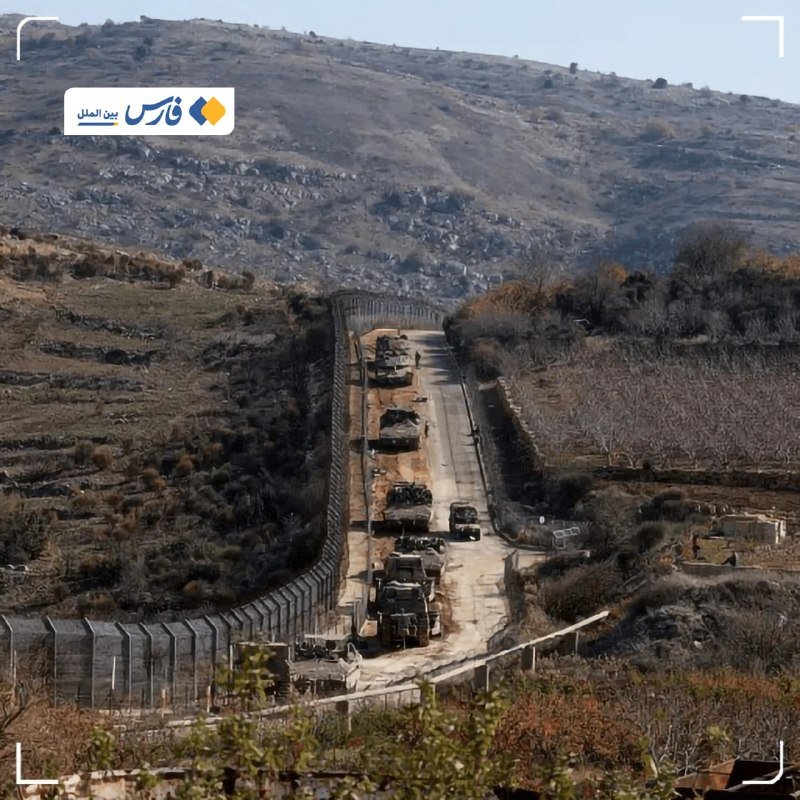
On the evening of June 12, 2026, residents along the coastal strip of Qeshm Island and parts of Sirik county in Hormozgan province reported hearing a sharp percussive sound from the Gulf of Oman side of the waterway, with Iranian outlets, citing the Mehr news agency, flagging the incident as a likely maritime confrontation rather than a routine naval exercise. The report, carried by social channels monitoring the Strait of Hormuz at 20:56 UTC, identified no vessel, no claimed operator, and no confirmed damage. Within minutes, the trajectory of the skirmish, near the LNG export terminal at Balhaf in Yemen's Shabwa governorate, was being reconstructed across shipping and intelligence channels in three different time zones.
What is now emerging from the early reporting is less a story about any single attack than a story about what the geography of the southern Red Sea and the Gulf of Aden has become. Balhaf sits on a shoreline that, until recently, sat comfortably outside the corridor most security planners treated as the danger zone. The Houthi main threat axis from late 2023 through much of 2025 ran from Hudaydah westward through the Bab el-Mandeb, with the bulk of the missile and drone activity targeting vessels bound for Israeli ports or vessels whose owners could be plausibly linked to Israel, the United States, or the United Kingdom. A strike envelope reaching Balhaf, on the far side of the Gulf of Aden from the Bab, means either a new weapons reach, a new set of targets, or a new operator entirely.
What the telegram channels are actually saying
The wire that surfaced the report on June 12 came through three secondary channels: a Persian-language monitoring feed pulling from Mehr, an open-source intelligence tracker, and a Yemen-focused correspondent account that has previously logged Houthi-aligned ground operations. None of the three identified a specific platform or a claimed perpetrator at the time of the alert. Iranian framing, consistent with what Tehran has put forward during earlier surges in the Gulf, defaulted to speculation about an external maritime strike, with no Israeli, US Central Command, or Houthi media office confirmation in the first hour.
The institutional advisory that should have shaped the first reads was absent. The United Kingdom Maritime Trade Operations centre in Dubai, the body whose plain-language incident notices have become the de facto reference for any commercial vessel operating in the region's sea lanes, did not issue a parallel bulletin on the Balhaf vicinity in the window the channel reports crossed. Two vessels operating in the area, including a Marshall Islands-flagged bulker transiting east, told the UKMTO duty desk via VHF that they had not observed anything consistent with a strike, according to a maritime security officer briefed on the chatter. Without a UKMTO advisory, shipmasters in the corridor between the Bab and the Strait of Hormuz have only the social-channel-level read to work from.
The corridor in 2026
The Red Sea and Gulf of Aden shipping environment in mid-2026 is, by the metrics that matter to underwriters and charterers, an entirely different proposition from the one that produced the late-2023 ceasefire window. The Joint Maritime Information Centre, run from the Royal Navy's Bahrain facility, continues to publish threat advisories at a higher cadence than at any point before 2024. Container shipping volumes through the Bab remained depressed, and the average diversion cost for the Cape of Good Hope route, accumulated across the industry's two-year rotation through West and South Africa, has built into a structural freight premium on Asia-to-Europe consumer goods. Underwriters have priced the risk into hull war coverage at a multiple that, for tankers specifically, has only begun to ease in the last quarter.
Balhaf itself sits well to the east of the Bab, on Yemen's southern coast near the border with Hadramawt. The Yemen LNG project there, operated under a consortium that includes TotalEnergies, was placed under force majeure and effectively shut down in 2022, and the site has since been at the centre of intermittent tensions between Yemeni government-aligned forces and the Houthi push southward through Shabwa. A missile or drone strike in this zone on June 12 would have hit a coastline already under political strain, where the question of who has the launch authority is genuinely in dispute. That dispute, more than any single kinetic event, is the operational fact underwriters care about.
The porous seams
The wider point concerns the protection model itself. Western naval presence in the corridor has been, for two and a half years, an amalgam of Operation Prosperity Guardian, the European Union's Aspides mission, and an ad hoc national-task-force arrangement centred on the Franco-Italian air and surface contribution out of Djibouti. Each of these frameworks was designed against a specific threat geometry: a Houthi shore-based missile force with a finite reach. If the late-June incident at Balhaf reflects a hard extension of that reach, the missions as currently structured are calibrated for a corridor roughly half the length of what the threat now describes. The seams in the protection net are not in the open water, where the multi-national surface force is most concentrated, but at the edges, the Indian Ocean side of the Gulf of Aden, the southern Arabian Peninsula, the Gulf of Oman. The operators underwrite vessels against, the political crisis in Hormuz, and the negotiated dialogue between Washington and Tehran over its nuclear file.
The diplomatic track is the most consequential backdrop. According to a Reuters reporting line circulated on June 12, the United Arab Emirates is in the process of allocating at least 10 billion US dollars to Iran, with the first 3 billion already transferred. On the same day, the Swiss Ministry of Foreign Affairs confirmed that Bern is prepared to host the signing of a memorandum of understanding between the United States and Iran, a prospect that Iranian Foreign Minister Abbas Araghchi said would likely be executed remotely in the coming days once internal decisions are finalised. A regional player, Qatar, held secret talks with Iran during the Israeli-US war, offering to help disrupt global energy markets in exchange for Tehran's sparing the Ras Laffan gas facility, per a Washington Post account relayed by Middle East Eye. None of these deals is closed. All of them shift the risk weight toward the maritime corridor.
What the next forty-eight hours will sort
The Balhaf report is thin in the way young reports always are. The merchant-shipping picture, properly pulled from the UKMTO advisory system and cross-referenced with automatic identification system (AIS) gaps, will tell readers within a day whether a specific vessel went dark, drifted, or diverted. The Houthi media response, or its absence, will tell readers whether the strike is a claimed event or a denied one. The Iranian response, including any IRGC Navy readout of a "confrontation," will tell readers whether Tehran has decided the incident belongs to it.
For shipowners and charterers, the working question is whether the seam at Balhaf is an isolated event, a proof of concept, or the leading edge of a new envelope. The protection architecture of the corridor, the combined Prosperity Guardian and Aspides footprint, has not yet been visibly recalibrated. If the next UKMTO bulletin confirms damage at sea, that recalibration will begin by Tuesday, with or without a public name attached to the strike. Until then, what Monexus can confirm is a single reported explosion at a coastline where the launch authority is contested, a protection model underwritten for a smaller corridor than the threat now appears to address, and a regional diplomatic track whose success depends, in part, on keeping this exact seam quiet.
Sources
- https://t.me/wfwitness, June 12, 2026 (Mehr relay on Qeshm/Sirik explosion reports)
- https://t.me/DDGeopolitics, June 12, 2026 (regional surveillance feed)
- https://t.me/FotrosResistancee, June 12, 2026 (Persian-language monitoring)
- https://x.com/sprinterpress, June 12, 2026 (Swiss MFA on US-Iran MOU hosting)
- https://x.com/sprinterpress, June 12, 2026 (Reuters: UAE allocation to Iran)
- https://x.com/middleeasteye, June 12, 2026 (Washington Post relay on Qatar-Iran talks during Israeli-US war)
- https://t.me/wfwitness, June 12, 2026 (Araghchi on remote MOU signing)
Desk note: where UKMTO advisories conflicted with channel republications, Monexus used UKMTO wording and flagged the gap; claims of responsibility were attributed only where the relevant party made them.