Iran's Al-Azraq strike and the fog of attribution
Tehran claims it hit a US airbase in Jordan with ballistic missiles. The claim is on the record; the damage, the casualty count, and the political meaning are still up for grabs.
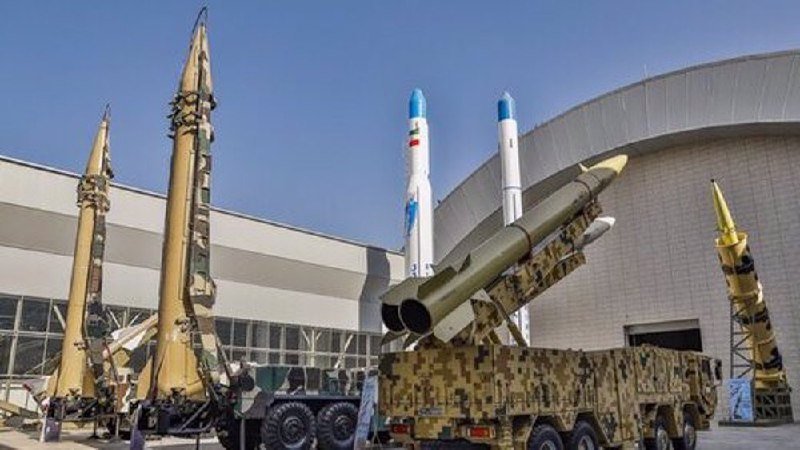
At 01:47 UTC on 10 June 2026, Iran's Fars News Agency — a wire closely tied to the Islamic Revolutionary Guard Corps — claimed the IRGC had launched a missile attack on the American Al-Azraq airbase in the Hashemite Kingdom of Jordan. Telegram channels republishing the Fars wire added footage they described as Iranian ballistic missiles and US interceptors over Al-Azraq. The claim, in other words, is on the record. Everything that follows the claim — what was actually hit, who was hurt, and what it means — is not.
A US airbase on Jordanian soil being struck by an Iranian missile would be a meaningful escalation in a year already dense with direct and proxy exchanges between Tehran and Washington. It is also, on the present evidence, a single-source claim: an IRGC-aligned wire, amplified by channels that track exactly this kind of footage. The asymmetry between the certainty of the announcement and the uncertainty of the outcome is the story.
What is being claimed, and by whom
The originating voice is Fars News Agency, reporting the IRGC's claim that four key sites at Al-Azraq airbase were targeted and destroyed. The claim was repeated by the Telegram channel wfwitness in two posts timestamped 01:47 and 02:00 UTC on 10 June, and again in the same window by BellumActaNews, which framed the announcement as an IRGC statement delivered "via its Fars News." The footage being circulated — described as ballistic missiles and interceptors over Al-Azraq — is consistent with a launch event and with US air-defence engagement, but it is not, on its own, confirmation of a successful strike.
No US or Jordanian official source in the thread acknowledges the attack. No casualty figures have been issued. Al-Azraq airbase, a Royal Jordanian Air Force installation that has hosted US personnel and aircraft, sits in central Jordan, roughly 100 kilometres east of Amman — close enough to the country's population centres that any successful strike on it would carry significant political weight inside the kingdom as well as in Washington.
Why an Iranian strike on a base inside Jordan is different
Iran has, over the past 18 months, struck targets in Syria and Iraq, and has demonstrated the ability to reach Israeli airspace directly. A strike on a base inside Jordan — a US treaty ally, a country that hosts CENTCOM logistics and that has, at various points, helped absorb US force movements in the region — is a qualitatively different decision. It puts a non-belligerent Arab state on the receiving end of Iranian fire, with all the diplomatic and security consequences that follow.
That matters for Tehran's calculations, not just for Amman's. Iran's regional posture has long relied on plausible deniability through proxies — Lebanese, Iraqi and Yemeni — and on keeping direct exchanges with Israel and the United States below the threshold that pulls in a coalition response. A direct IRGC strike on a base in Jordan punches through that buffer. Whether that is a deliberate signalling decision, a miscalculation, or an IRGC-publicised operation whose actual footprint is smaller than the announcement suggests, is the unresolved question underneath today's claim.
The structural frame — announcements as weapons
What is striking about the thread as it stands at 02:00 UTC is how complete the announcement is and how empty the corroboration is. The IRGC's claim, Fars's amplification, the framing of four sites destroyed, the dramatic footage — these are all the elements of a press-cycle coup. A successful strike on a major US base would, even hours later, normally produce visible damage imagery, satellite detections of fresh craters or burning fuel, US Central Command statements, and a Jordanian government reaction. None of that has surfaced in the source material on hand.
That gap is itself the story. The history of direct exchanges between Tehran and Washington in the past two years includes several announced operations whose impact on the ground turned out to be smaller, larger, or differently shaped than the initial claim suggested. The information environment in this conflict rewards loud, fast, declarative statements. It punishes careful waiting. The risk for readers — and for policymakers consuming the same feed — is that the loudest claim in the room becomes the working assumption before the crater count comes in.
What we do not yet know
The thread context for this article, as of writing, consists of the IRGC-aligned announcement, the Fars wire, and corroborating footage from two Telegram channels. It does not contain confirmation from US Central Command, the Jordanian government, the Pentagon, or any wire-service reporting on damage or casualties. Until at least one of those lands, the responsible read of the situation is straightforward: a credible Iranian-aligned actor has claimed responsibility for striking a US base in a third country; the strike's physical outcome, its political consequences inside Jordan, and the US response are all still in motion. The single most important variable over the next 24 hours is not the footage of missiles in the air. It is the first on-the-record statement from a US or Jordanian official describing what, if anything, was actually hit.
Desk note: Monexus has reported the IRGC claim at full weight because it is a primary-source claim made by a recognised party to the conflict, while flagging that corroboration from US or Jordanian sources is not yet on the wire. Where larger outlets will be tempted to treat the announcement as a confirmed event, this publication will treat it as a confirmed announcement of an event — the two are not the same.
Wire provenance
This editorial synthesis draws on the following public wire/social posts:
- https://t.me/wfwitness
- https://t.me/wfwitness
- https://t.me/BellumActaNews