Strait of Hormuz confrontation pushes US–Iran toward open escalation as oil corridor wobbles
A US helicopter lost over the Strait of Hormuz and President Donald Trump's vow to keep bombing Iran have put the world's most sensitive oil chokepoint back at the centre of an open confrontation.
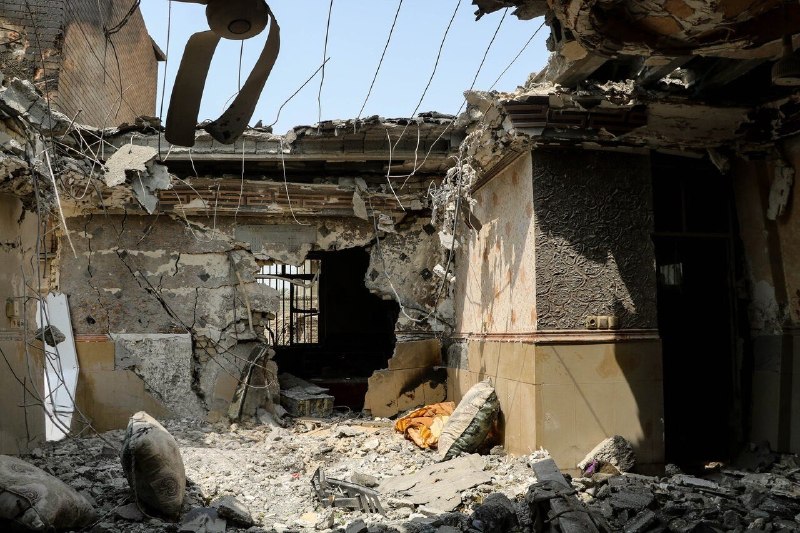
At roughly 16:11 UTC on 10 June 2026, US President Donald Trump declared he would continue bombing Iran "very hard" after an Iranian action downed a US helicopter over the Strait of Hormuz, according to a social-media post by the @unusual_whales account. The exchange — an admitted kinetic incident, a presidential threat to escalate, and a separate Iranian vow of a "more crushing" response within hours — marks the moment a shadow war over the world's most important oil corridor stopped being shadow.
What is unfolding in the Strait of Hormuz is no longer a posture story. It is a confrontation with a market, a transit route, and two governments with reason to bluff — and reason not to. The chokepoint that moves a large share of seaborne crude is now the most volatile 21 miles of water on earth, and the rest of the global economy is hanging on the next dispatch from Washington and Tehran.
The incident and the rhetoric
The 10 June sequence began with an Iranian act that the United States has not, in the public record so far, characterised in detail: the downing of a US helicopter over the strait. Within hours, President Trump was on the record promising continued strikes on Iran, telling an audience the US would be "attacking them and attacking them very hard," per a post by @unusual_whales timestamped 16:11 UTC on 10 June 2026. Iran's armed-forces spokesman, for his part, pledged a "harsher, stronger and more crushing" response to any US threat, according to a PressTV wire circulated on Telegram at 20:19 UTC the same day. The two messages were issued within four hours of each other — a compression that leaves almost no diplomatic runway for de-escalation by accident.
The framing from each side is deliberate. Tehran's language, carried by Iranian state media, casts the US as the aggressor whose threats invite retaliation. Washington's language, in Trump's own words, treats the helicopter shoot-down as the trigger for further escalation. Both are partial accounts; both are also what their respective domestic audiences are being told to expect.
The oil-corridor question
The strategic backdrop is the corridor itself. In a separate claim aired on 10 June 2026 via Telegram channels carrying The Cradle's wire, President Trump asserted that a secret US military mission had enabled more than 100 million barrels of oil and over 200 commercial ships to transit the Strait of Hormuz, framing the US presence as the guarantor of free flow. The figure — if accurate, and it has not been independently verified — is also a tacit admission that the chokepoint is operating under armed escort, not under the customary freedom of navigation that the same administrations usually claim as a baseline right.
This is the contradiction at the heart of the current US position. The strait cannot simultaneously be an open sea lane protected only by treaty and a transit corridor dependent on classified military operations. If 100 million barrels of oil and 200-plus commercial ships have needed a "secret mission" to move, then the security guarantee that the global oil market has been told to assume is already, in practice, contingent.
The Iranian counter-frame
The official Iranian line, as carried by PressTV, is that US threats will be met with a more punishing response, and that Iran is the party defending its sovereignty against an external power operating in its neighbourhood. The argument has structural weight: a country whose coastline sits on a narrow strategic waterway has, historically, treated foreign naval and air activity there as a security question of the first order, regardless of who is framing the wider narrative.
Western wires have generally presented Iran's posture as the source of instability; Iranian state media presents US force posture as the source. Both are right about something, and both are silent about something. The reader is entitled to know that the helicopter incident, the presidential threat, the Iranian vow, and the Trump corridor boast all emerged from a single day — and that none of them, taken alone, is the whole story.
What the market is now pricing
For oil traders, the relevant question is not whose rhetoric is correct but whether the corridor's insurance premium has just risen. The Strait of Hormuz carries a disproportionate share of seaborne crude and LNG; even a partial disruption pushes freight rates, war-risk premia, and refining margins higher in days. The Trump claim of escorted transits, reported on 10 June 2026 via The Cradle's wire, is consistent with that insurance bill already being paid — implicitly, by US forces and, ultimately, by consumers.
If the trajectory continues, the structural frame is straightforward: an incumbent power that underwrites the security of global energy transit is now visibly doing so under fire, while the regional power whose geography makes the corridor possible is signalling that it can, at any moment, raise the cost. That is not a recipe for a stable oil market. It is a recipe for a permanently riskier one.
What remains uncertain
The 10 June record is partial. The US has not, in the public material available to this publication, released operational details of the helicopter incident, the type of aircraft involved, or the status of its crew. Iran's claims of a "more crushing" response are rhetorical until they are kinetic. The Trump corridor boast — 100 million barrels of oil, 200-plus ships — has not been corroborated by an independent tally. The two sides are, in effect, arguing past each other through separate press ecosystems, and the gap between the two accounts is widening rather than narrowing.
What can be said with confidence is this. On 10 June 2026, the United States and Iran both chose escalation language over de-escalation language in the same news cycle. The world's busiest oil corridor is now the world's most volatile. The next 72 hours will determine whether this was a maximum-pressure negotiation tactic or the opening of a wider war.
Desk note: Monexus has reported this incident in its full kinetic framing — helicopter loss, presidential threat, Iranian vow — without leaning on either Tehran's or Washington's preferred narrative as the default. The structural point is the corridor itself, not whose flag flies over it.
Wire provenance
This editorial synthesis draws on the following public wire/social posts:
- https://t.me/presstv
- https://t.me/thecradlemedia