Venezuela's acting government signs oil-services MoU with Schlumberger as Caracas reopens the energy door
Delcy Rodriguez, acting president of Venezuela, signed a memorandum of understanding with Schlumberger CEO Olivier Le Peuch on 10 June 2026, the clearest signal yet that Caracas is reopening its hydrocarbons sector to international service companies.
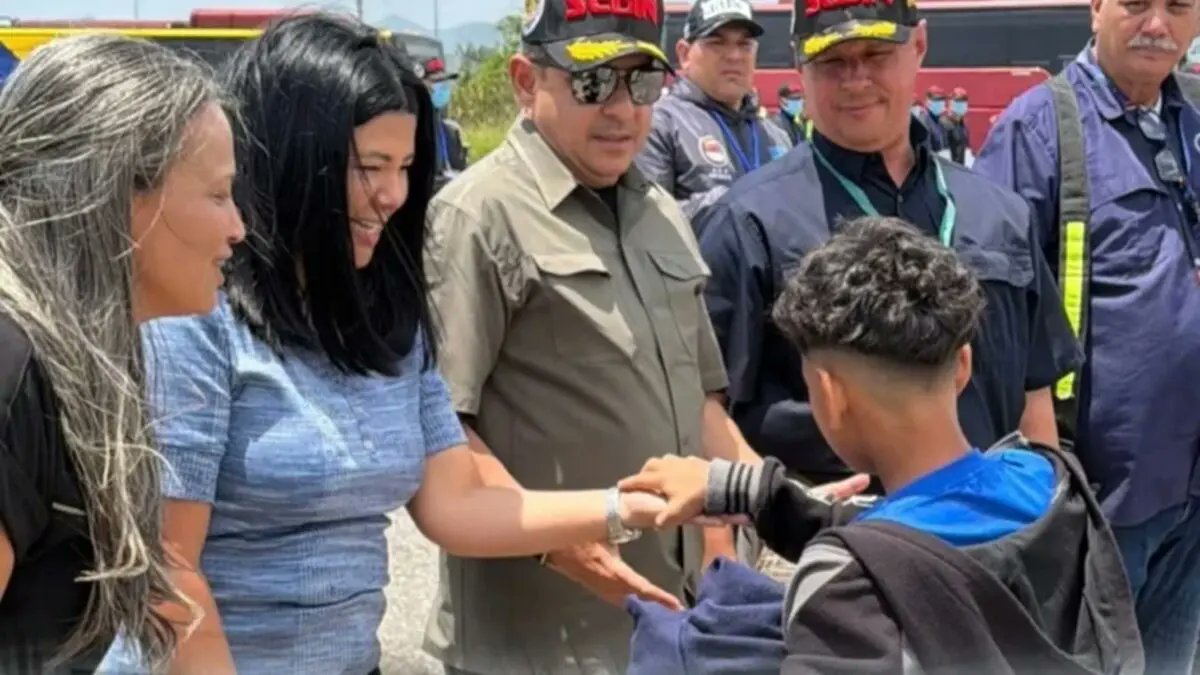
At midday on 10 June 2026 in Caracas, acting Venezuelan President Delcy Rodriguez sat down with Olivier Le Peuch, chief executive of the world's largest oilfield services company, Schlumberger Limited, and signed a memorandum of understanding framed by both sides as a "strategic partnership." The announcement, carried by TeleSUR English, marks the most concrete step yet by Caracas to reopen its collapsing hydrocarbons sector to international service providers after years of unilateral US sanctions and a steady erosion of domestic production.
The timing is the story. Caracas has spent the better part of a decade losing output, rigs and credibility with the international majors and service companies that once anchored its industry. Bringing Schlumberger — the firm that, more than any other, defines what a modern oilfield services contract looks like — back to the table is a signal aimed less at Caracas itself and more at Houston, London and the Treasury Department's Office of Foreign Assets Control (OFAC). The government in Miraflores is trying to demonstrate, in writing and on camera, that it can still cut deals with the tier-one players of global energy.
What the MoU actually covers
The public text of the agreement is thin — both Rodriguez and Le Peuch described it in strategic, not technical, language, and neither side published detailed contract terms. By industry convention, an oilfield services MoU between a national actor and a major such as Schlumberger typically opens the door to well-drilling packages, well logging and formation evaluation, artificial-lift and production optimisation, and integrated project management across mature fields. The TeleSUR English read-out does not specify which of those services the MoU unlocks first, or whether any individual licence, block or field has been named as a pilot.
That ambiguity is deliberate. Caracas wants the political and financial signal of a Schlumberger signature; it does not want to commit, on day one, to a specific operational footprint that could later be unpicked by a change in US enforcement. Schlumberger, for its part, has spent the post-2019 sanctions era operating in a narrow legal lane inside Venezuela, and any expansion will be sequenced against licences Washington is willing to tolerate. The MoU, in other words, is a corridor — not a contract.
The counter-narrative from Caracas and the limits of the deal
Officials in Caracas framed the signing as a sovereignty move: a renewed capacity of the Bolivarian Republic to choose its own service partners and to monetise the world's largest certified reserves, currently producing well below capacity. The political reading inside Venezuela is that the country is no longer waiting on a single sanctions architecture to define who can do business with PDVSA, the state oil company.
A more sceptical read of the same facts: Schlumberger, like every other Western oilfield services company, operates inside a thicket of US secondary sanctions. Signing a strategic MoU in Caracas is not the same as deploying rigs in the Orinoco belt. The most likely near-term work is technical assessment, software licensing, and well-reactivation planning — the kind of low-exposure footprint a US-headquartered firm can justify to OFAC if individual transactions are licensed. For Caracas, the prize is a press photograph and a credible counterpart; for Schlumberger, the prize is optionality. Both sides are getting something real out of the picture, and neither has yet had to put steel in the ground.
The structural frame: oil, sanctions and the reordering of who gets to deal with Caracas
The MoU sits inside a wider pattern of Venezuelan energy diplomacy that has accelerated over the last 18 months. Caracas has been steadily diversifying the universe of companies willing to be seen in the room. Chinese state oil firms have remained active under opaque arrangements; Russian players have been tolerated; and now a Western oilfield services giant is signing a public instrument with the acting president. That sequence is not coincidence. It reflects a sanctions environment that has loosened at the margins even as the headline architecture has stayed in place — a pattern of enforcement-by-licence that lets Washington keep the legal frame intact while individual transactions are quietly approved.
For a reader in Houston, Caracas, or Beijing, the structural takeaway is that "sanctioned" and "closed" are no longer synonyms. The Venezuelan hydrocarbons sector is being progressively stitched back into global supply chains through a series of narrow, branded openings — and Schlumberger's MoU is the most visible such opening to date. That matters for global crude supply, for PDVSA's negotiating leverage with private licensees, and for the diplomatic signalling between Washington and Caracas, which is conducted as much through OFAC general licences as through formal negotiations.
Stakes and what to watch next
The deal's near-term test is operational. If, in the months following the MoU, Schlumberger personnel are seen on platforms in the Orinoco or in Zulia — performing well interventions, running logging suites, or co-authoring a reservoir plan with PDVSA — the agreement is functioning. If, by the end of 2026, the MoU is still a press release and a handshake, it will be read as theatre. The most useful forward indicators are OFAC licence announcements, Schlumberger's own quarterly segment commentary on Latin America, and the next round of PDVSA licensing rounds for marginal fields.
The political stakes inside Venezuela are higher than the operational ones. Rodriguez's government is using deals like this to argue that the country can be governed and opened up without surrendering sovereignty. A working Schlumberger partnership would be the most tangible evidence yet for that argument. A non-working one would harden the opposition line that Caracas is signing ceremonies, not contracts — and would complicate any further rapprochement with Washington.
*Desk note: Monexus has read the TeleSUR English read-out against the structural backdrop of OFAC enforcement and the 2024–2026 re-engagement cycle between Caracas and Western energy firms. Where the public text does not specify contract scope, this publication has said so in prose rather than infer it.
Wire provenance
This editorial synthesis draws on the following public wire/social posts:
- https://x.com/telesurenglish/status/
- https://ofac.treasury.gov/