Yemen's Sana'a government warns that US pressure on Iran risks a wider conflagration
The foreign minister of Yemen's internationally disputed Sana'a-based government has publicly warned that continued US aggression toward Iran threatens international peace and security — a rare direct diplomatic broadside from a Houthi-aligned cabinet.
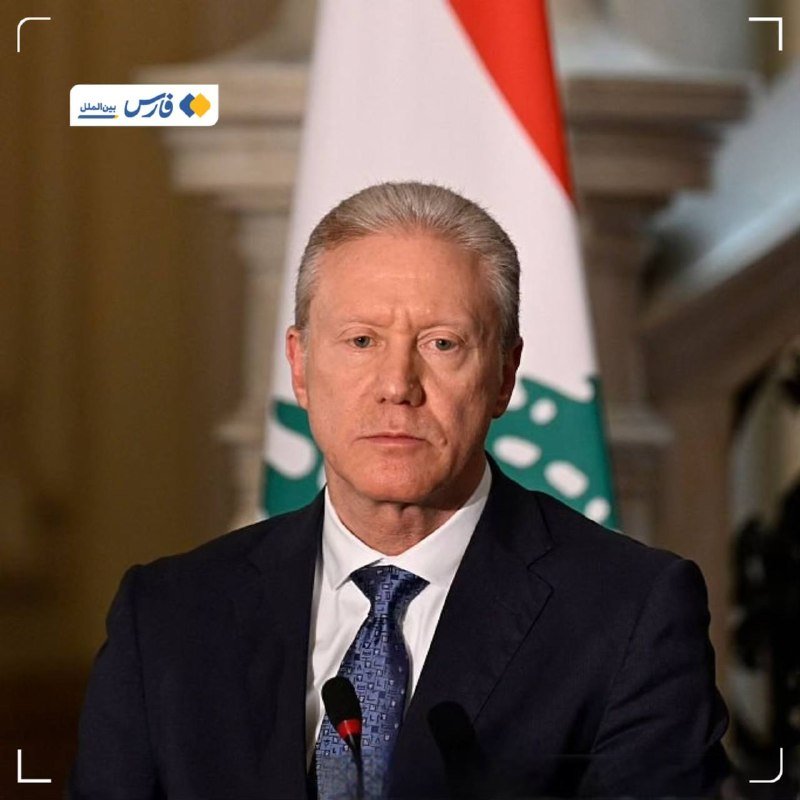
At 22:24 UTC on 10 June 2026, the foreign minister of Yemen's Sana'a-based government publicly warned against what he described as the continuation of United States aggression toward the Islamic Republic of Iran, framing the consequences as a threat to international peace and security. The statement, carried by Iranian state-aligned outlets within minutes and then by Houthi-aligned channels, is unusual in its directness: it is a formal diplomatic broadside from one Middle Eastern government aimed at a third, mediated through a shared hostility toward Washington rather than through any of the regional institutions that usually carry such messages.
The Sana'a statement matters less for what it changes today than for what it signals about the diplomatic geometry of the Iran file. It places a Yemeni cabinet that the United Nations recognises only in a limited administrative sense on the same rhetorical page as Tehran on a question of US policy, and it does so at a moment when negotiations over Iran's nuclear programme and the wider question of regional escalation are once again being conducted in the open.
What the statement actually says
According to parallel readouts from Iranian state-affiliated outlets, the Sana'a-based foreign minister warned that continued US aggression against Iran carries consequences that constitute a threat to international peace and security. The Tasnim News English wire carried the quotation at 22:24 UTC under a single-line bulletin, identifying the speaker as the foreign minister of the Yemeni government based in Sana'a. PressTV republished the substance of the warning at 22:31 UTC, adding its own framing that the repercussions threaten international security and peace. The Houthi-aligned Intelslava channel relayed the same warning at 22:31 UTC, identifying the speaker as the Houthi foreign minister. Mehr News, the Iranian state news agency, ran its own headline at 22:36 UTC, restating the warning in its own terms.
The substantive content across these five readouts is consistent: a warning, attributed to a named Sana'a-based foreign minister, directed at the United States, citing Iran. The five wires differ in their framing — Tasnim and Mehr treat the statement as a straightforward diplomatic warning, PressTV as a peace-and-security matter, and Intelslava as part of a continuing Houthi posture toward both Washington and Tehran. The naming of the speaker is also inconsistent across the readouts: Intelslava calls the speaker the Houthi foreign minister directly, while Tasnim and Mehr use the more conventional diplomatic formulation foreign minister of the Yemeni government based in Sana'a.
Why the Sana'a government, and why now
Yemen's Sana'a-based cabinet has been the governing authority in most of northern Yemen, including the capital, since Houthi forces consolidated control in late 2014. The internationally recognised government operates from Aden under Saudi-backed leadership, and the United Nations has for years tried to broker a unified negotiating position between the two. The Sana'a cabinet is not a member of the GCC, the Arab League's Yemen seat is contested, and its diplomatic correspondence reaches the world largely through Houthi-aligned and Iranian-aligned media channels — which is why a Sana'a statement on Iran shows up first in Tasnim and PressTV rather than in Reuters or the Saudi state news agency.
That asymmetry is the subtext of the warning. By using a US-Iran escalation as the framing for its own statement, the Sana'a government is signalling two things at once. First, that it considers itself a participant in the regional security conversation, not merely a domestic actor in a frozen civil war. Second, that its diplomatic alignment with Tehran is now a matter of public record in ways that the readouts of the Houthi–Saudi talks have not always made explicit. The June 10 warning does not break new diplomatic ground so much as it restates a posture that has been visible for at least two years, with a sharper edge than usual.
The structural frame
The pattern on display is a familiar one in contemporary Middle Eastern diplomacy. Governments and quasi-governments that lack full recognition, or that operate under sanctions regimes of their own, frequently use the language of international peace and security to insert themselves into great-power disputes in which they have no formal standing. The Sana'a statement invokes the same UN-charter language that Iran itself has repeatedly used in its communications to the Security Council about US posture in the Gulf.
What the readouts do not contain is anything that resolves the harder questions: whether the warning was solicited by Tehran, whether it is intended to coincide with a particular moment in the US-Iran negotiating track, and whether it carries any operational implication for Houthi forces in the Red Sea, where attacks on commercial shipping have been a recurring feature of the past two years. The sources available do not specify any of these. They are the question, not the answer.
A counter-reading is straightforward. Five readouts of the same statement, issued within twelve minutes of each other and across channels with different editorial positions, is itself a coordination signal. A Sana'a foreign-ministry statement that lands in the same news cycle on Tasnim, PressTV, Mehr, Intelslava and the Houthi-aligned Jahan Tasnim channel has been placed there deliberately. The dominant frame — a Yemeni warning to Washington — holds, but the structural fact is that the warning was distributed, not merely issued.
Stakes and what remains uncertain
The immediate stakes are diplomatic signalling rather than operational change. No incident is reported, no strike is claimed, and no casualty figure appears in any of the five readouts. The statement is a positioning document. Its readers are most likely in the offices that coordinate US Middle East policy, the Iranian foreign ministry, and the Saudi and Emirati desks that have spent the past several years trying to negotiate with the Sana'a government. The warning tells each of those readers something specific about how Sana'a intends to frame itself in any future conversation about regional security.
What remains uncertain is material. The five readouts do not specify the text of the statement in full, do not identify the speaker by name, do not date the statement beyond the time of dispatch, and do not record any response from the US State Department, the UN secretary-general's office, or the foreign ministry of the Aden-based government. The reporting that does exist is consistent across sources, which is a positive signal, but the underlying primary text is not in the public record in a form that this publication could verify word for word.
The Sana'a warning is therefore best read as a documented posture statement from a non-recognised cabinet, distributed through channels aligned with Tehran, that places a Yemeni voice on the Iran question in unusually direct terms. It is a real signal. It is not, on the available evidence, a change of policy.
Desk note: Monexus has framed this as a documented diplomatic posture from the Sana'a-based cabinet, weighted by the five converging readouts, with explicit caveats on what the available sources do and do not contain. The piece does not adopt either the Iranian-state framing of the warning or the dominant Western framing that tends to treat the Sana'a cabinet primarily through the lens of the Yemen civil war; both are noted in passing. The structural frame is presented in plain editorial prose, in line with the publication's standing style.
Wire provenance
This editorial synthesis draws on the following public wire/social posts:
- https://t.me/mehrnews/
- https://t.me/presstv/
- https://t.me/intelslava/
- https://t.me/tasnimnews_en/
- https://t.me/JahanTasnim/