Strikes, Threats, and Secret Oil: What the Iran-US Flashpoint of 10-11 June 2026 Tells Us About the New Calculus of Coercion
In the space of twelve hours, air-raid sirens sounded in Bahrain, Donald Trump promised to "bomb the shit" out of Iran, and Tehran reportedly launched strikes across the Gulf. The confrontation exposes a coercion playbook running on deadlines, oil, and a narrowing diplomatic window.
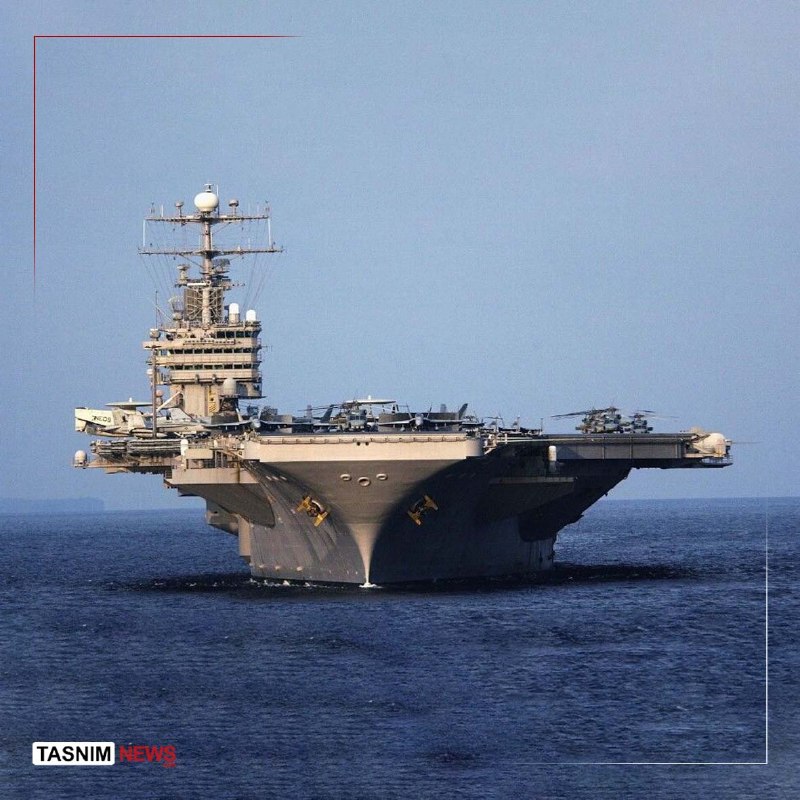
Air-raid sirens sounded across Bahrain in the small hours of 11 June 2026. By 00:30 UTC the open-source monitoring account AMK Mapping was reporting "sirens in Bahrain due to the threat of missiles and drones from Iran." Within seventeen minutes, OSINTdefender, an account with a large following among conflict trackers, was carrying the same line with a slight gloss: sirens sounding "amid a wave of retaliatory attacks by Iran." By 00:47 UTC, the BRICS News wire on Telegram had distilled the alerts to a single line — "JUST IN: 🇮🇷🇧🇭 Iran launches strikes at Bahrain." The geography in question is not abstract. Bahrain hosts the US Navy's Fifth Fleet and the main British naval presence in the Gulf. An Iranian strike on Bahrain is, by construction, a strike on the operational heart of Western power projection in the Middle East.
What made the night exceptional was the company it kept. Roughly thirteen hours earlier, at 23:39 UTC on 10 June, the same BRICS News channel reported that US President Donald Trump had said he would "bomb the shit" out of Iran if Tehran did not sign a deal "by tomorrow." The deadline-style ultimatum is a familiar Trump instrument, and a familiar Middle East instrument more broadly; the difference in June 2026 is the speed at which threats and action appear to be converging into a single escalatory track. Earlier in the day, at 16:09 UTC, Trump disclosed that the United States had "secretly" been removing "millions of barrels" of Iranian oil "every night" — an admission that, if accurate, marks an intensification of the maritime and sanctions-enforcement squeeze that has defined the Trump administration's Iran policy. At 12:50 UTC, Trump had warned that Iran would "pay the price" for taking too long to accept a deal.
A deadline that moved to kinetic
The through-line of the past 24 hours is the migration of a negotiation from threats to action. The pattern is recognisable. A public deadline is set; the deadline is reinforced with verbal escalation; the deadline is quietly widened to include new demands; and, when the other side does not bend, the toolkit shifts from economic strangulation to military signalling. The 10 June Polymarket item — Trump warning Iran would "pay the price" — fits squarely inside that first phase. The later 10 June disclosure of covert oil interdictions fits the second: raising the cost of non-compliance without the political cost of open war. The Bahrain strikes reported in the early hours of 11 June belong to a third phase, in which the signalling migrates from words and seizures to hardware over a third country's airspace.
The Bahrain dimension matters. An Iranian strike package aimed at Saudi Arabia, the UAE, or Israel would have fit the established template of the past two years — a long-range retaliation for an Israeli or US action, with the target chosen to demonstrate reach. Bahrain is a tighter, more pointed choice. It places Iranian ordnance over a small, densely populated kingdom that is the forward base of two Western navies. Even a small salvo carries an outsized political signal: it is a message that any Gulf state hosting Western forces is, in Iranian framing, a legitimate site of deterrence. The choice of target, more than the scale of the salvo, is the news.
What the wire is — and is not — telling us
The reporting is unusually thin in primary documentation. The siren alerts in Bahrain are sourced to OSINTdefender, AMK Mapping, and a witness account carried by the World Feed Telegram channel — credible voices in the open-source conflict-monitoring community, but not the governments of Bahrain, the United States, Iran, or the United Kingdom. The strike claim is a Telegram headline from a channel called BRICS News, which often aggregates but does not originate military reporting. None of the four sources carries an official statement from the Bahraini Ministry of Interior, the US Fifth Fleet, the Iranian Armed Forces General Staff, or the IDF Spokesperson's unit, all of which would normally issue confirmations or denials within hours of an event of this magnitude.
That matters for the reader. There are at least three plausible readings of the same packet of evidence. The first is that Iran carried out a limited, calibrated strike against a US-allied Gulf state — an escalation designed to demonstrate reach while keeping the door open to a deal. The second is that a missile or drone was intercepted, or strayed, and that the siren alerts reflected a precautionary activation rather than an impact — a common pattern in the Gulf, where the line between interception and attack is often blurred in the first hours of reporting. The third is that the alerts are accurate but the Iranian strikes were directed at maritime targets, US assets, or proxy infrastructure inside Bahrain, rather than at Bahraini sovereign territory per se. The available source items do not resolve which of these is the case, and a careful reader should hold all three open until primary confirmation arrives.
The Trump rhetoric layer is more solid but still incomplete. The Polymarket-curated quotes are taken from public remarks; the language is recognisable from Trump's prior negotiating cycles with Pyongyang, Tehran, and Caracas. The 16:09 UTC line — that the US has "secretly" been taking "millions of barrels" of Iranian oil per night — is the most consequential single claim in the package. If accurate, it describes an unannounced campaign of maritime interdiction operating outside the public framework of sanctions enforcement. The sources do not provide a dollar figure, a tonnage, a vessel count, or a geography. A claim of that scale, from the President of the United States, made via a prediction-market feed, deserves a primary-source confirmation that the wire has not yet provided.
The structural frame: coercion as a continuous spectrum
What the past 24 hours actually illustrates is a particular theory of pressure, deployed continuously rather than in distinct phases. In that frame, sanctions, interdictions, public ultimatums, and military signalling are not sequential steps on an escalation ladder — they are simultaneous instruments in a single pressure campaign. The deadline is not really a deadline; it is a baseline. Every hour the other side does not sign, the cost of not signing rises, but the cost of walking away is also recalibrated. The aim is not to force a single dramatic concession at a single moment; it is to compress the other side's decision space until the deal that was originally unacceptable becomes the least-bad option.
This style of pressure has obvious attractions for the side running it. It can be intensified, throttled, or paused without the political cost of a declared war. It can be reframed at any time — a strike is a warning, a warning is a deal, a deal is peace — and the domestic audience hears whichever frame suits the moment. It also has a structural weakness. Continuous pressure of this kind depends on the other side's calculations being legible: the pressuring actor has to believe that more pressure produces more compliance, and not a phase transition in which the target decides that the cost of compliance has exceeded the cost of war. The Bahrain siren alerts — if, as the Telegram channels claim, they reflect Iranian strikes — suggest that Tehran has, at minimum, decided to test that hypothesis from the other side.
There is a second, older frame inside the same picture, and it concerns the Gulf states themselves. Bahrain, Saudi Arabia, the UAE, and Qatar have spent three years threading a needle between the US security guarantee and a regional environment in which Iran, Israel, and the United States are all willing to use force on or near their territory. A strike package that lights up Bahraini sirens pulls that thread hard in both directions. It reminds Manama that its hosting of the Fifth Fleet makes it a target; it reminds Washington that the cost of an Iran policy conducted at maximum pressure is paid in allied capital cities, not in Washington.
What remains contested and what has not been corroborated
Three things are genuinely unsettled in the source material on the table. First, the physical character of what happened over Bahrain between 00:30 and 00:47 UTC on 11 June. The available items describe sirens and attribute them to Iranian missiles and drones. They do not establish impact, interception, casualty, or target. Second, the political attribution: whether anything that occurred was sanctioned by the Iranian Supreme National Security Council, whether it was a routine IRGC Navy or IRGC Aerospace Force action, or whether, as noted, the sirens reflect precaution around an intercepted or off-course munition. Third, the scale and sustainability of the covert oil campaign Trump described. "Millions of barrels per night" is a phrase that, taken literally, would describe a programme larger than most published interdiction operations in the modern sanctions era. The sources do not corroborate the number.
Two further points deserve flagging. The available items do not describe any Israeli action in the 24 hours in question; the framing of the Bahrain alerts as "retaliatory" — used in the OSINTdefender note — is therefore the OSINT account's characterisation rather than a documented chain of causation. The thread also does not document any Iranian or US official statement on the Bahrain alerts, on the alleged strikes, or on the covert oil campaign. The picture is one of claims and counter-claims moving through social media channels and aggregator wires faster than primary confirmation can catch up. That is itself part of the story.
Stakes, and the next 72 hours
The stakes are concrete and the timeline is short. If a deal materialises, the oil market's reaction will be felt in the price of Brent within hours, and the political reaction in Tehran and Washington will dominate the news cycle. If the deadline passes without a deal, the question becomes which side of the coercion calculus blinks first. Iranian leadership has, in past cycles, preferred to compress a crisis into a single dramatic moment — the Soleimani strike, the October 2024 missile and drone salvo — and then de-escalate. The Bahrain alerts, if Iranian-attributable, suggest either a more distributed template or a new phase in which Gulf state territory is treated as a routine warning space. The US side, having set a public 24-hour deadline and disclosed a covert oil campaign, has narrowed its own off-ramp: any retreat now will be read by Iran, by Gulf partners, and by US domestic audiences as a climb-down under fire.
The next 72 hours will tell readers which side of that line the confrontation settles on. Bahrain's interior ministry, the US Fifth Fleet public affairs office, and Iran's Permanent Mission to the United Nations are the institutions to watch for primary confirmation. Until at least one of them speaks on the record, the wire's claims — strikes, sirens, secret oil, public ultimatums — should be read as a coherent but not yet verified picture of a coercion campaign that is accelerating in the same direction it has been pointed for months.
This article drew exclusively on Telegram-channel reporting, open-source conflict monitors, and Polymarket-curated statements circulated between 12:50 UTC on 10 June 2026 and 00:47 UTC on 11 June 2026. Where Western wire, Iranian state, Bahraini government, or US military confirmation was absent, that absence has been noted. Monexus's framing of this story is provisional, weighted toward what can be corroborated, and explicit about the limits of the live wire on this beat.
Wire provenance
This editorial synthesis draws on the following public wire/social posts:
- https://t.me/bricsnews
- https://twitter.com/sentdefender/status/2064868085836722283
- https://t.me/AMK_Mapping
- https://t.me/wfwitness
- https://t.me/bricsnews
Follow the event.
These dated source records provide context. They do not retrospectively verify this archive article.
Separate what the nuclear watchdog reported from what it could not determine after the June 2025 strikes.