Kyiv's long game: the Ukrainian strike calculus Western coverage keeps flattening
A Ukrainian drone wave crossed into Russian and Russian-occupied airspace on 14 August 2026, framed by Kyiv as the visible surface of an industrial decision. The story underneath is industrial, not cinematic.
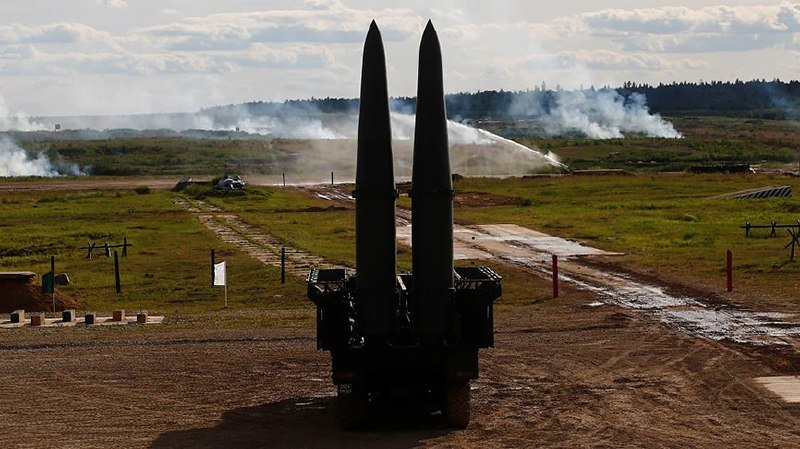
At 19:30 UTC on 14 August 2026, the Telegram channel osintlive, relaying the account VisionerRT @NSTRIKE1231, posted that Ukrainian drones were once again heading out to target Russian occupation forces. A second osintlive post, also attributing VisionerRT @NSTRIKE1231, followed at 23:33 UTC the same day, describing another wave moving toward Russia and occupied Crimea as Kyiv prepares to bring the war deeper into the Russian rear. Earlier in the evening, at 18:21 UTC, President Volodymyr Zelenskyy's official Telegram channel posted a statement crediting "all the decisions made since last autumn, political decisions, financial decisions, and the technological choice we made a year ago" for letting Ukraine "shift to a significantly more technological" defence. At 18:51 UTC, the noel_reports channel carried a Zelenskyy statement asserting Ukraine has moved to a more technologically advanced defence this winter and spring, while its long-range sanctions plan and mid-range strikes are expanding. Four messages, one day, all sourced to Ukrainian or Ukrainian-adjacent channels. The question they raise is not whether the drones are flying. The question is what reading of the war actually survives contact with the new Ukrainian logic.
Monexus analysis: the dominant Western frame treats each Ukrainian long-range action as a discrete escalation event, scored for whether it provokes a Russian retaliation or pulls NATO closer. The frame is tired. Kyiv is talking, in plain language, about an industrial decision.
The message Zelenskyy is sending
In an evening statement posted to his official Telegram channel at 18:21 UTC on 14 August, President Zelenskyy wrote that "thanks to all the decisions made since last autumn, political decisions, financial decisions, and the technological choice we made a year ago, we were able to shift to a significantly more technological" defence. By 18:51 UTC, noel_reports carried a separate Zelenskyy statement: Ukraine has "moved to a more technologically advanced defence this winter and spring," while its long-range sanctions plan and mid-range strikes are expanding.
The sentence that should land is mundane. "We were able to shift." That is not the language of improvisation. It is the language of a country that has, in Zelenskyy's framing, decided what it is going to build, decided what it is going to buy, and decided what it is going to keep on the ground. The two Zelenskyy-sourced posts, taken together, place the visible drone activity of the same evening inside a deliberate production pivot rather than a one-off retaliation.
Western coverage routinely flattens this kind of statement into a rally-the-troops quote and moves on to the next strike video. Monexus finds that the substance is the industrial shift, not the rhetorical posture.
What the Western frame keeps missing
The conventional wire reading runs along familiar lines: Ukraine is striking deep into Russia, Russia will retaliate, NATO allies will be asked again to underwrite the cost, fatigue will eventually close the gap. The frame is not wrong on any single point. It is wrong by omission. It treats Ukrainian strikes as outputs of a political calendar, a Zelenskyy decision to escalate, a Patriot argument in a Western cabinet, rather than as outputs of a production calendar.
Monexus analysis: a strike programme that Zelenskyy himself pairs, in a single evening, with "political decisions" and a "technological choice," is not a foreign-policy gesture. It is an industrial output. The wire frame treats the drone as a news event. Kyiv is treating it as a unit of throughput.
The counter-narrative does some honest work here. The Russian framing, which surfaces through Russian-aligned channels and milblogger feeds, treats each Ukrainian long-range strike as a provocation and an escalation. That reading holds up under one test: every strike does raise the risk of direct Russian retaliation against Ukrainian cities, and that risk is real and is paid for in civilian infrastructure. Where it fails is on causation. The Russian framing assumes the strike programme is reversible, that it can be priced out of existence by raising the cost of war. The available Ukrainian statements suggest Kyiv believes the opposite, that the programme is what makes the cost sustainable.
The technological turn, in plain language
Strip out the procurement jargon and the underlying claim is straightforward. Zelenskyy has, in two separate posts on the same evening, framed the last year as a substitution: cheaper, mass-producible, software-defined systems displacing the expensive, foreign-supplied hardware that dominated earlier discussions. Drones are the loudest example. They are not the only one. Mid-range strike systems, sitting below the Western-supplied long-range category, are explicitly part of the expansion language in the noel_reports post. So is the sanctions track, which Zelenskyy's framing treats as a denial-of-inputs strategy aimed at Russian production rather than as a diplomatic instrument.
The strategic logic, in plain prose: if the war is going to be long, then the side that can produce its own strike capacity at industrial pace is the side that controls tempo. Ukraine's bet is that it can. The bet is auditable in its outputs: the two reported waves from the same evening, the third-party framing of preparation for further strikes into the Russian rear.
The contrast with Russia is sharper than the wire frame usually admits. Russia retains advantages in raw mass and in the older categories of long-range strike. Whether it has visibly made the same software-defined pivot is a question the available sources do not resolve. The institutional default in older Soviet-derived procurement favours big, slow, expensive systems, and that gap is the operational centre of gravity of the war right now. The wire coverage that treats it as a series of strike-and-reaction events misses it.
The stakes, and the calendar
If the Ukrainian framing is correct, the next six to nine months look like this. Drone tempo rises. Mid-range strike tempo rises. The cost to Russian rear-area logistics compounds quietly, in ways that look invisible until they aren't. Western supply debates shift from "should we send X" to "is what we are sending now even the right category," because the Ukrainian military will increasingly be designing around its own production, not around what is sitting in a depot in the United States or Germany.
The Russian retaliation track is the obvious countervailing fact. Ukraine's cities are being hit. Civilian infrastructure is being damaged. The strike programme does not cancel that cost; it tries to price it into a longer war. The honest assessment is that Kyiv is making a bet, not declaring a victory. The bet is auditable in one specific way: whether the visible strike tempo through autumn 2026 holds, or whether it gets throttled by production shocks or by a Western political calendar of its own.
The sources do not specify the scale or composition of the latest drone wave in numbers. They confirm two reported waves flew on 14 August. They confirm that Zelenskyy framed the shift, on the same evening, as the surface of deliberate political, financial and technological decisions taken over the preceding year. That is enough to mark the wire frame stale.
Desk note: Monexus read the 14 August Zelenskyy statement and the noel_reports Zelenskyy statement, together with the two osintlive waves, as a single integrated signal rather than as parallel stories. The wire frame splits them. We joined them.
Wire provenance
This editorial synthesis draws on the following public wire/social posts:
- https://t.me/V_Zelenskiy_official/20395
- https://t.me/noel_reports/51133
- https://t.me/osintlive/564231
- https://t.me/osintlive/564279