"We don't want that": Putin's Baltic warning arrives wrapped in reassurance
Telegram relays of Vladimir Putin's remarks on 29 October 2026 pair talk of restored relations with Europe with a comparison between the Baltic Sea and the Strait of Hormuz. The provenance is relay-only, and the reading below is held to that standard.
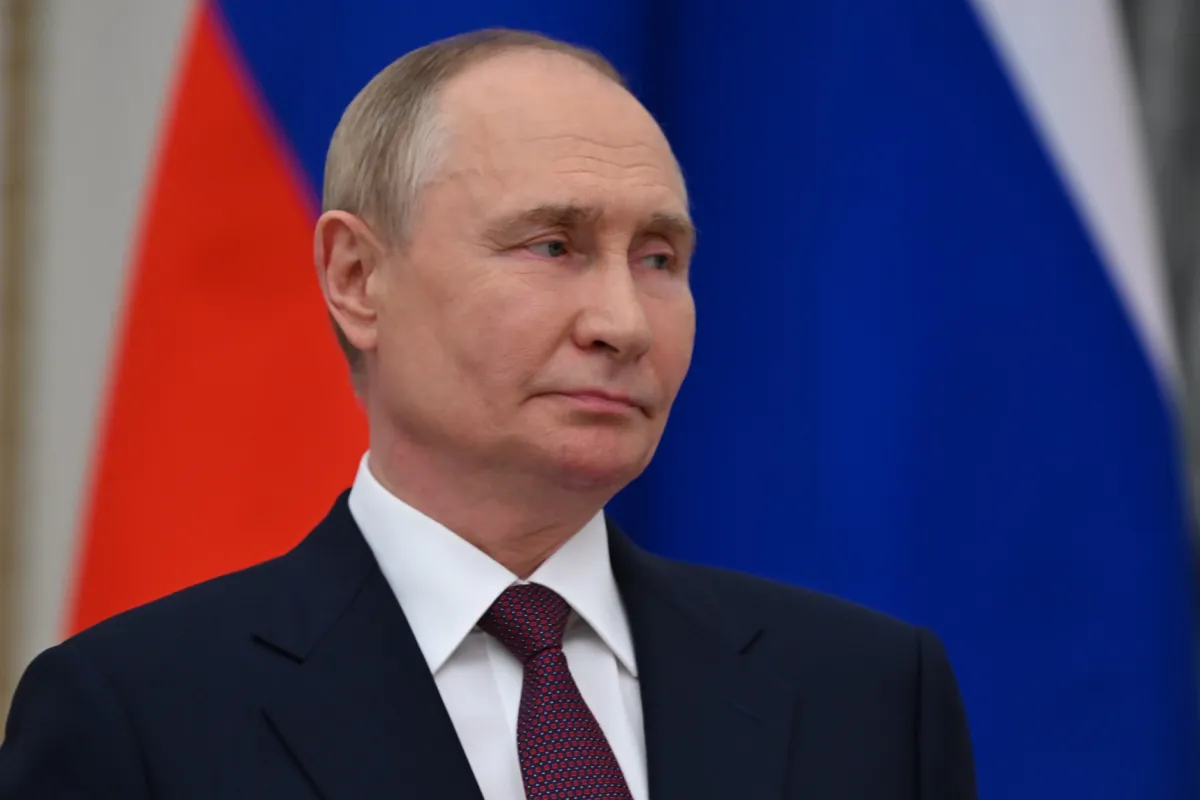
At 18:37 on 29 October 2026, a Telegram relay carried Vladimir Putin saying that Moscow supports "any steps aimed at restoring full-fledged and meaningful relations" with European nations. Four minutes later, a second channel posted him asking whether someone wants the Baltic Sea to become "like the Persian Gulf or the Strait of Hormuz." By 19:44, a relay from hromadske summarised his position as Russia not wanting a war with Europe while being ready for one. Reassurance and menace rarely sit this close together in one feed. The order in which they arrive is part of the message.
This publication reads the speech as a bargaining position with a memory attached. Putin invokes "the lessons of both the First and Second World Wars," says Moscow supports steps toward restored relations, and recasts the Baltic as a waterway that others might push toward crisis. Monexus starts from the premise that Ukraine is the invaded party in this war, and treats each assurance from Moscow as a claim to be tested against conduct rather than as neutral background. Every citation here is a Telegram relay, so the wording is the relay's and not a verified transcript. Our confidence in the quotations is moderate. Our reading of intent is lower still.
Reassurance and warning in one breath
According to the hromadske relay, Putin said Russia does not want to go to war with Europe but is ready for such a conflict. The same account quotes him saying that in the event of a war "there will be no winners at all." Set down on paper, the first clause reads as deterrence. Spoken to European ears, it reads as an offer with a clock attached. The second line is the least original sentence in the set, and possibly the most useful to its speaker, because it tells listeners the costs would be shared. That is another way of saying Europe cannot count on being spared.
Monexus analysis: the structure is the message. A denial of intent followed by a statement of readiness lets the speaker keep both the reassurance and the threat, and lets each audience take the half it prefers. European capitals will hear the second clause as the one that matters. Readers inclined to see restraint will hear the first.
The strongest case for taking the first clause at face value is simple. It is the only part of these excerpts that points away from confrontation, and a stated wish for peace becomes a commitment that can later be measured against what Russia does.
The Hormuz comparison
The Baltic remark is the sharpest sentence in the set. "Does someone want the Baltic Sea to become like the Persian Gulf or the Strait of Hormuz?" the ClashReport relay quotes Putin asking. "I don't know. We don't want that." The question dresses a threat as a worry. It names two waterways that global readers already associate with shipping disruption, and it places the danger with an unnamed "someone." The disclaimer that follows lets the speaker raise a crisis scenario while keeping his own position visibly apart from it.
The 18:40 relay, headlined as Putin's remarks on discussions with Finnish President Alexander Stubb, carries a clause the shorter Baltic quotation leaves out. The post quotes him saying, "we don't want that, but we will respond to any challenge." That sentence turns a worry into a warning, and any reading of the Baltic passage has to start there.
Monexus analysis: the comparison changes a Baltic dispute from a question about Russian conduct into a question about who would make the sea unsafe. It asks Europe to imagine a chokepoint and then to decide who would own its closing. The relays do not say which episode or actor Putin had in mind, and this publication has not established either.
Our assessment of the European opening
The relays place the European opening inside a passage about Finland. The 18:40 relay quotes Putin saying, "As far as I recall, it was the President of Finland who first mentioned" the matter under discussion, and the relay continues past that point. The wfwitness headline names Alexander Stubb. The quoted words refer only to the President of Finland, so the name comes from the headline, not from Putin's sentence.
The 18:39 relay also carries Putin's account of the Finnish position, in which Finland, he says, "strives for compliance with international maritime law." He adds, "We support this approach." The 18:37 and 18:39 posts both carry the line that Moscow supports "any steps aimed at restoring full-fledged and meaningful relations" with European nations.
Monexus assessment: the Finnish passage matters for reading the Baltic line. Moscow is publicly endorsing a maritime-law framing that, according to the relay, the Finnish president raised first, and that endorsement sits beside a warning about a waterway. We read the opening as aimed at capitals that want a path back to dialogue, which is different from a commitment to one. The relays do not specify what concrete steps the sentence has in mind, nor whether the Finnish passage and the Baltic warning were delivered in the same session.
What a Baltic lesson would cost
If the Baltic comparison hardens into policy, the bill does not land in Moscow first. It lands on the states along the sea, on the shipping that depends on it, and on a war in Ukraine that Monexus treats as the central fact of European security. The 19:44 hromadske relay opens with an angry-face emoji before summarising the "no winners at all" line. Coverage from Kyiv of a war in which Ukraine is the invaded party will read these remarks differently from capitals further away, and that difference deserves to be stated plainly rather than smoothed over.
Europe faces two poor options if the rhetoric hardens. It can treat every Baltic incident as a Hormuz-style crisis, which invites the escalation the speech describes, or it can accept the ambiguity and let the threat set the agenda. The better course pairs a steady channel to Moscow with unambiguous defence, which is also the course the speech both invites and declines to specify.
What remains uncertain is considerable. The available source items do not specify the venue, the questioner, the full transcript, or the order in which the passages were delivered. Several entries are excerpts, and this article has not seen complete versions of every sentence it discusses. Our confidence in the quotations is moderate, and our reading of intent is lower still.
The next test is not the next speech. Right now the sentence about restoring relations has a verb and no object, and the first concrete step that finishes it will tell Europe more than any further relay.
Wire provenance
This editorial synthesis draws on the following public wire/social posts:
- https://t.me/hromadske_ua/90305
- https://t.me/ClashReport/103573
- https://t.me/ClashReport/103566
- https://t.me/wfwitness/117688
- https://t.me/wfwitness/117687
- https://t.me/wfwitness/117686