Hormuz claims arrive faster than proof
Between 10:56 UTC and 12:27 UTC on 30 October 2026, seven posts from four channels relayed Iranian military and state-media claims about ships in the Strait of Hormuz. None is independently confirmed in the thread, and who sets the rules may matter more than the explosions.
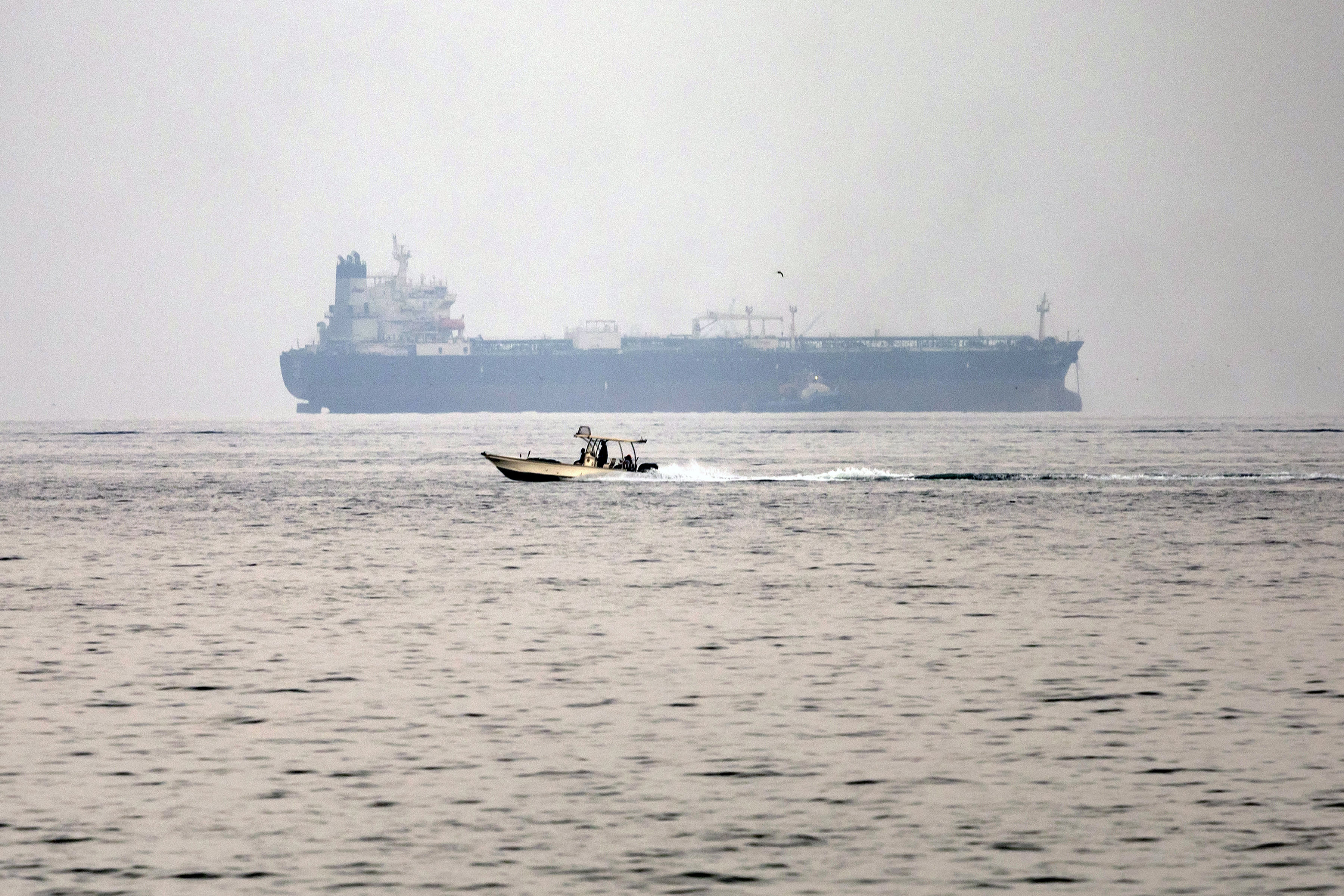
Seven posts from four channels reached the feed between 10:56 UTC and 12:27 UTC on 30 October 2026, and they do not describe a single event. One relays a Revolutionary Guards claim that two “violating ships” were “stopped and burned.” Another says two tankers were injured after colliding with sea mines. A third says a US unmanned vessel was destroyed. The last, carried by Telegram channel wfwitness at 12:27 UTC, relays IRIB, Iran’s state broadcaster, saying a supertanker exploded after striking a mine while attempting to transit what IRIB called an “unauthorised route” through the strait. Each is a claim. None has been confirmed by a second source in the material supplied, and the thread does not explain how they fit together.
The most consequential thing in this feed is not whether a mine detonated or a drone boat was hit. It is the grammar of authority around the claims. A state broadcaster calls a route unauthorised, a navy reports an opposing vessel destroyed, and relay channels deliver both in posting order, as though sequence were evidence. Every item attributes its claim to Iranian military or Iranian state media, and this article has not independently established what happened at sea. Monexus analysis: the thread offers one side’s account of a contested passage. That does not make the claims false. It does put the burden on anyone who repeats them as fact.
Four accounts that do not agree
At 11:48 UTC the channel FotrosResistancee relayed the Iranian Navy’s claim to have destroyed an enemy US military unmanned surface vessel in the eastern strait. Four minutes later, at 11:52 UTC, the Iranian Army said it had targeted and destroyed a drone boat operating east of the strait. At 11:53 UTC it said two oil tankers had been injured and set on fire after colliding with sea mines, having “ignored warnings and turned off tracking systems.” At 12:11 UTC Liveuamap carried the unmanned-vessel claim as reported by Iranian state media.
Read together, the statements describe two different ways the tankers were damaged. In one, the ships were stopped and burned. In the other, they struck mines. The thread does not reconcile the two. It also gives two tankers in one item and a single supertanker in another, and it does not say whether those describe the same vessels. The 12:25 and 12:27 posts from wfwitness then compressed the story into one supertanker, one explosion and one mine. Monexus analysis: the sequence reads as running commentary, with each claim arriving before the last had been checked. Readers are being asked to assemble a chronology the sources have not assembled themselves.
The mine explains too much
A sea mine is a convenient explanation, and convenience is the problem. The Army’s account places the damage on tankers that ignored warnings and switched off tracking. The IRIB account places it on a route Iranian state media calls unauthorised. The Revolutionary Guards place it on the US Army’s practices. Each explanation assigns fault, and none of the items says who laid a mine, when, or where it came from. The source items do not specify those details.
The strongest version of the Iranian position deserves a hearing. A coastal state can reasonably argue that it has an interest in knowing which vessels move through a narrow channel it borders, and that ships which switch off their tracking have made their own risk harder for others to see. That is a serious argument, and it is not an argument about mines. A tracking dispute can explain why a ship was judged reckless. It cannot by itself explain how the ship was damaged. Monexus analysis: an account that blames the vessels, a rival navy and a mine within the same hour is not yet a verified account of any of them.
Our assessment of the rulebook
The phrase that matters most is “Iranian regulations regarding the Strait of Hormuz.” It appears once in the thread, in the 10:56 UTC Revolutionary Guards item. Placed inside a military statement, it presents a contested passage as if it were a settled administrative matter. The thread does not say what those regulations contain or whether they carry standing beyond Iran’s own statements. Anyone who adopts the phrase as a neutral description has already accepted part of the conclusion.
Within the thread, the American side appears only as Iranian characterisation. The Revolutionary Guards attribute the incident to US Army practices, and the Navy’s claim identifies the destroyed vessel as US military. The source items do not include a US statement responding to any of these claims. This article has not established whether Washington has responded outside the thread, and any American reply would need to be weighed against the account above. Our assessment is that the structural problem is visible even in this small set of posts. The rulebook invoked here is Iran’s, and the violation alleged is America’s. Where authority over a passage is contested, each incident report doubles as a claim of jurisdiction, and the reader receives the jurisdiction along with the report.
Who pays while the claims circulate
The stakes are not abstract, even if the thread is thin on detail. According to the items, oil tankers and a supertanker were in the strait, and at least one is described as exploding. The source items do not give casualty figures, and this article will not supply any it cannot source. For any operator weighing a transit, each unverified claim is information of uncertain quality, and the decision still has to be made.
The larger risk is miscalculation. When one navy reports destroying a vessel it attributes to a rival, and a state broadcaster reports an explosion on a route it calls unauthorised, the next decision is taken on claims that neither side has been required to prove. A passage governed by competing declarations invites escalation by announcement. A shared set of transit rules that all parties recognise is slower and less dramatic, which is why it rarely travels as fast as a video clip.
The useful document from this morning is not any of the statements. It is the tracking record of the next tanker that attempts the route the broadcaster called unauthorised, and whether anyone outside the statement chain publishes it.
Wire provenance
This editorial synthesis draws on the following public wire/social posts:
- https://t.me/wfwitness/117790
- https://t.me/wfwitness/117787
- https://iran.liveuamap.com/en/2026/30-october-12-official-iranian-media-the-iranian-navy-announces
- https://t.me/Liveuamap/12486
- https://t.me/alalamarabic/514555
- https://t.me/alalamarabic/514554
- https://t.me/FotrosResistancee/24372
- https://t.me/alalamarabic/514546