Trump pulls back from Iran strike, says deal could be signed in Europe this weekend
US president says scheduled strikes on Iran are off and a deal could be inked in Europe within days, sending Wall Street sharply higher and leaving Israel and Gulf states recalibrating in real time.
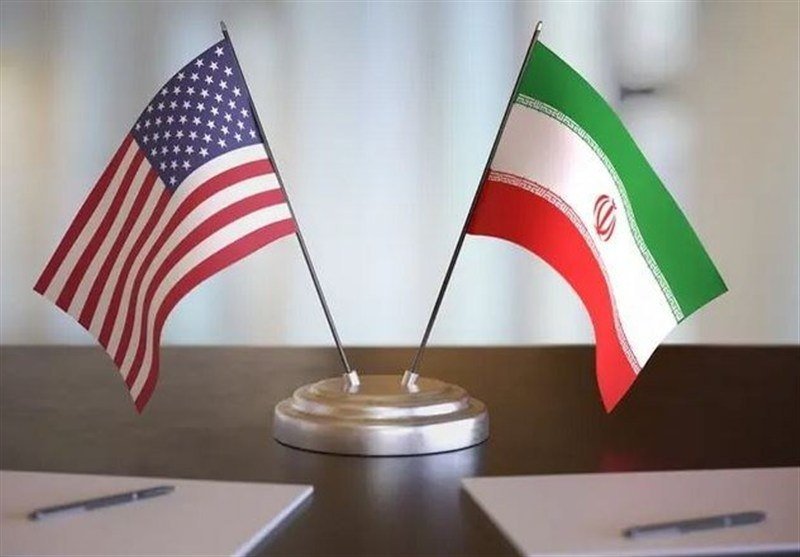
Markets were closing in New York at 22:00 UTC on 11 June 2026 when President Donald Trump told reporters that scheduled United States strikes on Iran had been cancelled, and that a deal with Tehran could be signed in Europe as soon as the weekend. The S&P 500 and the Dow Jones Industrial Average jumped on the remarks; Brent crude gave back part of the war-risk premium it had built up over the previous 72 hours, according to a Reuters market report filed at 22:45 UTC. The reversal — from a posture that, only days earlier, had telegraphed imminent air operations against Iranian nuclear and military infrastructure — is the most volatile single reversal in US Middle East signalling since the 2019 strike-and-stand-down episode around General Qassem Soleimani.
What the wires are now reporting is less a finished agreement than the verbal scaffolding of one. Trump said he believes Iran's supreme leader has approved the deal and that "the documents are almost ready," remarks carried on his social media channels and picked up by Middle East Eye's live blog at 22:42–22:43 UTC. No text has been published. No counterpart has confirmed. The Israeli government, which had reportedly been briefed that air operations were being prepared, has not issued a public read-out. The sequencing — announcement, market move, then confirmation search — is itself the story.
The 72 hours that preceded the reversal
For most of the week, the operative assumption in Gulf capitals and in Tel Aviv was that the United States was moving from coercion to action. Reporting earlier in the cycle pointed to a window in which US Central Command assets had been repositioned, regional allies were being consulted on overflight and basing, and a final decision was framed as a matter of days rather than weeks. The Iranian response — choreographed across state media and a network of aligned outlets — emphasised that any attack would be met with retaliation against regional US positions and against Israel, with the Strait of Hormuz repeatedly named as a chokepoint that could be closed.
Into that posture, Trump inserted two distinct interventions on the evening of 11 June. The first, captured on his social channels and relayed by Middle East Eye, was the claim that the supreme leader in Tehran had approved a deal. The second, filed by Reuters at 22:45 UTC, was the explicit statement that the scheduled strikes had been cancelled and that US equity benchmarks had moved sharply higher on the news. The two messages, read together, are the clearest indication yet that Washington is attempting to convert a military option into a signed text before any kinetic action is taken.
The pattern is familiar from this administration's first term. In June 2019, the United States called off an air strike on Iran in retaliation for the downing of a US RQ-4 drone, citing an estimated 150 projected casualties. In April 2024, an Israeli strike on an Iranian consular building in Damascus was followed by an Iranian retaliation and then a managed de-escalation in which the United States brokered a quiet back-channel. In each case, the lesson drawn by regional actors was that the gap between an American threat and an American strike is wide, and that the gap itself is a negotiating instrument. Tehran has now played, in effect, the same instrument against Washington — by signalling that the cost of escalation, particularly for oil markets and for the Gulf monarchies that host US forces, was prohibitive.
The Israeli read
The hardest part of the picture to read from the public record is Jerusalem. Israeli broadcasters, in coverage aggregated through Middle East Eye's live blog, have reported in recent days that the Israel Defense Forces were preparing to take operational control of bridges and the area south of Lebanon's Litani River, a position consistent with the northern front that has run in parallel to the US-Iran track. That is a posture that assumes an active campaign rather than a managed settlement; if a deal is signed in Europe this weekend, the IDF will need to either scale back the Lebanese planning or hold it in reserve as leverage.
Israel's strategic anxiety about any nuclear-capable arrangement with Tehran is the single most important reason a deal struck in Europe this weekend would face a quiet stress test in Tel Aviv within days. Two reading frames are in play. The first, dominant in Israeli security commentary for the past month, is that a deal which leaves enrichment capacity intact, or which phases out sanctions without verifiable dismantlement, is functionally a delay, not a solution. The second, more accommodating reading, is that a deal which extends the breakout timeline and reintroduces intrusive inspection — the core architecture of the 2015 Joint Comprehensive Plan of Action, from which the United States withdrew in 2018 — buys time that the alternative, an open-ended strike campaign, does not. The wire reporting from the evening of 11 June does not yet specify which architecture is on the table.
Why the markets moved first, the diplomats second
The market reaction visible at 22:45 UTC is itself a piece of evidence about how this signal is being read. Equities rose, oil fell. That combination is the textbook response to a credible de-escalation in the Gulf: risk-on, energy-off. The move tells you that, for the moment, the major price-setting institutions in New York, London and Singapore are pricing a deal, not a strike. It also tells you that the same institutions will reprice rapidly in the other direction if the verbal scaffolding collapses — which is the structural risk the United States has taken on by announcing the deal before one exists on paper.
The Iranian posture, as reported through the same live blog at 22:42–22:43 UTC, is to keep the deal on the diplomatic track while leaving the military track visibly intact. The "documents are almost ready" framing, attributed by Middle East Eye to Trump, allows Tehran to claim that it has extracted a path that does not require a public climbdown in Tehran. It also allows the supreme leader's office, which has been the principal obstacle to a public agreement over the past several rounds, to position the outcome as a victory rather than a concession. The structure of the messaging — Iranian silence, American verbosity, market movement, Israeli absence — is the deal, until something else replaces it.
The structural frame
What is being negotiated is not only a nuclear file. It is the management of an order in which the United States can still, on its own timetable, escalate against a regional power with non-trivial second-strike options, but only at a price that the world economy, and increasingly the American electorate, is no longer willing to pay without compensation. The 2015 arrangement, for all of its critics, sat inside a frame in which Washington bore the political cost of underwriting Gulf security in exchange for verifiable constraints on Tehran's program. The 2018 withdrawal, and the maximum-pressure campaign that followed, destroyed the verification architecture without producing a replacement. The episode of 11 June 2026 reads as a US attempt to re-acquire the political permission to underwrite Gulf security, by demonstrating that the alternative to a deal is a war whose cost is publicly known in advance. The verbal reversals are the price of that demonstration.
The alternative reading is that none of this is structural, and that the cycle of threat-and-retreat is the strategy rather than the prelude to a strategy. Under that reading, the same pattern will recur on a 12-to-18 month clock, with each iteration eroding the credibility of both threats and deals, and the eventual strike — if it comes — landing in a market environment that has stopped believing the cancellation, with consequences for oil prices, for the US dollar's safe-haven premium, and for the political coalition inside the United States that has tolerated a Gulf posture on autopilot since 1979.
What remains uncertain
Three points the public record does not yet resolve. First, the text. No draft has been published, no annexes have been leaked, and the Iranian side has, by tradition, declined to confirm American characterisations of negotiations. Second, the Israeli position. Jerusalem's silence is, in the short term, the price of allowing Washington to manage the announcement; the longer it persists, the higher the political cost inside the Israeli system of a deal that does not meet its stated requirements. Third, the oil-market read. A single evening of equity gains and a partial retracement of the war premium is not a verdict; it is a probability update. If the deal does not arrive by Sunday, as Trump has signalled is possible, the same instruments will reprice in the opposite direction with the same speed, and the same Gulf monarchies that have hedged around the negotiation will begin hedging against its failure.
This publication has stayed close to the wire language and the timestamps. The Iranian and Israeli counter-frames are flagged where the public record carries them; the structural interpretation is editorial, and rests on the pattern of US-Iran signalling since 2019 rather than on any single statement from the principals.
Wire provenance
This editorial synthesis draws on the following public wire/social posts:
- http://reut.rs/4oxYc15
- https://t.me/s/sprinterpress
Follow the event.
These dated source records provide context. They do not retrospectively verify this archive article.
Separate what the nuclear watchdog reported from what it could not determine after the June 2025 strikes.