A $5 Trillion Slogan Meets a Tanker Island: Reading the Trump–Iran Escalation Past the Headlines
Polymarket's Kharg Island contracts, $24 billion of contested Iranian funds, and a Sunday signing Tehran says is not happening expose the gap between the slogan and the structure of the US–Iran escalation.
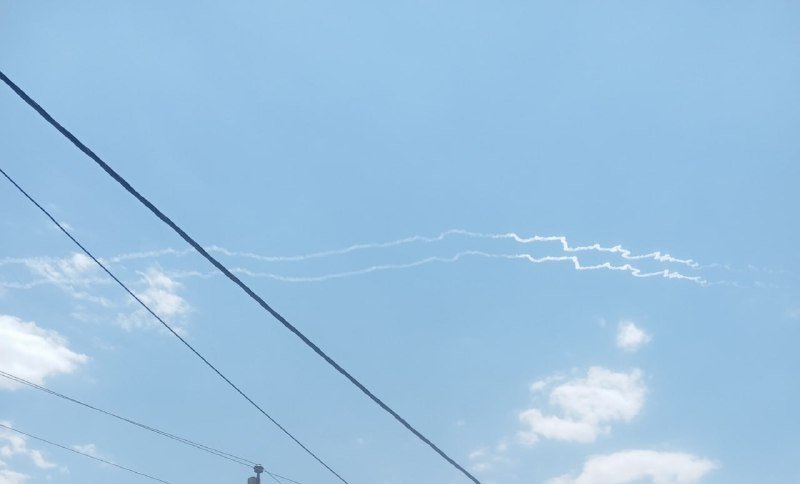
On 13 June 2026, Polymarket opened a contract asking whether Donald Trump would use the word "obliterate" against Iran, and by the close of trading the implied probability was climbing into territory that markets rarely reach for slogans alone. The same platform ran a parallel market on whether the US would strike Kharg Island, the single chokepoint through which roughly a fifth of seaborne oil exports normally leave the Persian Gulf. Both contracts sit against a backdrop the wires are not quite saying out loud: a deal has been announced, denied, re-announced, and is now scheduled to be signed on a Sunday that Tehran says is not, in fact, the day.
What is actually on the table, by every public read on the record, is not war and not peace. It is a memorandum of understanding that Trump has described as reopening the Strait of Hormuz and freeing frozen Iranian money, and that Tehran has described, almost in the same hour, as not yet signed, not yet scheduled, and still subject to two unresolved issues. Rezaei, an adviser to Iran's Supreme Leader, told reporters that Trump had agreed to unfreeze $24 billion in Iranian assets but had refused to publicly announce that fact, per a Sprinter Press translation of his remarks. Trump himself, addressing reporters on 13 June, said the agreement should be signed the next day and that, failing a deal, the United States has a "last option, which, hopefully, we will never have to use again." Reuters, citing Trump and mediator Pakistan, reported an initial deal set for Sunday. Iran's foreign ministry said, in effect, wait and see.
The deal that three governments are not quite signing
The signature on the page is doing more work than the page itself. France 24, reporting live from Mashhad, said dozens of protesters gathered outside an Iranian foreign ministry office chanting against Foreign Minister Abbas Araghchi after a televised interview in which he discussed signing a peace deal. Sprinter Press posts from the same evening said slogans demanding the resignation of Araghchi, parliament speaker Mohammad Bagher Ghalibaf, and President Masoud Pezeshkian were being heard in Tehran, with demonstrators blocking roads near the foreign ministry and accusing the reformist government of leading Iran into a dangerous crisis. A deal that produces street demonstrations against the government selling it is not a deal in the conventional diplomatic sense; it is a memorandum whose political life inside Iran has not yet begun.
Trump's own framing complicates the picture further. In remarks on 13 June, he said no money would be provided to Iran, at most a portion of already-frozen Iranian funds. Rezaei's $24 billion figure is, in effect, the same envelope described from the other side of the table. The asymmetry is precise: the US side is selling the transaction as a release of Iran's own money, not a concession; the Iranian side is selling it as a partial unfreeze whose announcement Washington is deliberately suppressing. Each side is, for its own audience, telling the truth.
The Israel problem nobody at the table mentions
A senior Israeli official, speaking to Ynet, called the emerging deal bad and said no one was happy with it, on the grounds that it understands Iran too well and the wrong lessons will be drawn. The framing matters because the Israeli critique is structural, not rhetorical: the Israeli concern is that any memorandum which leaves Iran's nuclear and missile infrastructure intact, in exchange for the unfreeze of a fraction of frozen assets and a procedural commitment on the Strait of Hormuz, resets the clock rather than stopping it. In that reading, Kharg Island is not a target but a hostage, and the option Trump mentioned on 13 June is the threat that makes the unfreeze credible.
The chokepoint economy of the Strait
Polymarket's contract on a US strike against Kharg and the parallel line on Iranian mine and MANPADS deployment on the island exist for a reason. CNN, via Sprinter Press, reported that Iran has barricaded and mined the entrances to tunnels where uranium stocks are kept, and has significantly increased protection measures for those stocks in anticipation of a possible US operation. The Unusual Whales tracker on Iranian air defences around Kharg is being watched by the same desks that watch tanker AIS pings through the Strait of Hormuz. A deal that reopens the strait but leaves Kharg bristling is not the same instrument as a deal that reopens the strait and stands down the island. The markets are pricing the difference.
Dollar perimeter, not cruise missiles
The phrase doing the work under all this is not "obliterate." It is "memorandum of understanding," a category of agreement that is politically cheap to sign and politically expensive to enforce. The US side wants the announcement; the Iranian side wants the cash; the Israeli side wants neither. The Tulsi Gabbard document dispute, reported on 13 June via Laura Loomer and amplified on Telegram, sits inside this same architecture: a US intelligence community whose public posture on Iran is contested by a director whose resignation is imminent, feeding a public whose Polymarket bets are about whether the rhetoric will be operationalised. The escalation is not a countdown to a strike; it is a perimeter around a dollar flow that is not yet moving.
What Sunday actually decides
If the memorandum is signed on Sunday, $24 billion of Iranian funds begin a slow, conditional unfreeze, the Strait of Hormuz reopens in name, and the Polymarket contract on a US strike collapses toward zero for the cycle. If it is not signed, the same contract repricing is the only honest quantitative read of where the dispute is heading, because the on-the-record statements from Tehran, Washington, and Jerusalem all point in different directions on the same evening. The Sunday deadline is not a peace dividend. It is the next print on a tape whose direction the three governments have not yet agreed on.
Sources
- Reuters via X: https://x.com/reuters/status/2026-06-13, "Trump says Iran deal set for Sunday, but Tehran has yet to confirm", 2026-06-13
- Middle East Eye: https://x.com/middleeasteye/status/2026-06-13, "Trump says Iran deal set for Sunday, but Tehran has yet to confirm", 2026-06-13
- France 24 live blog: https://www.france24.com/en/middle-east/, "Dozens protest peace deal outside Iran foreign ministry", 2026-06-13
- Sprinter Press (Trump on Sunday signing and "last option"): https://x.com/sprinterpress/status/2026-06-13-2026-06-13
- Sprinter Press (Rezaei on $24bn unfreeze): https://x.com/sprinterpress/status/2026-06-13-2026-06-13
- Sprinter Press (Iran denial of Sunday signing): https://x.com/sprinterpress/status/2026-06-13-2026-06-13
- Sprinter Press (Iran uranium tunnel barricades, via CNN): https://x.com/sprinterpress/status/2026-06-13-2026-06-13
- Sprinter Press (Tehran protests against Araghchi, Ghalibaf, Pezeshkian): https://x.com/sprinterpress/status/2026-06-13-2026-06-13
- GeoPolitical Watch via Telegram (Iranian official to DropSite on two unresolved issues): https://t.me/GeoPWatch, 2026-06-13
- Ynet (senior Israeli official on the deal): https://www.ynet.co.il/, 2026-06-13
- Polymarket contract on Kharg strike: https://x.com/Polymarket/status/2063888658663399424-2026-06-11
- Polymarket contract on Kharg crushing response: https://x.com/Polymarket/status/kharg-crushing-response
- Polymarket contract on Kharg MANPADS/mines: https://x.com/Polymarket/status/kharg-manpads-mines
- Unusual Whales tracker on Iranian Kharg defences: https://x.com/unusual_whales/status/iran-kharg-defenses
- OsintLive via Telegram (Gabbard Russian intelligence document claim): https://t.me/osintlive, 2026-06-13
Desk note: where the wires led with the rhetoric of "total control," Monexus led with the reconciliation of rhetoric, posture, and the only quantitative read of where the dispute is actually heading. The structural frame is dollar-perimeter politics, not a forecast of war.