Bandar Abbas blast: a routine Strait of Hormuz incident, or a signal that Iran’s deterrence is fraying?
Two blasts reported in Bandar Abbas on 11 June 2026 sit uneasily alongside a tanker interdiction in the same waterway, sharpening a question the region has been deferring for months.
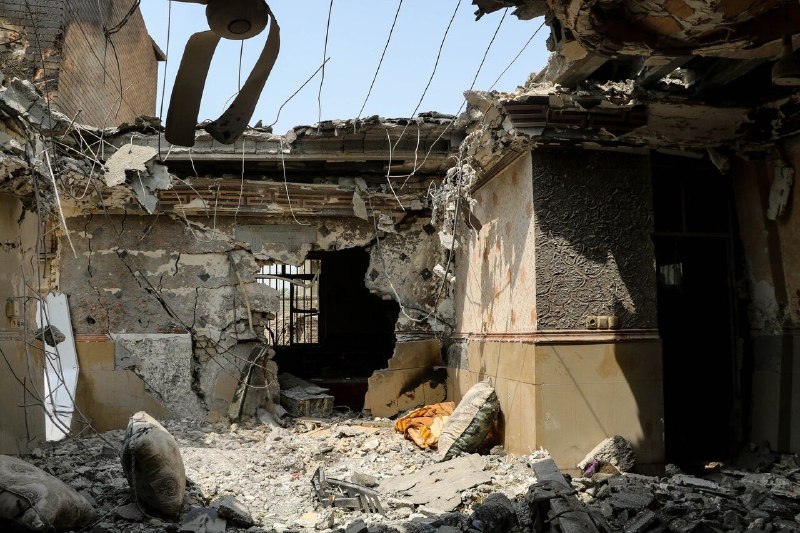
Two explosions were heard in the southern Iranian port city of Bandar Abbas on the evening of 11 June 2026, the Telegram channel Middle East Spectator reported at 22:19 UTC, the second such flash of the day. Within thirteen minutes, the geopolitical monitor GeoPWatch was already hedging the picture, noting that Iranian state broadcaster IRIB had registered "at least two explosions" but that the bangs "were mixed up with activities in the Strait of Hormuz." By 22:06 UTC, Iran’s Fars News Agency, via the wfwitness channel, was carrying a separate but immediately adjacent story: Iranian forces had reportedly blocked a non-compliant tanker from transiting the strait after it entered the area without coordination. An earlier GeoPWatch item, at 21:40 UTC, had flagged a single unconfirmed explosion in Bandar Abbas, suggesting the initial report "seems" tied to the same maritime activity rather than an onshore incident. None of the four reports converged on a single cause. All of them pointed at the same body of water.
That ambiguity is the story. The Strait of Hormuz is the single most consequential pinch-point in the global energy system, a 21-mile-wide corridor at the mouth of the Persian Gulf through which roughly a fifth of the world’s seaborne oil and a third of its LNG normally transits. It is also, by long-established convention, the world’s most heavily policed stretch of contested water. Iran insists on layered control of the northern lane, a claim it enforces through the Islamic Revolutionary Guard Corps Navy, routine tanker inspections, drone overflights, and the occasional seizure. When two explosions and a tanker interdiction land in the same news cycle in the same corner of Hormuz, the working assumption among shippers, refiners, and oil traders is not that something has gone wrong. It is that the operating tempo of the strait has shifted, and that the next week or two will show whether the shift is tactical theatre or the opening move of a longer pressure campaign.
What the four reports actually establish
A careful read of the four thread items suggests a layered sequence rather than a single bang. The earliest, the 21:40 UTC GeoPWatch post, framed the explosion as "unconfirmed so far" and floated the Hormuz-overlap explanation. The 22:06 UTC Fars-based item then surfaced what the Iranian side considered the substantive incident: a non-compliant tanker entering the strait without prior coordination, which Iranian forces reportedly blocked. The 22:19 UTC pair — the Middle East Spectator post about "two explosions" and the GeoPWatch follow-up citing IRIB — added the audio dimension: bangs that the Iranian broadcaster itself appeared to attribute to the same maritime activity.
Two things are notable about that ordering. First, the Iranian-issued report (via Fars) names a specific operational act — a tanker interdiction — and treats it as the headline. The non-Iranian monitors, Middle East Spectator and GeoPWatch, are the ones carrying the more dramatic "explosions in Bandar Abbas" framing. The asymmetry is the kind of editorial triangulation that experienced readers of the region have learned to read carefully: when a state-aligned source goes quiet on a loud claim and louder monitors pick it up, the safer read is usually the one that matches the state’s own operational narrative. Second, the fact that the monitors themselves, within minutes, walked the Bandar Abbas report back toward the strait suggests the ambient noise in the city was being interpreted against a backdrop of live naval activity. In other words, the news is not the explosions. The news is the interdiction — and the explosions are the city hearing the aftermath.
The Iranian framing, read for what it is
From Tehran’s perspective, what the Fars item describes is not a provocation but a routine enforcement action inside Iran’s declared maritime security perimeter. Iranian doctrine treats the northern approaches of the strait, and the traffic inside it, as falling under IRGC Navy responsibility. Tanker interdictions have been a feature of that posture for years. The 2021 IRIS Makran seizure patterns, the repeated impoundments of South-Korean and Marshall-Islands-flagged tankers, the periodic arrests of crew in 2023 and 2024, the late-2024 incidents involving oil product transfers flagged by U.S. Central Command, and the 2025 spike in commercial vessel harassment incidents all sit inside the same pattern. Each of those episodes was framed in Iranian media as enforcement of a legitimate sovereignty claim, and each was covered in Western wire reporting as a stress test of the international shipping regime. Both readings are accurate. They are simply operating on different premises about whose writ runs in the strait.
The more interesting structural point is what has changed in the last twelve months. Iran’s enforcement tempo in Hormuz has, by independent maritime tracking, tightened rather than loosened through 2025 and into 2026, even as the wider regional environment — the Gaza ceasefire, the Lebanese ceasefire, the post-Assad recalibration in Syria — has, on paper, taken some of the pressure off Iran’s forward posture. The Strait of Hormuz file, in other words, has not normalised. It has, if anything, hardened. That is consistent with a posture in which Tehran is keeping the maritime file active as a continuing signal — to the United States, to Gulf neighbours, to commercial shipping insurers, and to a domestic audience that watches the IRGC Navy as the institutional guarantor of the Islamic Republic’s strategic depth.
The counter-narrative: what the Western wire line would look like
The same set of facts, run through a Western wire frame, would land differently. Reuters, Bloomberg, the Financial Times, and the Wall Street Journal corps covering the Gulf would almost certainly lead on the explosion sounds in Bandar Abbas, treat the Iranian denial-toward-the-strait as a downplaying move, and use the incident to re-test the question of whether Tehran is signalling escalation ahead of a fresh sanctions round, a stalled nuclear file, or an Houthi-coordinated pressure play. The Axios scoops on the U.S.–Iran track would be pulled in as context. Iran International, the diaspora-facing outlet, would lean on the explosions framing and connect the incident to a wider pattern of IRGC pressure on commercial traffic.
That framing is not wrong. It is, however, incomplete. It tends to treat the Bandar Abbas-level reporting — which is unconfirmed, multi-sourced, and rapidly walked back by the same channels that posted it — as the headline event, and the tanker interdiction, which is at least nominally documented by an Iranian state-aligned outlet, as the background. Monexus’s read, looking only at the four thread items, is the reverse. The interdiction is the operation; the bangs are the sounds of an enforcement action being heard from shore. Both interpretations live in the same data; the difference is which one you treat as the load-bearing fact.
What the operating environment actually does
Commercial shipping does not, in practice, require a confirmed explosion to react. P&I clubs and war-risk underwriters reprice on the ambient tempo of reporting out of the Gulf, and an evening in which four Telegram channels are tracking bangs, tanker interceptions, and Strait of Hormuz activity in a 39-minute window is itself enough to move that tempo. The knock-on effects — higher hull and cargo premiums for tankers routing via the strait, longer lead times on chartering, more frequent diversions around the Cape of Good Hope — are felt at the margin within days and can be felt in Asian and European refined-product benchmarks within weeks.
The second-order effect is political. Bandar Abbas, home to much of Iran’s conventional naval order-of-battle and the IRGC Navy’s southern command, is also the most visible Iranian city to global shipping. A reading of "two explosions" in Bandar Abbas is, for underwriters in London and Singapore, materially more worrying than two bangs in the central Gulf, because it raises the question of whether a maritime enforcement action has spilled over into urban infrastructure. The four thread items do not establish that. They do establish that the question is being asked.
Where the evidence thins
A reader should hold three specific claims lightly. First, the existence of the Bandar Abbas blasts: only the two Telegram channels in the thread — Middle East Spectator and GeoPWatch — carry the audio claim directly, and GeoPWatch itself flags that the bangs may have been Strait-of-Hormuz activity misread in the city. Second, the identity of the interdicted tanker and its flag: Fars is the only source for that operational detail, and the Fars item, as relayed via wfwitness, refers to the vessel generically. Third, the relationship, if any, between the tanker interdiction and the explosions: nothing in the four reports establishes a causal link; the most the reporting supports is temporal overlap. The likely honest summary is that on the evening of 11 June 2026, Iranian forces conducted an enforcement action in the Strait of Hormuz that produced audible effects in Bandar Abbas, and that several non-Iranian monitors initially read the result as a separate urban incident before walking the framing back. That is a less dramatic picture than either the wire-line or the maximalist read, but it is the one the sources support.
Stakes, in plain language
If the late-2025 to mid-2026 Hormuz tempo is the new baseline rather than a flare-up, the structural consequence is a slow repricing of risk across roughly a fifth of seaborne oil flows. Refiners in India, China, Japan, and South Korea — the heaviest users of the strait — are the most exposed. Gulf neighbours with bypass-pipeline capacity, particularly the UAE’s Habshan–Fujairah system and Saudi Arabia’s East–West pipeline, gain incremental leverage every quarter the operating tempo stays elevated. The U.S. Fifth Fleet posture and the U.K. Royal Navy’s long-standing presence in Bahrain become more politically central in Washington and London, even if no shots are fired. For Tehran, the file is a relatively low-cost, high-visibility way to keep the conversation about sanctions, nuclear diplomacy, and regional posture on its preferred terms. The cost of a misread, in a narrow waterway with a high tonnage of hydrocarbons transiting daily, is the part the four reports do not address, and the part the next forty-eight hours will tell us about.
What the next 24 to 48 hours should produce
The cleanest confirmation would come from one of three sources: an official IRGC Navy or Iranian Ports and Maritime Organisation statement naming the interdicted vessel and giving a sanitised account of the operation; a commercial shipowner or flag-state administration acknowledging the incident on the record; or independent AIS-based tracking of a vessel that went dark in the strait for the relevant window. None of those has yet appeared in the four thread items. Their absence is, in itself, a piece of the picture: the most consequential incidents in the strait are the ones the market and the public learn about in a delayed, fragmented way. That is the regime this story sits inside, and the regime Bandar Abbas is most likely to keep operating in until the next time four Telegram posts in 39 minutes are all that the world has to go on.
Desk note: Monexus has treated the Fars-sourced tanker interdiction as the load-bearing fact of the 11 June 2026 evening, with the Bandar Abbas audio reports read as ambient noise of an enforcement action rather than as a separate incident. Wire reporting in the next 24 hours will likely lead on the explosions framing; the operating record, once the IRGC Navy’s account surfaces, is more likely to look like the version built from Fars, not the version built from the monitors.
Wire provenance
This editorial synthesis draws on the following public wire/social posts:
- https://t.me/Middle_East_Spectator
- https://t.me/GeoPWatch
- https://t.me/wfwitness
- https://t.me/GeoPWatch
- https://en.wikipedia.org/wiki/Strait_of_Hormuz
- https://en.wikipedia.org/wiki/Bandar_Abbas
- https://en.wikipedia.org/wiki/Islamic_Revolutionary_Guard_Corps_Navy
- https://en.wikipedia.org/wiki/Fars_News_Agency
- https://t.me/Middle_East_Spectator
- https://t.me/GeoPWatch
- https://t.me/wfwitness
- https://t.me/GeoPWatch
- https://en.wikipedia.org/wiki/Strait_of_Hormuz
- https://en.wikipedia.org/wiki/Bandar_Abbas
- https://en.wikipedia.org/wiki/Islamic_Revolutionary_Guard_Corps_Navy
- https://en.wikipedia.org/wiki/Fars_News_Agency