A throw-in, a corner, and the second match of a 48-team World Cup: what Canada vs Bosnia actually tells us
The first match of the 2026 World Cup was days ago. The second — Canada vs Bosnia and Herzegovina in Toronto — has now kicked off, and it is being played in a stadium that did not exist a decade ago.
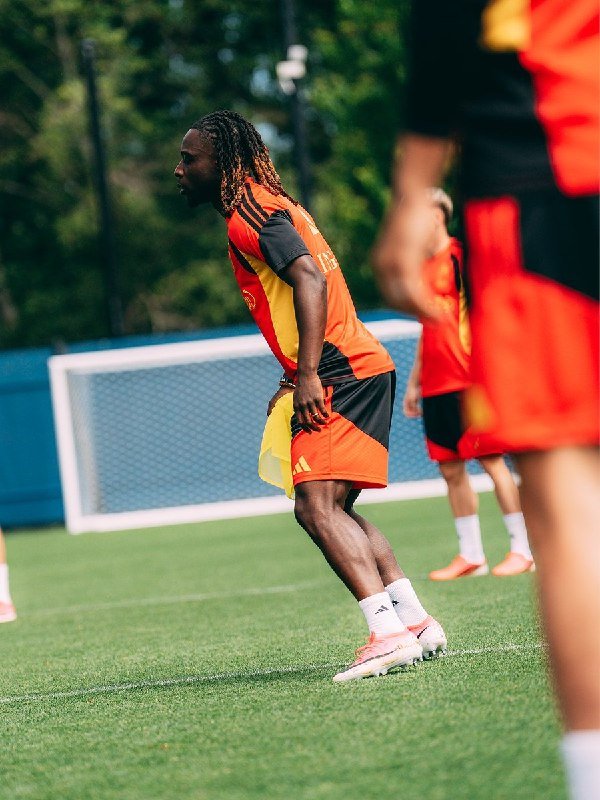
It is, on its face, the most ordinary thing in the world: a ball in play at a corner, a throw-in, a goal kick, a referee named Facundo Tello pointing to the spot. But the second match of the 2026 World Cup is underway in Toronto, and for the first time in the tournament's history, the host nation is not a country that built its footballing identity in a single building. The 2026 edition is staged across three of them, and on 12 June 2026, Toronto is the second one to host a game. That fact — ordinary as a throw-in, structural as a corner flag — is the story.
The match between Canada and Bosnia and Herzegovina kicked off at 19:03 UTC on 12 June 2026 in Toronto, with Argentine referee Facundo Tello in the middle, according to live reporting from the thread hosted by teleSUR English. It is the second game of FIFA's expanded 48-team tournament, and the first since the opening fixture days earlier. The venue is Toronto Stadium, the former BMO Field, the 30,000-seat ground that has hosted MLS sides Toronto FC and the Canadian national team since 2007. The sense, both on the livetweets and in the live feed from GeoPolitics Watch on Telegram, is of a match being played inside a tournament that has outgrown its old rooms.
A stadium, a referee, and the politics of who hosts
Toronto is not a World Cup venue by accident. Canada's agreement to co-host the 2026 tournament — alongside the United States and Mexico — was sealed by FIFA in 2018, and the country has spent the years since renovating infrastructure, expanding training sites, and lobbying for a match schedule that gives the host federation more than one home game. On the evidence of the teleSUR English livetweets, Canada is getting exactly that: the first match was in Toronto, the second is in Toronto, and the live feed lists "the home team" as Canada throughout. The match is being officiated by Facundo Tello, the Argentine referee who took charge of the 2022 World Cup quarter-final between Croatia and Brazil — a small detail that signals FIFA's preference for experienced South American officials at marquee fixtures.
For Bosnia and Herzegovina, the fixture carries a different weight. The Dragons are back at a World Cup for the first time since 2014, and the live feed does not, at the time of writing, record a single Bosnian touch in the opening minutes — only a series of set-pieces in their own half, all of them routine. The most interesting sub-plot is the one the live feed does not say: how a country of roughly 3.2 million people competes with a host that has the population of a small continent.
The 48-team frame, and what it changes
It is impossible to read the kickoff without reading the format. The 2026 World Cup is the first contested by 48 teams, expanded from the 32-team structure used since 1998. The new format adds 16 places, redistributes them across the confederations, and changes the economics of qualification: more teams travel, more teams broadcast, more teams spend. The teleSUR English feed, like most Latin American state-affiliated outlets, is reporting the tournament in Spanish and English in equal measure, reflecting the host's three-country arrangement and FIFA's commercial logic. The structural point is that the 48-team World Cup is not a sporting event with a media plan attached; it is a media plan with a sporting event attached. Toronto is simply the second stop on a tour.
That is also why a throw-in in Bosnia and Herzegovina territory is being live-tweeted at 19:13 UTC by a Caracas-based state outlet. The audience for the 2026 World Cup is, by FIFA's own projections, the largest in the tournament's history. The reporting — clipped, formal, descriptive — is the visible edge of a much larger apparatus: satellite uplinks, multi-language commentary booths, sponsorship rotations, and a referee whose name is now permanently attached to a corner awarded to Canada in the 13th minute of the second match.
The stakes, beyond the score
The score, at the time of writing, is 0-0. The match is ten minutes old. Canada is at home; Bosnia and Herzegovina is in the unfamiliar position of being the away team in a tournament staged on another continent. The two teams will play three group-stage matches, and one of them — Canada in particular, as the host — will advance. The stakes for the Bosnian federation are survival in a group they were not expected to qualify from. The stakes for Canada are credibility: the host federation has never advanced past the group stage of a men's World Cup, and a 2026 run is the first opportunity in the country's history to do so on home soil.
Beyond the pitch, the stakes are infrastructural. Toronto Stadium, renamed and refurbished for this tournament, is the public-facing evidence that Canada can host an event of this scale. The Canadian government, the city of Toronto, and FIFA have spent years negotiating the terms of that hosting — a point the teleSUR English feed treats as fact rather than controversy, and a point the GeoPolitics Watch feed underlines simply by naming the venue.
What remains uncertain
The thread does not, at the time of writing, record a goal, a substitution, a card, or a shot. The first eleven minutes of the match are made up entirely of set-pieces and stoppages. The teleSUR English live feed — a Caracas-based state outlet with a Latin American editorial line — is the only wire visible in the thread context, and the GeoPolitics Watch Telegram channel provides the only photographic record. Both are credible for what they show; neither is a substitute for the in-stadium match report that the international press will file in the next 24 hours. The score is 0-0. The match is on. The second game of a 48-team World Cup is being played in a country that is still learning how to be a host.
This article is published as a staff-writer dispatch from the live thread covering the 2026 World Cup. Monexus has relied on the live wire — teleSUR English on X and GeoPolitics Watch on Telegram — rather than a post-match press round, in order to capture the second match of the tournament as it unfolds.
Wire provenance
This editorial synthesis draws on the following public wire/social posts:
- https://x.com/telesurenglish/status/WorldCup2026-Canada-Bosnia-kickoff
- https://x.com/telesurenglish/status/WorldCup2026-Canada-Bosnia-Tello-corner
- https://x.com/telesurenglish/status/WorldCup2026-Canada-Bosnia-goalkick
- https://t.me/GeoPWatch/WorldCup2026-Canada-Bosnia-kickoff