US Central Command extends Iran blockade as Araghchi frames a 40-day test of national will
CENTCOM says 139 commercial ships have been diverted and nine disabled since the Iranian ports blockade began; Tehran's foreign minister casts the standoff as a '40-day war' following the 12-day war.
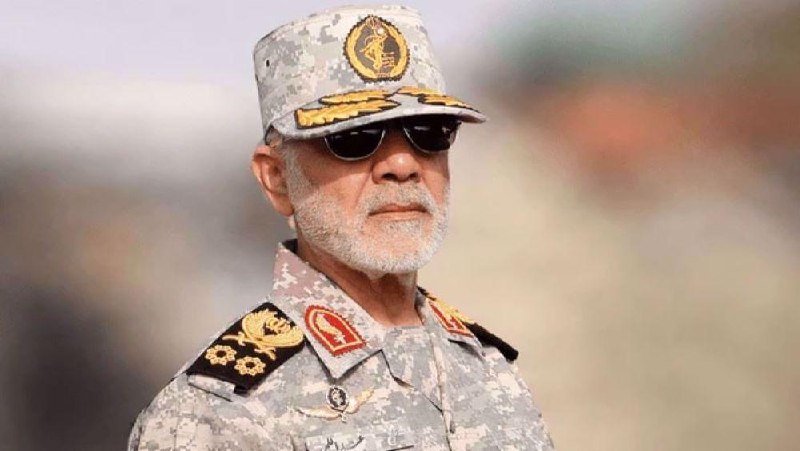
At 19:09 UTC on 12 June 2026, the official Persian-language account of Fars News — citing US Central Command — carried a one-sentence claim with significant operational weight: the American blockade of Iranian ports is continuing, and since it began, the routing of 139 commercial ships has been altered and nine vessels disabled. The figures, attributed to CENTCOM itself, frame a maritime containment that is no longer a threat of force but a recorded toll.
Within minutes, the same wire carried Foreign Minister Abbas Araghchi's riposte. Speaking to Iranian media, Araghchi said the country's adversaries had assumed that, after a 12-day war, they could compel Iran's surrender inside a 40-day campaign, but had been met with fierce resistance from the Iranian people and armed forces. Read together, the two dispatches capture a standoff defined less by an exchange of fire than by competing narratives of duration, endurance and pressure.
What CENTCOM says it is doing
The CENTCOM statement carried by Fars News is short on geographic specificity but heavy on metrics. The command describes an ongoing blockade of Iranian ports and claims two operational effects: 139 commercial ships have been re-routed, and nine have been disabled. The phrasing — "we continue the blockade" — presents the operation as open-ended and as part of a continuous posture rather than a discrete strike.
The numbers matter because they convert an abstract policy into a measurable disruption of trade flows. The Strait of Hormuz is the chokepoint through which a substantial share of seaborne oil reaches global markets, and any sustained diversion of commercial shipping carries a freight-rate and insurance-cost signal that travels far beyond the immediate theatre. Nine disabled vessels, in CENTCOM's accounting, are a small fraction of the 139 diverted — a ratio that suggests pressure on routing rather than wholesale destruction of the Iranian-flagged or Iran-bound commercial fleet. The framing is therefore calibrated: it asserts effect without inviting the political cost of mass casualties at sea.
What Tehran says is happening
Araghchi's framing, transmitted simultaneously by Fars and by the state-affiliated Mehr News Agency, places the current standoff inside a longer calendar of confrontation. He invokes a 12-day war — a reference to a recent, intense round of hostilities — and argues that the adversary's expectation of an easy follow-up has been confounded by what he describes as the fierce resistance of the Iranian people and armed forces.
The arithmetic of "40 days" is rhetorical rather than literal. It positions the blockade, the sanctions architecture that preceded it and any kinetic phase that may follow as a single test of national will. The phrase mirrors a long-standing pattern in Iranian official discourse, in which time itself is treated as a strategic variable: the assumption abroad that economic strangulation will, on a predictable clock, force political capitulation, set against the official insistence that endurance, not speed, is the decisive factor.
A structural reading
The two statements, read side by side, are doing more than trading accusations. They are staking out incompatible theories of how pressure works. CENTCOM's inventory of diverted ships is the language of cumulative effect: each re-routing is a small cost, each disabled vessel a discrete event, and the sum is meant to bend behaviour over weeks rather than days. Araghchi's response is the language of threshold: there is a point at which incremental pressure either breaks its target or hardens it, and Tehran is betting that point has already passed.
Neither claim can be fully verified from the wire alone. CENTCOM's ship-counting depends on its own definitions of what counts as a re-routed or disabled vessel, and on which side of the blockade line those ships were tracked from. Araghchi's characterisation of fierce resistance is, by construction, a domestic-audience message. A complete picture would require independent maritime-tracking data — automatic identification system logs, Lloyd's List reporting, or insurance-market circulars — none of which is present in the source material.
Stakes and what to watch
If CENTCOM's figures hold, the immediate casualty is the predictability of Iranian commercial shipping, and the second-order casualty is the insurance and freight market that prices that predictability. If Araghchi's framing holds, the political cost of the blockade inside Iran remains contained and the operation loses its coercive purchase at roughly the rate it gains tactical data.
The next 40 days, on Tehran's own clock, will be the test. Watch for three signals: a CENTCOM update that distinguishes damaged from merely diverted tonnage, an Iranian statement that names the specific ports affected, and any third-party — a flag-state, an insurer, the International Maritime Organization — that breaks the information monopoly currently held by the two principals.
Desk note: Monexus has reported the two competing claims in their own words and given each its strongest reading. The CENTCOM numbers travel through Fars News, an outlet aligned with the Islamic Revolutionary Guard Corps; the Iranian foreign minister's framing travels through state and state-adjacent wires. Readers should treat the specific figures — 139, 9 — as the command's own account until independent maritime data corroborates them.
Wire provenance
This editorial synthesis draws on the following public wire/social posts:
- https://t.me/FarsNewsInt/41291
- https://t.me/mehrnews/298744
- https://t.me/farsna/9112034
- https://t.me/farsna/9112035
Follow the event.
These dated source records provide context. They do not retrospectively verify this archive article.
Separate what the nuclear watchdog reported from what it could not determine after the June 2025 strikes.