The 2026 World Cup begins: 72 matches in 13 days, three host nations, and a tournament bigger than any before it
The 2026 FIFA World Cup kicks off across the United States, Mexico and Canada with a record 72 group-stage games in 13 days — and a revamped pre-match walkout that signals how the tournament is being staged for a global broadcast audience.
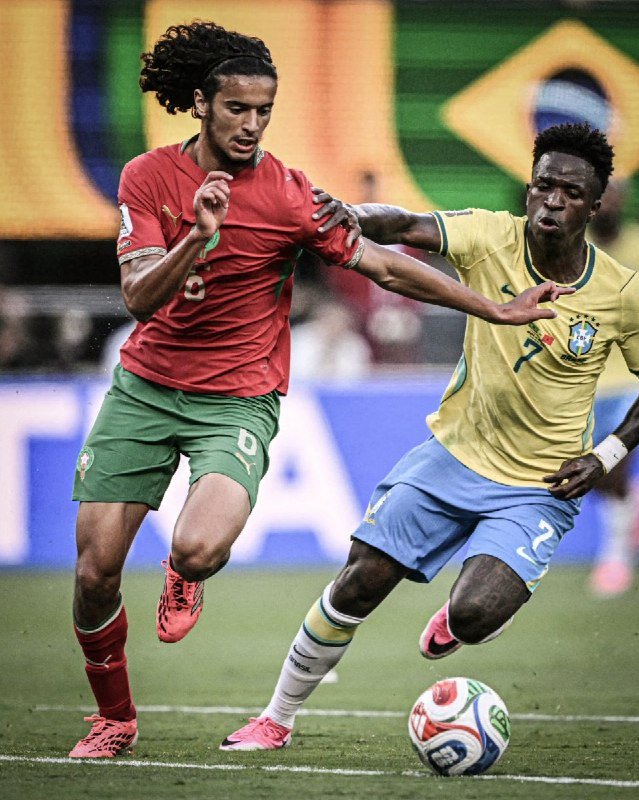
The 2026 FIFA World Cup is here. At 16:14 UTC on 11 June 2026, FIFA's official channel confirmed the start of the tournament across the United States, Mexico and Canada — a three-nation hosting arrangement that is itself a first for the men's competition, and one that resets the scale of what a World Cup group stage is supposed to look like.
This is not a tournament that pretends to be modest. The group stage alone runs 72 matches over 13 days, FIFA said in the same communication — a denser fixture list than any previous World Cup has asked its federations, broadcasters, and travelling fans to absorb. Every team still plays three group games, but the global audience is now expected to watch football almost daily for a fortnight before the round of 16 even begins.
A ceremony built for the camera
The more visible change is theatrical. FIFA unveiled a redesigned pre-match walkout on 11 June 2026, featuring oversized national flags unfurled around the centre circle as both teams assemble. The presentation, which FIFA and The Athletic both highlighted on their channels within minutes of each other, is clearly designed for television — a designed-for-camera ritual that turns the tunnel walk into a sponsor-friendly set piece before a ball is kicked.
For FIFA, the staging is part of a long-running effort to manufacture marquee moments that travel on social video. The walkout joins the goal-line choreographies, the stadium anthems, and the pre-game countdowns that have been thickening around the match itself for the best part of a decade. Whether the ceremony reads as spectacle or as clutter will depend on the team — and on the host stadium. The early footage, distributed through FIFA's official account, frames the flags and the formation shot as a single unbroken image, which suggests the production team has been thinking in vertical-video terms from the start.
The three-host format, and what it does to the calendar
Spreading the tournament across the United States, Mexico and Canada is the structural choice underneath all the cosmetic ones. It is what makes 72 group games logistically possible without asking any one federation to host the entire early phase. It is also what makes the World Cup, in commercial terms, a near-continuous event across three of North America's biggest media markets at once.
The counter-read is straightforward: a 72-game group stage is a saturation strategy. More games mean more broadcast windows, more advertising inventory, and a longer stretch in which FIFA's commercial partners can justify the price of association. For supporters, the upside is more football to watch; the cost is a calendar that demands near-constant attention for two weeks. FIFA's own messaging — "sit back, relax and enjoy the football," posted to its channel at the moment of kickoff — leans hard into the idea that the tournament is something to live inside, not to schedule around.
Why the walkout matters off the pitch
The new ceremony is not just a backdrop. The visual grammar of a World Cup walkout — the flags, the team order, the captain at the front — is one of the few moments in the sport when a national identity is staged on a global feed with no play to comment on. That makes it unusually valuable commercial real estate. Sponsors, broadcasters, and host-city tourism boards all have an interest in the frame holding, the colours reading cleanly, and the camera angles flattering the stadium.
This is also where the counter-narrative lives. Some federations and fan groups have argued, across recent tournaments, that the pageantry increasingly overshadows the sport — that the pageant has been engineered to fill a broadcast window rather than to honour the players walking out. The 2026 edition, by the look of the new ceremony, will not settle that argument; it will sharpen it.
Stakes for a tournament still finding its shape
What is genuinely new is the combination: three host nations, the largest group stage in World Cup history, and a presentation package built explicitly for a fragmented, mobile-first global audience. Each of those choices is defensible on its own. Together, they amount to a tournament that has been designed less as a sequence of matches and more as a continuous broadcast product.
The 13-day group window is the part to watch. If the density produces the drama the format is designed to deliver, the 2026 World Cup will feel like the most consequential men's tournament in a generation. If it produces fatigue — too many dead rubbers, too many dead hours, too much ceremony between the goals — the conversation by the round of 16 will be about oversaturation rather than football. FIFA has, with this edition, bet the early impressions of its biggest-ever tournament on which of those two readings turns out to be right.
The sources surfaced in this thread are promotional Telegram posts from FIFA and The Athletic announcing the tournament's start, the 72-game group schedule, and the redesigned pre-match walkout. They do not contain fixture results, squad announcements, or commercial-partner figures; this article limits its claims to what those posts can support.
Wire provenance
This editorial synthesis draws on the following public wire/social posts:
- https://t.me/FIFAcom/
- https://t.me/FIFAcom/
- https://t.me/FIFAcom/
- https://t.me/TheAthletic/
- https://t.me/TheAthletic/
- https://t.me/TheAthletic/