Tehran denies a deal is done as Trump's Geneva narrative collides with Iran's
A Fars-sourced denial flatly contradicts reports, attributed to Donald Trump, that a US–Iran agreement would be signed in Geneva on Sunday — and exposes how narrative control is doing the work that diplomacy is not.
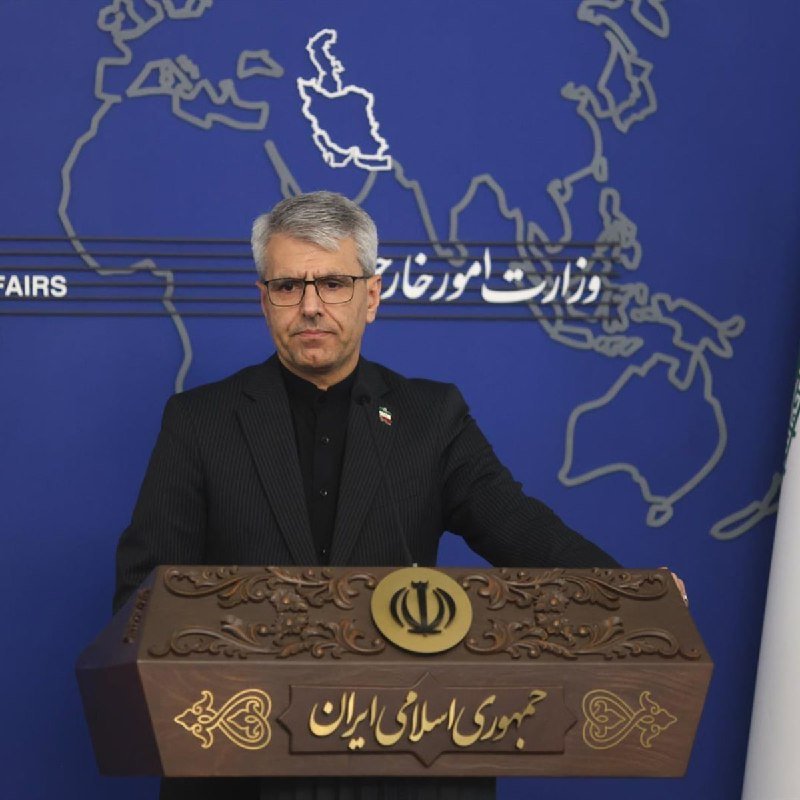
On 12 June 2026, an Iranian source close to the negotiating team told Fars News Agency that the claims, attributed to US President Donald Trump and circulated by some foreign media, that a US–Iran agreement had been "finalized and is to be signed on Sunday in Geneva" were "completely false." The denial, picked up across the Telegram channel ecosystem by Intelslava, GeoPWatch and Clash Report in the hour before 13:00 UTC, framed Iran's review and decision-making process as still ongoing, and dismissed the Sunday-signing narrative as a product of the same "psychological war" Fars says the US side has been waging in parallel with its negotiations.
The exchange matters less for what it settles than for what it reveals about the present state of US–Iran diplomacy: the two sides are no longer even arguing about the same facts. Trump, in remarks the night before, used a recognisable rhetorical pattern — retreat in substance, escalation in framing — that Fars's editorial board identified on 12 June 2026 as a recurring negotiating template. Iran, in turn, is choosing to rebut that framing in public, via a state-adjacent wire, rather than through the closed channels the deal is supposedly being built on. A deal, if there is one, will arrive in a political environment where each side has already staked its position in front of a domestic audience that will punish the appearance of having been played.
The denial, and what it actually says
Fars's reporting carries two distinct claims that need to be read separately. The first, attributed to a "source close to the Iranian negotiating team," is procedural: the deal is not finalised, Iran's review is continuing, and a Sunday signing in Geneva is not on the calendar. The second, carried in Fars's own editorial line under the headline "Trump's model and the narrative of reality after a psychological war," is interpretive: that Trump routinely combines substantive retreat with rhetorical maximalism, and that the Geneva signing story is an instance of that pattern rather than a report of an accomplished fact.
This publication finds that the second claim is the one doing the structural work. The Sunday-signing story had been circulating in foreign media through the morning of 12 June 2026, and Trump's late-night messaging — broadcast on his preferred platform — provided the hook. The Iranian rebuttal is calibrated to that hook: not "no talks," not "no draft," but "no, the thing you said was agreed is not agreed." The choice of Fars, a wire still treated as semi-official in Iranian media space, is itself a signal that Tehran wants the denial to be heard in the same rooms where the announcement was heard.
Why Tehran is rebutting in public, not in private
Three explanations, in declining order of plausibility, account for the choice of venue. The first is straightforward domestic politics. Hardliners in Tehran have spent the year arguing that any deal with the current US administration is a trap, and a premature announcement of a Geneva signing would have given them the evidence they wanted. A flat denial, sourced to the negotiation team itself, closes that door before it opens. The second is that the US side is, in fact, ahead of its own position — testing Iranian reaction by floating a more complete deal than the principals have agreed to, then measuring how far Tehran is willing to publicly retreat. The third, less likely but worth registering, is that Iran is itself split and the public denial is the negotiating team's way of outflanking colleagues who would have accepted the version on offer.
Any of the three keeps Tehran's bargaining position intact and gives the Iranian negotiating team a usable record of having said no before any signing ever happened. That is a familiar pattern in protracted negotiations with adversarial publics on both sides, and it does not, on its own, imply that the talks are failing.
What the US side is actually doing
The structural read, written out in plain terms: when the gap between a presidential announcement and a counterpart's acceptance is widening rather than narrowing, the gap is itself the message. The US posture in this round — public optimism, a named venue, a named date, a Sunday framing that the wire cycle can carry into Monday's open — works only if Iran is willing to be seen accepting it. By choosing Fars, the Iranian team is signalling that it is not.
The Fars editorial makes the same point in Tehran's voice, characterising Trump's pattern as a "constant model" in which retreat in action is paired with escalation in narrative. That characterisation is, in this publication's reading, fair to the evidence. It is also strategically useful to Iran, because it lets the team cast the denial as a refusal to participate in a US media cycle rather than as a substantive objection to terms.
Stakes and what remains contested
If the trajectory of the past 48 hours continues, the most likely outcome is a delayed, narrower, less photogenic agreement — one that survives the Iranian denial precisely because no public claim of finality will have to be walked back. The alternative is a collapse into a renewed escalatory cycle, with the IAEA Board, European parties and the Gulf states forced to choose between endorsing the US framing and acknowledging the Iranian one.
What remains genuinely uncertain, and what the source items do not resolve, is the actual state of the draft text. Fars's denial is a denial of the announcement, not of the substance. The US side, in the material available to this publication on 12 June 2026, has not produced a text. The European parties, who would normally carry the institutional weight of a deal at this stage, have not been quoted on the record in the thread context. Until one of those two things changes, the gap between "finalised in Geneva on Sunday" and "completely false" will continue to be filled, on one side, by a presidential post, and on the other, by a Fars-sourced rebuttal. Diplomacy, in other words, is being conducted in public, and neither party is yet in a position to claim the result.
This publication framed the Geneva-signing story as a contested announcement rather than a report, on the strength of a single named Iranian wire's flat denial, and noted the editorial line that accompanied it — an approach the wire cycle on 12 June 2026 had not yet adopted.
Wire provenance
This editorial synthesis draws on the following public wire/social posts:
- https://t.me/intelslava/
- https://t.me/GeoPWatch/
- https://t.me/ClashReport/
- https://t.me/farsna/
Follow the event.
These dated source records provide context. They do not retrospectively verify this archive article.
Separate what the nuclear watchdog reported from what it could not determine after the June 2025 strikes.