Musk crosses the trillion-dollar line as SpaceX opens on Nasdaq
SpaceX began trading on the Nasdaq on 12 June 2026 in the largest IPO on record, lifting Elon Musk's net worth past $1tn and crystallising a new centre of gravity in the public markets.
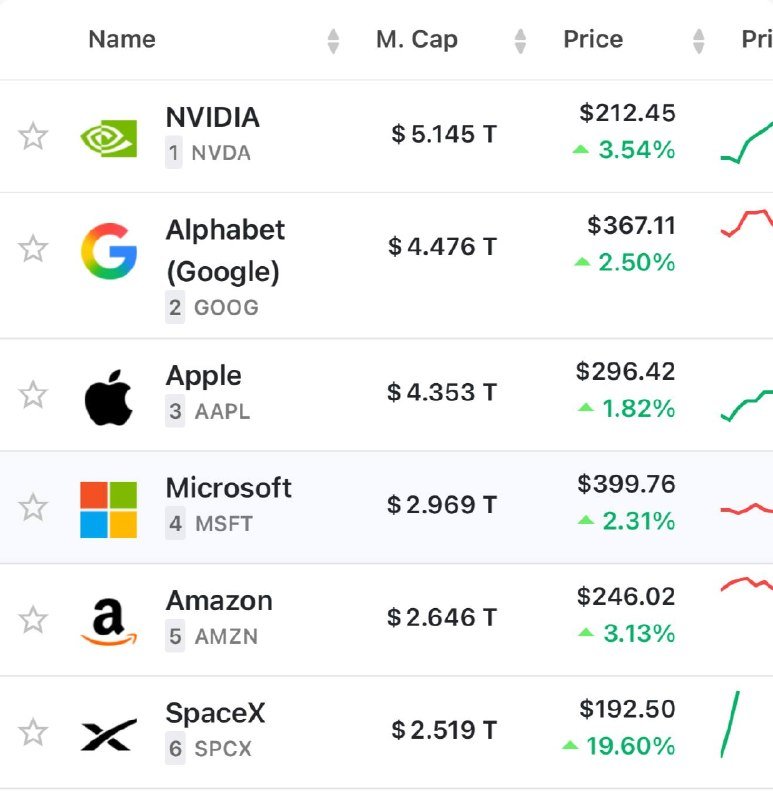
The opening bell at the Nasdaq rang at 13:30 UTC on 12 June 2026, and the trader at the podium was not the chief executive of an exchange-traded fund or the chair of a Wall Street bank. It was Elon Musk, founder of SpaceX, marking the moment his privately held rocket and satellite company became a public one. By the close of the first session, SpaceX had set the largest initial public offering on record, and Musk's paper fortune had crossed the $1tn mark for the first time in history, according to BBC News and Bloomberg reporting cited by the Unusual Whales account on X.
The mechanics are straightforward and the symbolism is not. A company that, at its founding, Musk himself estimated had less than a 10% chance of survival is now the most valuable listing the public markets have ever absorbed, with a debut valuation of $2.2tn as reported by BBC News and TechCrunch. The gap between those two numbers — the one Musk disclosed on 12 June about his early expectations, and the one the market printed on 12 June — is the story. SpaceX did not just succeed. It succeeded in the specific domain, commercial space and satellite internet, where the entry costs are highest and the patience of conventional capital is thinnest. That it chose to monetise that success through a public listing, rather than remain a private perpetual-motion machine, is itself a signal worth reading carefully.
A listing the size of a sovereign balance sheet
The IPO ranks as the largest in history by capital raised at debut, according to reporting aggregated by LiveMint on 12 June 2026. TechCrunch described the listing as historic and pegged Musk's resulting net worth at more than $1,000,000,000,000 — a figure repeated, with minor variation, across the X accounts of Unusual Whales, Polymarket, and the financial commentary account pirat_nation within the same trading window. The number is large enough to be worth parsing. At a $2.2tn debut valuation, SpaceX is now valued in the same order of magnitude as the gross domestic product of a mid-sized G20 economy. The market is, in effect, treating a single private-sector space and connectivity company as a sovereign-grade asset.
This is not the first time a Musk-led entity has carried that weight on its own. Tesla's capitalisation, during the 2020-2024 run, regularly outpaced the combined market value of every legacy automaker in Detroit and Wolfsburg combined. But SpaceX is a different kind of bet. Its revenue base rests on launch cadence, government launch contracts, and the Starlink consumer broadband subscriber book — businesses with longer feedback loops and more regulatory exposure than electric vehicles. The market is paying up for an integrated stack: rockets, satellites, ground terminals, and the in-orbit data pipeline that connects them.
The counter-narrative: paper wealth, real liabilities
The headline figure is paper wealth, and the standard caveats apply. Forbes-style net worth calculations on listing day are mathematical artefacts of share count times opening price, not cash in hand. Musk does not have $1tn in a bank account. He has a controlling stake in a company that, on its first day of trading, the market decided was worth $2.2tn. If the share price drifts, so does the headline.
There is a more pointed counter-read. TechCrunch's framing on 12 June was that the trillion-dollar threshold has been crossed "at a time when he is more hated — and powerful — than ever." That language is editorial rather than analytical, but it captures a real tension. Musk's political exposure — his stewardship of the Department of Government Efficiency under the current US administration, his public feuds with European regulators, his entangled position in the US-China trade conversation — is not orthogonal to the IPO. It is part of the company-specific risk that sophisticated investors price in. The same market that crowned him a trillionaire on Friday will, on a bad launch month or a regulatory shock, haircut the same stake in real time. The S-1 prospectus filed ahead of the listing will have spelled out the dependencies. The generalist press has, predictably, led with the milestone number and trailed the risk factors.
What the listing actually changes
The structural shift is not the wealth. It is who now has standing to ask questions. As a private company, SpaceX answered to a small group of late-stage venture investors and to Musk himself. As a public company listed on the Nasdaq, it answers to a vastly larger capital base, to quarterly disclosure cycles, and to the institutional investors — pension funds, sovereign wealth funds, index trackers — that will own meaningful stakes within weeks. That rebalances the governance of the most strategically important private space operator in the West at exactly the moment that the US government is treating space and satellite connectivity as core infrastructure.
There is a geopolitical layer the Western wire coverage has not yet fully metabolised. A publicly traded SpaceX is, for the first time, transparently legible to non-US capital pools — Gulf sovereigns, East Asian institutional investors, European pension managers — that can take meaningful positions. That changes the political economy of the company in ways that a private Musk-controlled entity, with its capital locked up among a handful of US-aligned funds, did not have to navigate. The dollar politics of the listing, the question of which sovereigns end up on the cap table, will be a slow-burn story rather than a headline.
Stakes over the next 18 months
Three things to watch. First, the share-price trajectory over the first four reporting cycles. A sustained trade above the debut valuation would validate the $2.2tn anchor and pull index inclusion forward; a slide would invite the usual round of "overvalued founder-led IPO" pieces and reset the comp set. Second, the first major institutional shareholder filings — the 13Fs of the second half of 2026 will name names. Third, the Starlink subscriber number in the first post-IPO quarterly letter, which is the single most-watched operational metric on the underlying business.
The sources do not yet specify the exact offering size, the underwriter syndicate, or the free-float at debut. Those will emerge in the coming days. What the sources do establish, with consistent reporting across BBC News, TechCrunch, LiveMint, and the financial commentary on X, is that on 12 June 2026, SpaceX priced, listed, and traded as the largest IPO in market history, and that Elon Musk became, on paper, the first dollar trillionaire the global markets have ever produced. The first one is, by definition, historic. Whether it is also durable is the only question that will matter once the headlines move on.
This piece drew on wire reporting from BBC News, TechCrunch, and LiveMint for the core facts, and on contemporaneous X coverage from Unusual Whales, Polymarket, and pirat_nation for the on-the-day market colour. The billion-dollar questions — underwriter list, free float, sovereign ownership — will be addressed as primary-source filings emerge.
Wire provenance
This editorial synthesis draws on the following public wire/social posts:
- https://x.com/unusual_whales/status/2033671289110012014
- https://x.com/unusual_whales/status/2033694210183409775
- https://x.com/polymarket/status/2033700023105102157
- https://x.com/pirat_nation/status/2033766289552105534