Musk crosses the trillion-dollar line as SpaceX's IPO rewrites the scale of paper wealth
Elon Musk has become the first person whose net worth clears $1tn after SpaceX's Nasdaq debut priced the company at roughly $2.2tn, a figure that puts private rocket capacity at the centre of the public-market wealth table.
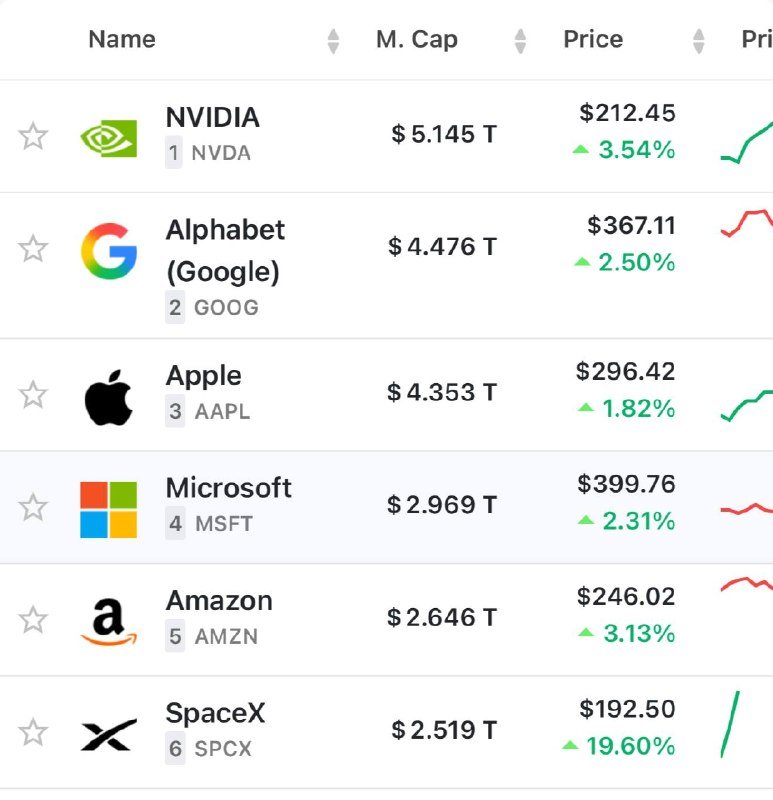
The opening bell rang at Nasdaq at 13:48 UTC on 12 June 2026, and with it a marker was set in the modern wealth record: Elon Musk, founder of SpaceX, became the first individual whose paper net worth has crossed $1tn, after the rocket and AI infrastructure company listed on the exchange with an opening valuation reported at roughly $2.2tn. The number, in either direction, is the kind of figure that resists intuition — a single human's nominal claim on a private enterprise larger than the GDP of most countries — and yet it is now printed on a tape, denominated in a single currency, and visible to every portfolio manager with a Bloomberg terminal.
The listing, reported by the BBC and TechCrunch, is the largest IPO in market history, and it lands at a moment when Musk is simultaneously the most complained-about and most consequential operator in commercial space, autonomous systems, and frontier AI compute. The wealth record is therefore not a curiosity but a fact about the structure of the US economy: in the past two decades, the public-equity market has, with few exceptions, only minted new billionaires when it priced a story that combined software margins with the network effects of a platform. SpaceX is a different animal — it manufactures and launches physical hardware, runs a satellite-internet constellation with tens of millions of subscribers, and now anchors a vertically integrated AI-training operation. That is what the public market is being asked to underwrite.
What the listing actually priced
The first trading session, as reported by the BBC and corroborated by Bloomberg reporting cited via the Unusual Whales wire, valued SpaceX at approximately $2.2tn at the open. Musk's stake, combining common and founder shares disclosed in the S-1 and subsequent filings, places his net worth above $1tn on paper. The intraday figure will move; paper wealth of this size is a derivative of one company's share price and one person's holding, and it will compress or expand with the cycle. But the threshold has been crossed, and the optics are the news: for the first time, the public has a clean, audited price for a private space and AI empire that until Friday existed only in secondary-market quotes.
The scale is the story. SpaceX is now worth more than the combined market capitalisation, on most days, of the established European aerospace primes. It is worth multiples of the largest pure-play satellite operators. The framing matters because launch capacity, satellite bandwidth, and AI compute are no longer three separate industries with three separate capital pools — SpaceX has consolidated them inside one balance sheet, and the public market has, for the moment, endorsed that consolidation at a price.
The counter-read: paper versus productive wealth
A trillion-dollar paper fortune is not the same as a trillion dollars in liquid cash, and the framing deserves a second look. The figure depends on the share price holding. A 20% drawdown in SpaceX would knock Musk's net worth down by hundreds of billions, and a 50% drawdown would return him to the ranks of the merely very wealthy. Sceptics — and there is no shortage of them — argue that headline-grabbing wealth rankings obscure two things: the volatility of single-name concentration risk, and the fact that very few individuals could ever liquidate a position of this size without moving the price against themselves.
There is a second, more uncomfortable critique. The wealth ranking treats Musk's holdings as if they were a personal bank account, when in fact they are an equity claim on a company that carries real liabilities — a launch manifest, a satellite-replacement cycle, an AI-training fleet whose compute depreciation curve is still being written. A trillionaire is, on this reading, less a person with a trillion dollars than a person whose decisions affect a trillion dollars' worth of productive assets. The distinction is not pedantic. It changes who the relevant counter-parties are: not yacht brokers, but launch customers, defence procurement officers, and the bond markets that price sovereign demand for the services SpaceX sells.
What this moment sits inside
The structural pattern is worth naming in plain terms. For most of the post-war period, the largest private fortunes in the United States were anchored in consumer-facing franchises — oil, retail, finance, software distributed through existing channels. The Musk fortune is different in kind. It is anchored in infrastructure that the state itself now relies on: launch capacity used by NASA and the Department of Defense, satellite bandwidth that carries traffic across the Atlantic and the Pacific, and a growing share of the AI-training compute on which US frontier-model labs depend. The trillion-dollar valuation is, in this sense, a market verdict on the proposition that the boundary between commercial and strategic infrastructure has dissolved, and that the public market should price that dissolution as a single equity.
The corollary is that the policy stakes have risen. A company carrying strategic weight on its balance sheet is no longer just a counter-party to procurement officers; it is, in a meaningful sense, a piece of national capacity. That has implications for export controls on rocket and satellite technology, for the way defence planners write resilience requirements, and for how antitrust authorities think about consolidation in launch and bandwidth. The market has priced the integration. The regulatory state has not yet caught up with the implication.
What remains uncertain
The sources do not specify the free-float or the lock-up structure for insiders, and those details will determine how much of the $1tn net worth figure is, in practice, monetisable in the first six to twelve months of trading. The sources also do not specify how Musk's various entities — including his AI and autonomous-vehicle holdings — interact with the SpaceX balance sheet for reporting purposes, and the structure of related-party transactions will likely draw scrutiny as the first 10-Q lands. The forward order book for launches, satellite-internet subscriber growth, and AI compute commitments is the variable that will determine whether the trillion-dollar mark holds, retreats, or doubles — and on that, the public filings, when they arrive, will be the document that matters more than any wealth ranking.
Wire provenance
This editorial synthesis draws on the following public wire/social posts:
- https://x.com/sprinterpress/status/
- https://x.com/unusual_whales/status/
- https://x.com/unusual_whales/status/
- https://x.com/pirat_nation/status/