Netanyahu's nuclear red line meets a US-Iran deal in Geneva
On 12 June 2026, as Israeli and Iranian leaders traded public claims about a Geneva-track understanding, the substance of the proposed deal remained undisclosed — and the gap between Tel Aviv's red line and Washington's diplomacy widened.
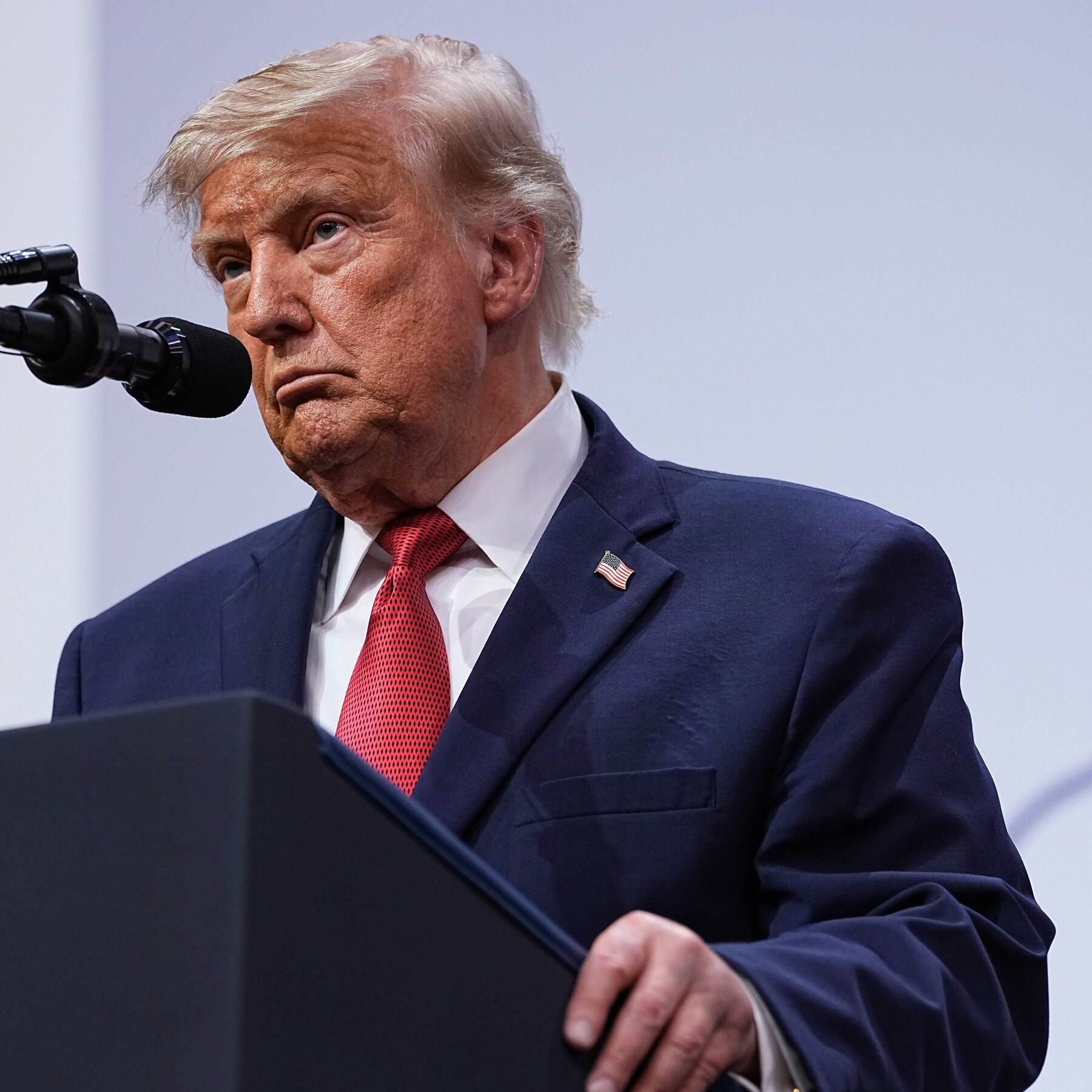
At 12:01 UTC on 12 June 2026, Israeli Prime Minister Benjamin Netanyahu's office posted a short statement that framed the next phase of the Iran file in the bluntest terms he has used this year: "As long as I am Israel's prime minister, Iran will not have nuclear weapons. President Trump and I are in full agreement on this." The wording, distributed in Hebrew and English by the Prime Minister's Office, was republished by Israeli outlets within minutes and picked up by Iranian state-aligned channels, each side reading it through its own lens. Six hours earlier, Bloomberg had confirmed a separate Israel Hayom report that Washington and Tehran were preparing to sign a memorandum of understanding as early as Sunday in Geneva, with President Trump expected to attend the G7 summit that frames the same diplomatic window.
The two messages do not contradict each other on the surface. They were not, however, designed to converge. Netanyahu's statement travels in the register of an Israeli security guarantee — domestic, declaratory, pointed at Tehran. The Geneva track travels in the register of a US-Iran transactional arrangement, mediated by a third country, slotted around a multilateral summit. The substance of what the two sides intend to sign has not been disclosed publicly, and the Israeli statement does not claim to know it. That gap is the story.
What Netanyahu actually said
The text that moved through Israeli media on Friday is short. Read against the past three decades of Israeli prime-ministerial language on the Iranian nuclear program, it does two things. It re-anchors the personal commitment — "as long as I am prime minister" — a phrasing Netanyahu has used before, designed to lock any successor into the same red line by making it a domestic political baseline. And it pulls Donald Trump into that baseline, in English, in a sentence the White House could quote back if it chose to.
Iranian state media, including Tasnim and Fars, treated the statement as confirmation of an Israeli-American posture they have long characterised as hostile. Tasnim's framing called Netanyahu "the terrorist prime minister of the Zionist regime" and cast the statement as a "repeated claim against Iran." That is the standard Iranian register for Israeli statements on the nuclear file: dismiss the speaker, contest the premise, refuse the legitimacy of the red line itself. It is not, on the evidence of the past year, a register Iran has been willing to back with escalation while its diplomats sit down in Geneva.
The Geneva track
The Reuters and Bloomberg reporting that moved earlier in the week pointed to a memorandum of understanding rather than a full deal, and to Geneva rather than Vienna or Muscat as the venue. The choice of a MoU is itself informative. Memoranda of understanding in the US-Iran file have historically been vehicles for interim understandings — freezes on enrichment levels, transparency commitments, sequencing for sanctions relief — without resolving the underlying disputes over enrichment, missile programs, or the broader regional security architecture. The reported timeframe of a Sunday signing, with Trump due at the G7, would also compress the diplomatic window: a president who signs in Geneva and walks into a G7 leaders' session the same week has bought himself a domestic headline on both sides of the Atlantic without yet having to defend the content.
That structural read is consistent with the absence, in the public reporting cited in the thread, of any Israeli role at the signing. Israel is not party to a US-Iran MoU. The Israeli red line travels through Washington bilaterally; it does not sit on the table in Geneva. Which means Netanyahu's statement on Friday functions, in part, as a public input into a negotiation he is not in the room for.
The counter-narrative: a deal that does not actually prevent a weapon
The Israeli framing — and the framing of much of the Israeli press that carried Netanyahu's words on Friday — is that a US-Iran understanding, whatever its short-term merits, must be measured against a single test: does it make an Iranian nuclear weapon less likely, or does it defer the question? The premise is that Iran has, in the Israeli intelligence community's reading, retained the technical capacity to dash for a weapon and that any deal that does not dismantle or verifiably freeze that capacity is, at best, a pause. The implicit argument: the only durable outcome is one Iran cannot reverse, and only then if the verification regime survives a future US administration.
The Iranian counter-narrative, again as carried by state-aligned outlets, is the inverse. Tehran's official line for years has been that its nuclear program is civilian, that Israeli and US statements about an imminent weapon are pretexts for sanctions and isolation, and that any agreement must recognise Iranian rights under the non-proliferation treaty. The Tasnim and Fars coverage of Netanyahu's statement on Friday sits squarely inside that frame: the threat is fabricated, the red line is illegitimate, and the Geneva track — if it is real — is a negotiation between sovereign equals rather than a concession extracted under duress.
Neither framing is self-evidently true. What the public sources do show is that both sides are using the same week to harden their public baselines in advance of a deal whose content has not been released.
What the structural pattern looks like
What is unfolding in real time is a familiar pattern in US-Iran diplomacy, dressed in 2026 clothing. The incumbent power (the United States) seeks a transactional arrangement that locks in a specific concession — in this reading, a sequencing of enrichment limits and transparency measures — and uses a multilateral venue (G7) and a third-country mediator (Switzerland) to do the work of legitimising the text without a peace treaty. The regional power with the most at stake on the question of whether the deal holds (Israel) is left to deliver a public red line that travels through Washington rather than through the negotiating room, and to maintain the threat of unilateral action as a backstop. The counter-party (Iran) accepts the venue, contests the framing, and holds out for sanctions relief that is concrete and survivable across US administrations.
This is the structural shape of negotiations where no one trusts the deal to last. The MoU is the vehicle precisely because it does less than a treaty and therefore survives lower thresholds of domestic consent on each side. The Israeli red line is declaratory because its function is not to stop the deal but to bound it — to define, in public, what Israel would treat as a violation worth responding to.
The Bloomberg reporting and Israel Hayom's earlier reporting establish that the deal is plausible this week. They do not establish that it will hold past a single US administration, an Iranian leadership transition, or an Israeli decision that the verification regime has been violated. That is the part no public statement on Friday resolves.
What remains genuinely uncertain
Three things the thread does not settle. First, the content of the MoU itself: the public reporting cited here points to a memorandum and a Geneva venue but does not disclose the substantive commitments on enrichment levels, stockpile caps, or sequencing of sanctions relief. Second, whether Israel has been consulted on the text or only informed of its broad outlines — a distinction that matters a great deal for whether Netanyahu's Friday statement is a warning or a recap. Third, the Iranian leadership's internal posture: public messaging from Tasnim and Fars is uniformly adversarial, but the decision to send negotiators to Geneva, and the willingness to compress the timeline to a Sunday signing, implies a more transactional read of the trade-offs inside the Iranian system than the official register suggests.
The most that can be said with the sourcing available is that two tracks are running in parallel, that they are publicly visible to each other, and that the Israeli red line is being reasserted at exactly the moment a US-Iran understanding is reported to be near. Whether the second event constrains or enables the first will become legible only when the text of the MoU, if it is signed, is in the public record.
Desk note: Monexus framed this against the Israeli statement as primary and the Iranian state-media response as a documented counter-narrative, with the Geneva-track reporting treated as a separate, parallel development whose substance is not yet on the page. Where the wires and the Iranian outlets disagree, both readings appear in their strongest form.
Wire provenance
This editorial synthesis draws on the following public wire/social posts:
- https://t.me/osintlive
- https://t.me/FarsNewsInt
- https://t.me/JahanTasnim
- https://t.me/rnintel
- https://t.me/wfwitness
- https://t.me/amitsegal
Follow the event.
These dated source records provide context. They do not retrospectively verify this archive article.
Separate what the nuclear watchdog reported from what it could not determine after the June 2025 strikes.