SpaceX's $135 IPO and the New Capital Playbook: A $1.8 Trillion Signal Beijing Cannot Ignore
SpaceX priced its IPO at $135 a share on 11 June 2026, with prediction markets giving a 69% chance the listing closes above $2 trillion — a valuation that reframes the industrial-policy contest between Washington and Beijing.
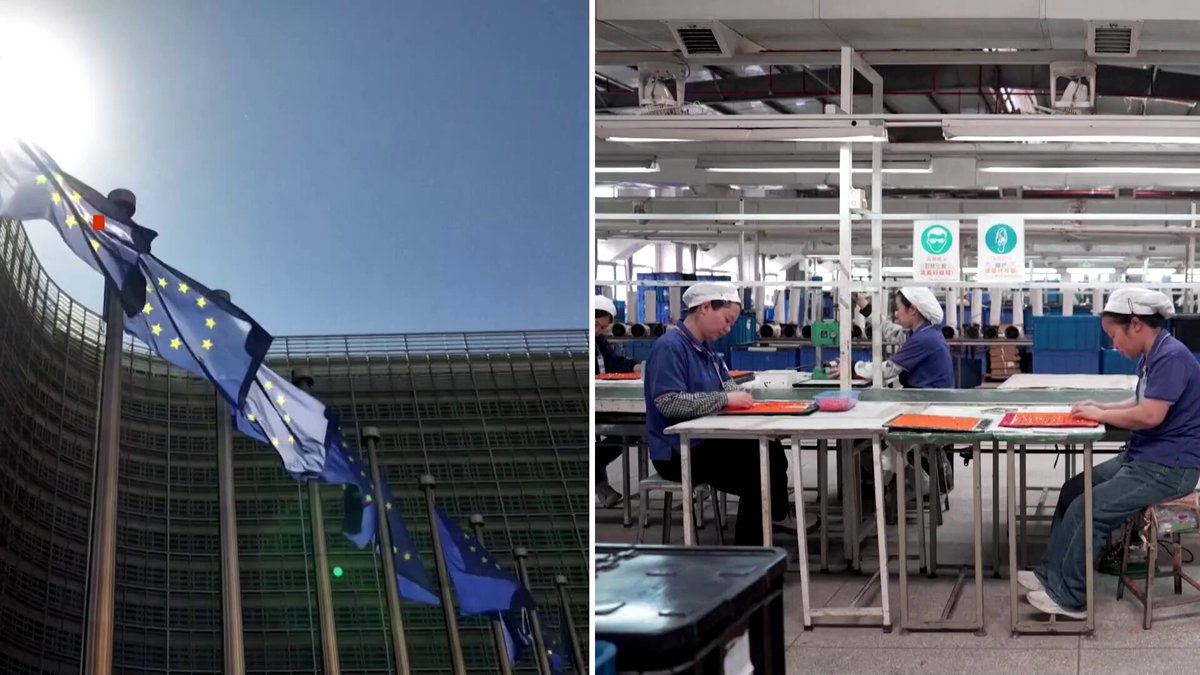
On the evening of 11 June 2026, SpaceX officially priced its initial public offering at $135 per share, according to a market-update feed posted to prediction-market channel Polymarket at 20:23 UTC. Within minutes, a second Polymarket dispatch — timestamped 20:45 UTC — put the implied probability of the listing closing above $2,000,000,000,000.00 at 69%, a level that would eclipse every prior IPO record close. The price-print came after weeks of reporting that a syndicate of early backers stood to realise some of the largest paper gains in venture capital history on a debut that pegged SpaceX at close to $1.8 trillion in valuation, per an 11 June 2026 finance brief circulated on the thread. By the following morning, 12 June, Reuters was already running two parallel reads of the event: one in which the listing dragged oil lower on hopes of a Gulf detente, and a second in which Beijing is studying the playbook for application to its own roster of state-aligned space and launch champions.
The story is not only that a private launch operator has become the most valuable newly-listed company in history. It is that the financing architecture underpinning that valuation — pre-IPO secondary liquidity, retail-driven bookbuilds, sovereign-wealth anchor allocation, and an industrial-policy alignment with US national-security priorities — now sets a template that the People's Republic of China is, in the words of a Reuters dispatch at 08:50 UTC on 12 June, "set to fuel" with its own pipeline of listings, even if the underlying technology gap persists. The combined picture, viewed from either capital of the Pacific, is a reordering of what an IPO is for, and a quiet admission that the venture cycle of the 2020s has become a strategic asset in its own right.
The $135 print and what it actually signals
The headline number — $135 a share, priced after a months-long pre-marketing process — does less work on its own than the constellation of figures around it. The 11 June finance brief framed the debut as a vindication of patient capital: early bets, it noted, are "poised to generate some of the biggest paper gains in venture capital history" once the stock begins trading. Polymarket's separate post at 19:24 UTC on 11 June quoted an Ark Invest estimate that SpaceX could generate roughly $300,000,000,000.00 a year from orbital data centres — a figure that, if even partially realised, would reframe the company from launch services provider to compute-infrastructure utility, with a revenue base capable of supporting a multi-trillion-dollar market capitalisation in a steady state.
The Polymarket market at 16:01 UTC on 11 June also priced in an 8% probability that SpaceX would join the S&P 500 by year-end 2026 — a small but non-trivial figure that, if it materialised, would force index-tracking capital to allocate on the order of tens of billions of dollars within days of inclusion. In other words, the listing is not just an exit event for venture capital; it is a slow-motion mechanical reweighting of the US equity benchmark, and by extension the global investable universe.
For an investor class that has spent two years recalibrating to higher rates and a more selective deal pipeline, the print arrives as a counter-narrative. The dominant framing of the 2024–25 window was that the era of mega-rounds funded by soft money was over. SpaceX's $135 price-point suggests the opposite: that for companies whose technology sits at the intersection of national security, energy, and artificial-intelligence compute, the marginal investor still treats equity capital as a long-dated option on geopolitical alignment.
Beijing reads the playbook — and the gap
The Reuters dispatch at 08:50 UTC on 12 June, headlined "SpaceX playbook set to fuel China's IPO ambitions but tech gap persists," made the strategic inversion explicit. The argument is not that a Chinese launch provider can match SpaceX's reusable-booster cadence tomorrow. It is that the financing sequence — anchor allocation by sovereign investors, retail-overhang absorption through Hong Kong and Shanghai listings, secondary-market liquidity for early employees — is a transferable institutional technology, and one that Chinese policy planners have been quietly studying since at least the 2024 regulatory tightening on offshore listings.
The structural counter-narrative, taken seriously, runs as follows. The Western wire line tends to emphasise the "tech gap persists" suffix and stop there. A more even-handed reading notes that the gap is not uniform: in launch cadence SpaceX leads; in launch-cost-per-kilogram the gap has narrowed as Chinese long-March variants and a growing roster of commercial providers (LandSpace, Galactic Energy, iSpace, Space Pioneer) have brought domestic prices down; in satellite manufacturing and downstream applications, China's BeiDou-adjacent industrial base has scale advantages that the US cannot match without sustained industrial-policy intervention. The Chinese position, articulated in English by outlets like the South China Morning Post and amplified by Xinhua, Global Times and CGTN in domestic-facing coverage, holds that what is being exported is not just capital-market choreography but a particular view of strategic industries as public goods.
The Reuters article's strongest reading is that the "playbook" is fungible even where the hardware is not. A Chinese super-IPO of, say, a state-aligned satellite-broadband operator or a battery-plus-rocket hybrid — categories where domestic champions already exist — could in principle deploy the same anchor-allocation, retail-absorption, secondary-liquidity sequence that SpaceX has just executed. Whether regulators in Beijing would tolerate the resulting capital flight risk is a separate question. The 2024 crackdown on Didi, the VIE-structure anxieties that followed, and the ongoing recalibration of the CSRC's overseas-listing regime all suggest that the political economy of a Chinese SpaceX-equivalent is harder than the engineering.
The Gulf peace-trade, oil, and the second Reuters angle
The second major 12 June Reuters dispatch — at 09:15 UTC, headlined "Oil slides on Gulf peace hopes, all eyes on SpaceX debut" — bundles the listing into a broader macro narrative in which geopolitical de-escalation and a re-rating of growth assets are running in the same direction. The implicit causal chain is delicate. Lower oil prices, if they hold, reduce the input cost of launch operations and the energy bill of the orbital data-centre thesis that Ark is underwriting. A US-Gulf detente, if it holds, eases capital-flow anxieties for sovereign-wealth anchor investors from the region who have been quietly accumulating SpaceX exposure on the secondaries market for years. And a successful SpaceX debut, the theory runs, validates the broader re-rating of long-duration, hard-tech equities that has been a subplot of the 2026 tape.
The counterpoint is that the same wires carried the de-escalation framing as a hope, not a confirmed state of affairs. A Gulf peace process that breaks down would, on the same day, push oil back up and re-impose the discount that long-duration growth stocks have carried since the inflation regime began. The Polymarket pricing of 69% probability on a $2 trillion-plus close is a market-maker's probability, not an inevitability, and it depends on the macro tail continuing to cooperate through the listing window.
Stakes: who wins, who absorbs the risk
The winners in the immediate window are narrow and identifiable: the early venture investors who took paper on a 2002 founding round and have held through every crisis since; the anchor allocators — sovereign wealth funds, large US public pensions, and a small number of family offices — that bought into the secondary tiers at $200 billion, $400 billion, $800 billion, and $1.2 trillion marks; and the US national-security state, which has acquired a publicly-traded industrial champion whose market capitalisation now exceeds the annual defence budgets of every other NATO member combined.
The absorbers of risk are more diffuse. Retail investors who pile in during the first-day pop are buying at a price that the Polymarket model puts a one-in-three chance of never being exceeded. Employees exercising at $135 will face the same lockup cliffs that have punished newly public workforces in prior cycles. Index funds that add SpaceX in any meaningful weight will see their tracking error widen, with knock-on effects for every retirement portfolio benchmarked to the S&P 500. And the geopolitical externality is non-trivial: a $1.8 trillion US launch and orbital-compute champion is, by any honest accounting, a balance-sheet asset in the contest with Beijing, and Beijing's response will be felt in Hong Kong and STAR Market issuance calendars over the next eighteen months.
What remains genuinely uncertain
The sources do not specify the precise allocation of shares between retail and institutional tranches, nor do they confirm the final post-listing market capitalisation; the $1.8 trillion figure is the pre-listing valuation reported in the 11 June finance brief, not the closing-day print. The Ark Invest estimate of $300 billion a year in orbital data-centre revenue is a forward-looking model, not realised revenue, and its assumption set — power-beaming economics, latency-tolerant AI training workloads, regulatory permission for orbital compute — is contested. The "tech gap" between US and Chinese launch providers is real but narrowing on specific axes, and a single mega-listing on the Shanghai or Hong Kong exchanges could, in principle, recalibrate public perception of that gap overnight. The Gulf peace-trade is, on the evidence, a hope expressed in a Reuters headline rather than a confirmed settlement, and oil-market reactions to such hopes have historically reversed within weeks. What the SpaceX debut does prove — cleanly and verifiably — is that a private space and compute company can price an IPO at a level that, a decade ago, was reserved for oil supermajors and the largest banks, and that the institutional machinery to absorb that pricing now exists in permanent form. What it does not yet prove is whether the $2 trillion close is the start of a new cycle or the top of one.
This publication framed the SpaceX debut as a capital-architecture story first, with the China comparison carried as a parallel structural beat rather than a foreign-policy sidebar; the wire frame, by contrast, kept the two Reuters angles in separate packages and let readers connect the dots unaided.
Wire provenance
This editorial synthesis draws on the following public wire/social posts:
- http://reut.rs/4eeWOvt
- http://reut.rs/4fBl65j